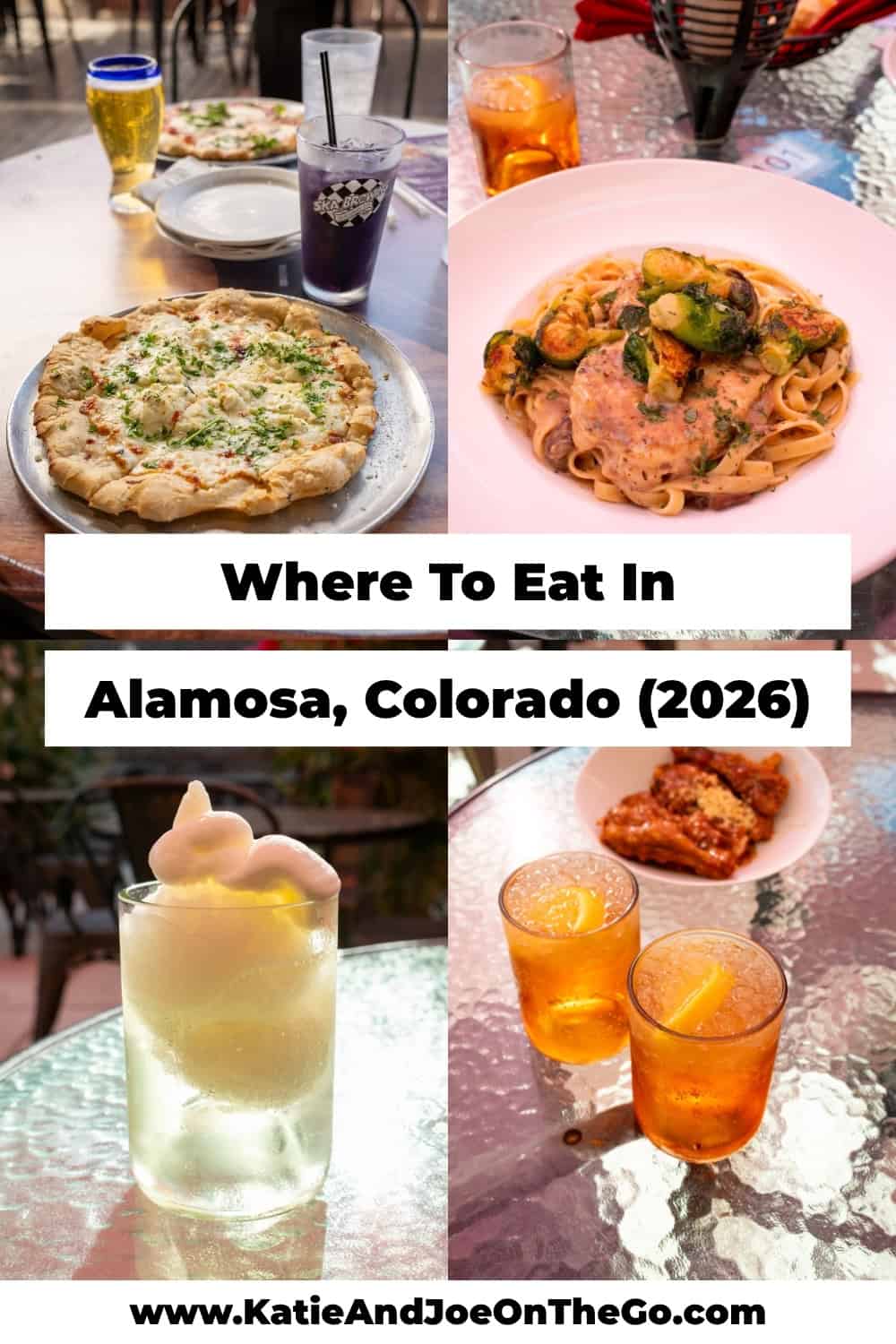
Alamosa & Great Sand Dunes National Park: The Complete Guide to Where to Eat, Stay, and Play

Are you planning a trip to Alamosa, Colorado and Great Sand Dunes National Park? We’ve gone a few times, but this was the first time visiting after it became a National Park and not just a monument. We spent three days here in July of 2026, camping two nights just outside the dunes. In that time, we covered every corner of the park and downtown Alamosa on a partnership with Visit Alamosa.
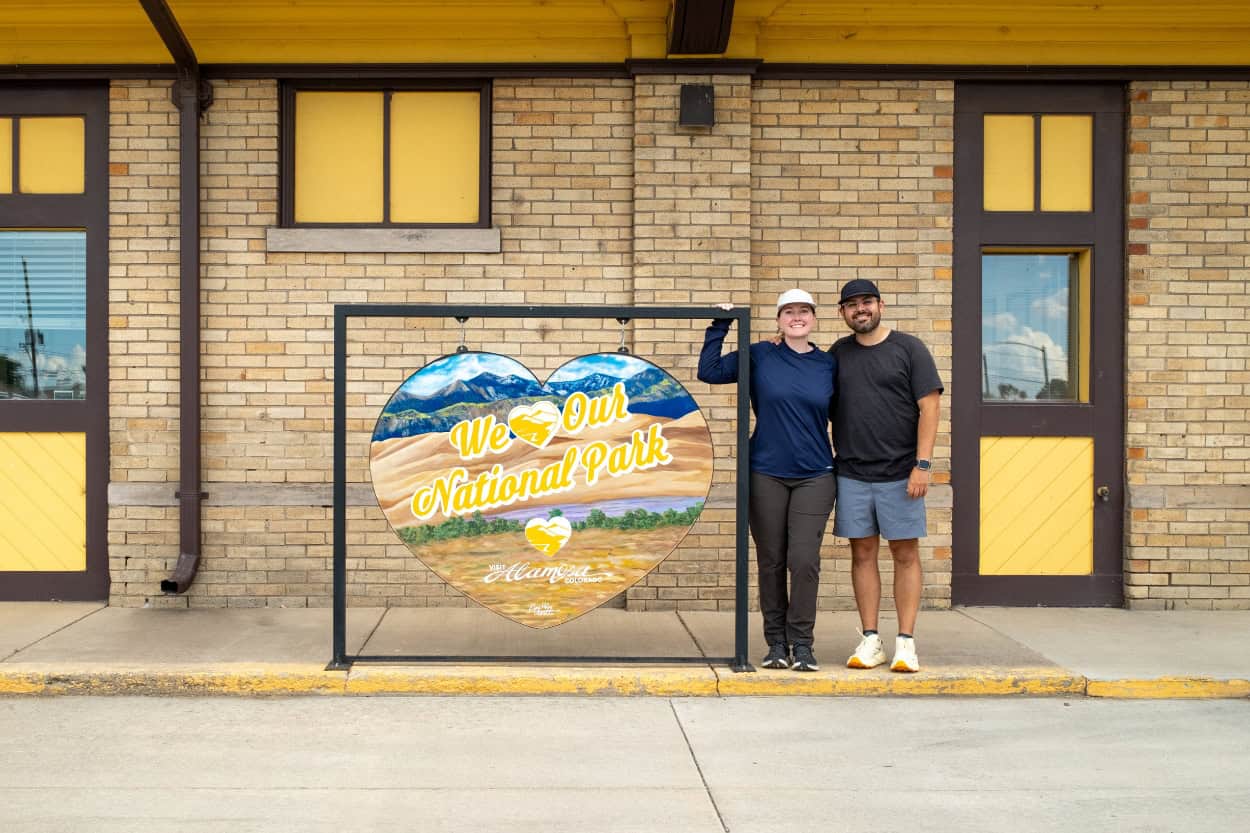
In this guide, we’re sharing everything you’ll need to explore Alamosa and the Great Sand Dunes National Park. That includes where to eat, where to stay, what to do, and all the little details you’ll need.
Everything You Need to Plan Your Trip
- ✈️ Flights: We use Daily Drop to find the best flight deals and mistake fares.
- 🚂 Trains and Buses: We book all of our transportation through OMIO.
- 🚗 Car Rental: We use Booking.com to compare the best rates.
- 🏨 Hotels: We use Booking.com and VRBO to find the best accommodation for every trip.
- 🏢 Hostels: We use Hostelworld to find the best budget stays.
- 🗺️ Tours and Activities: We book all of our tours through GetYourGuide and Viator.
- 🛡️ Travel Insurance: We never travel without it, SafetyWing.
- 📱 eSIM: We use Saily for all of our data needs.
- 📚 Guidebooks: Rick Steves and Lonely Planet.
- 💳 Travel Credit Card: We use the Capital One Venture X for all of our travel purchases. It comes with automatic trip cancellation, lost luggage, and travel accident insurance built in.
Short On Time?
- 🏕️ Stay Here: Piñon Flats Campground, for the closest camping to the dunes (or Dunes Inn if you’d rather have a bed)
- 🏄 Do This: Explore the dunes, join a ranger-led talk, and complete the Junior Ranger program
- ☕Coffee Here: Roast Craft Coffee in Alamosa
- 🍽️ Eat Here: Friar’s Fork in Alamosa
What Brought Us to Alamosa and Great Sand Dunes National Park
We partnered with Visit Alamosa to spend a few days exploring the town and Great Sand Dunes National Park. Our goal was simple: show what a few days here looks like, from the visitor center to the tallest dunes in North America.
Great Sand Dunes National Park is also one of the 63 U.S. National Parks on our list. If you are new here, we’re on a quest to visit every one of them, and as of July 2026, we’re on park 47. Meanwhile, a repeat visit gave us the chance to explore Alamosa itself in more depth.
Over three days, we split our time between downtown Alamosa and the dunes themselves. We camped two nights, tried sandboarding more than once, and ate at four different restaurants around town. This guide pulls all of that together into what we think actually matters for your own visit.
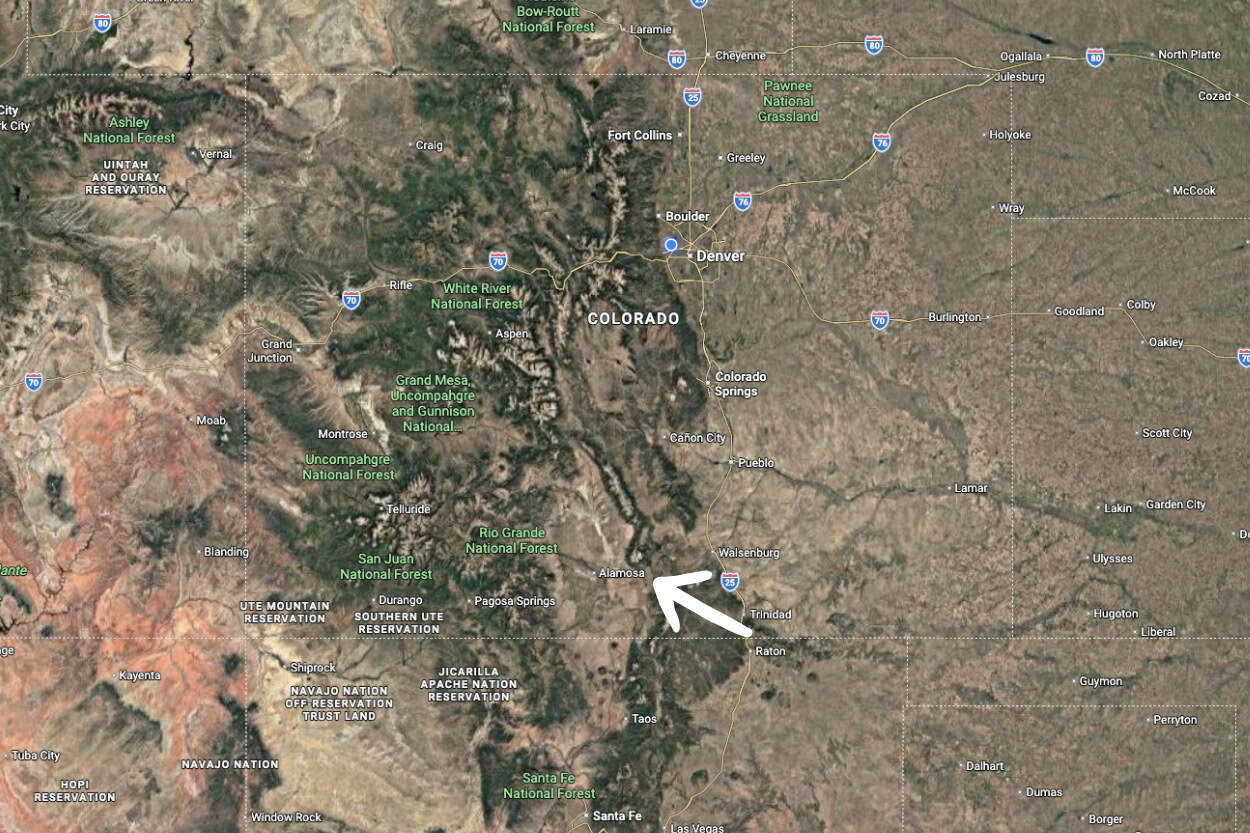
Where is Alamosa, Colorado?
Alamosa sits in the San Luis Valley in south-central Colorado, along the Rio Grande. At about 7,544 feet in elevation, it’s known locally as the “Hub of the San Luis Valley.” The Sangre de Cristo Mountains rise to the east, and the San Juan Mountains sit to the west.
With a population of just under 10,000, Alamosa is the largest town in the valley. It’s also the closest full-service town to Great Sand Dunes National Park, about 30 minutes away by car.
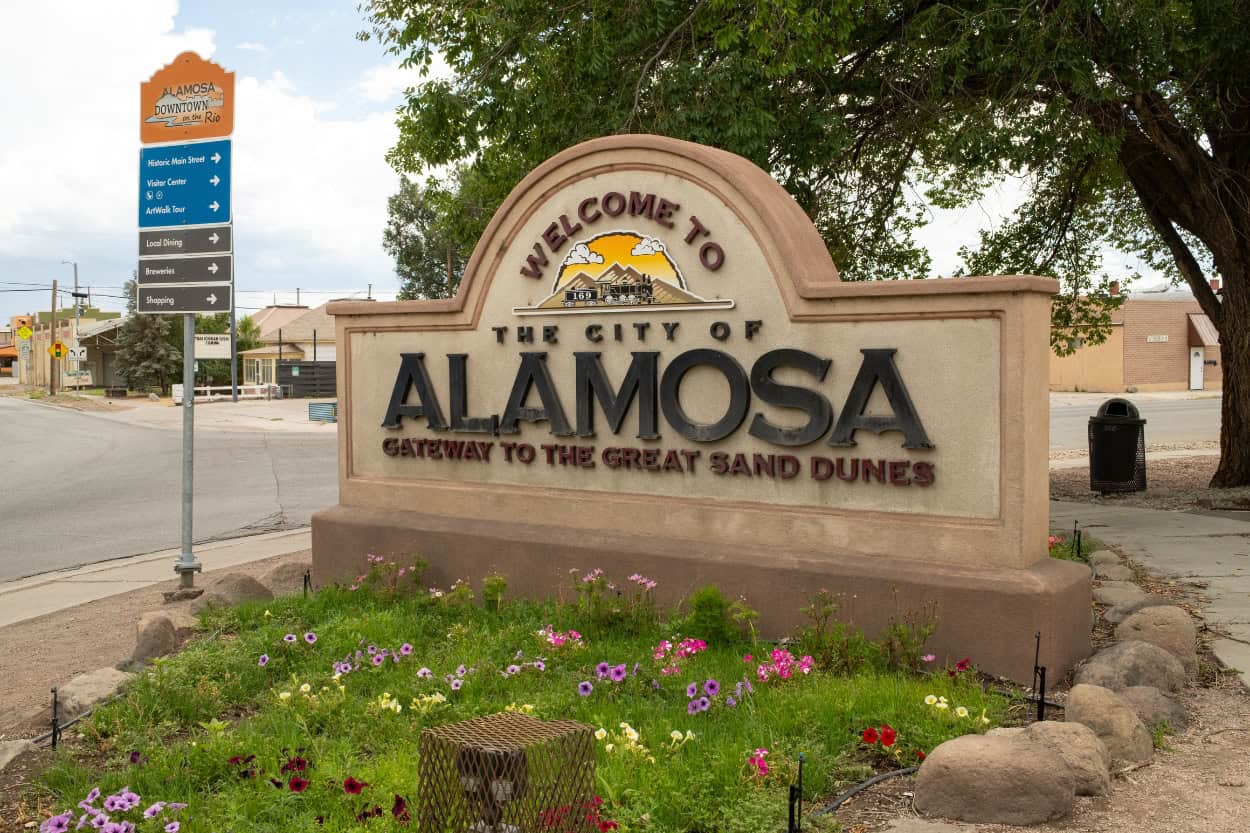
History of Alamosa
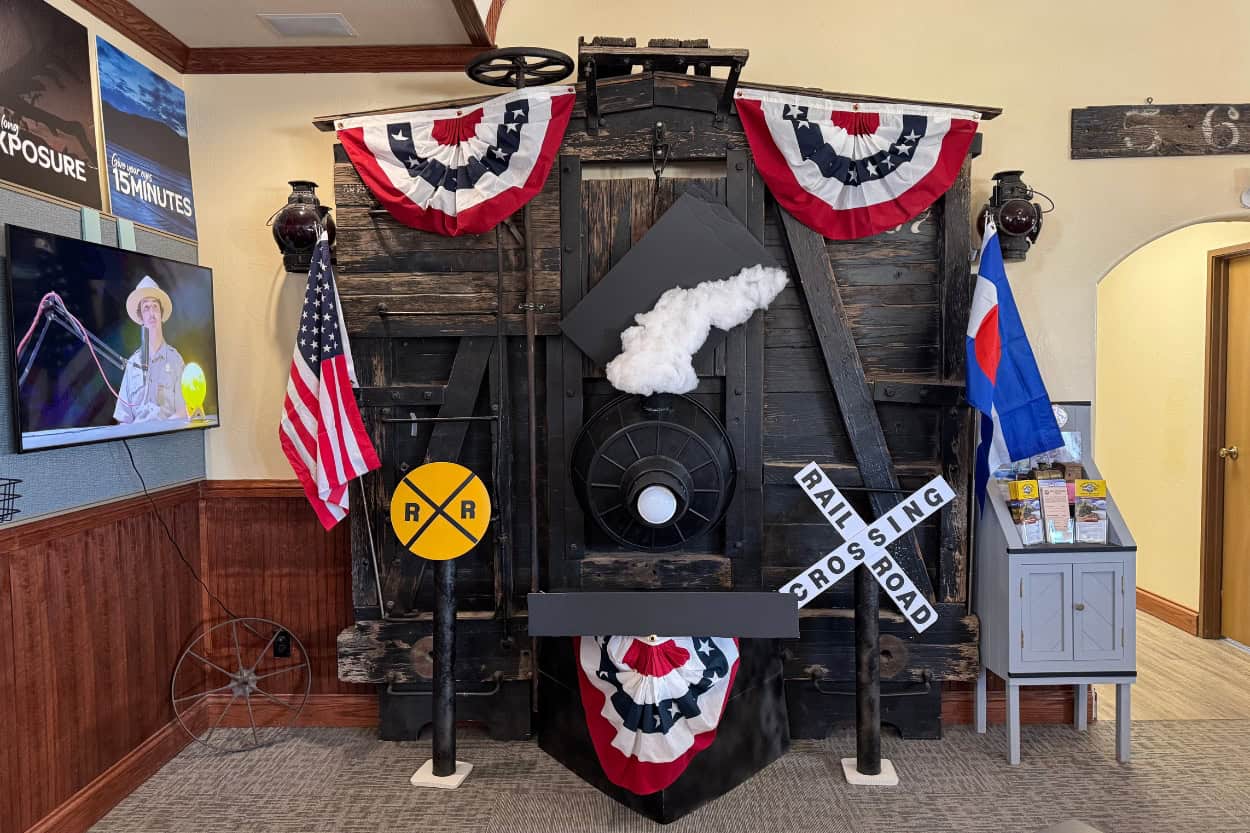
Alamosa got its start in May 1878, founded by the Denver & Rio Grande Railroad. The name comes from the Spanish word for cottonwood grove, a nod to the trees lining the Rio Grande.
The town grew fast. Nearly 100 buildings, including hotels and saloons, were literally shipped in on rail cars from nearby Garland City. They were unloaded in a single day. By the 1880s, Alamosa was the largest transfer and repair hub for the narrow-gauge railway in the Rocky Mountains. The local economy leaned on train servicing, cattle ranching, and the wool trade.
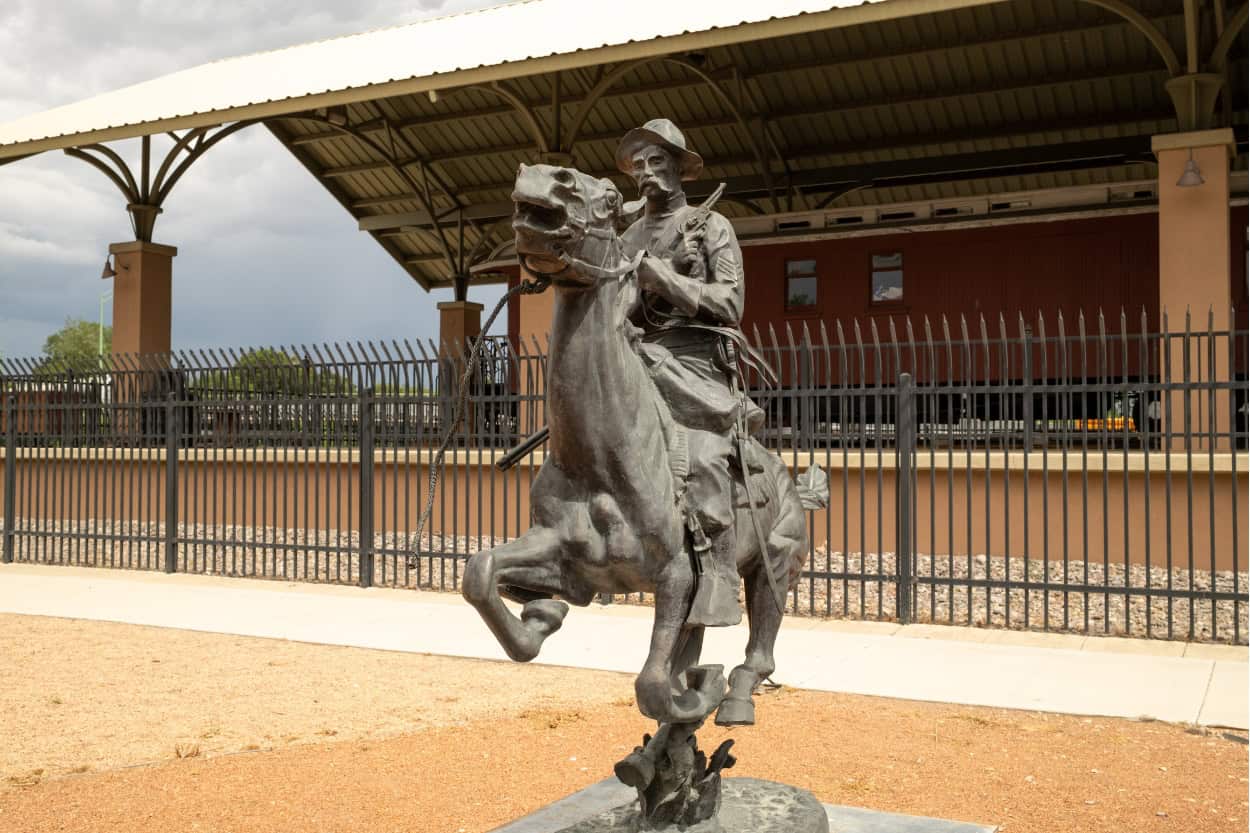
That railroad history still shows up around town today, the visitor center itself is housed in the old train depot.
Alamosa is also home to Adams State University, founded in 1921 as a teacher’s college for rural Colorado.
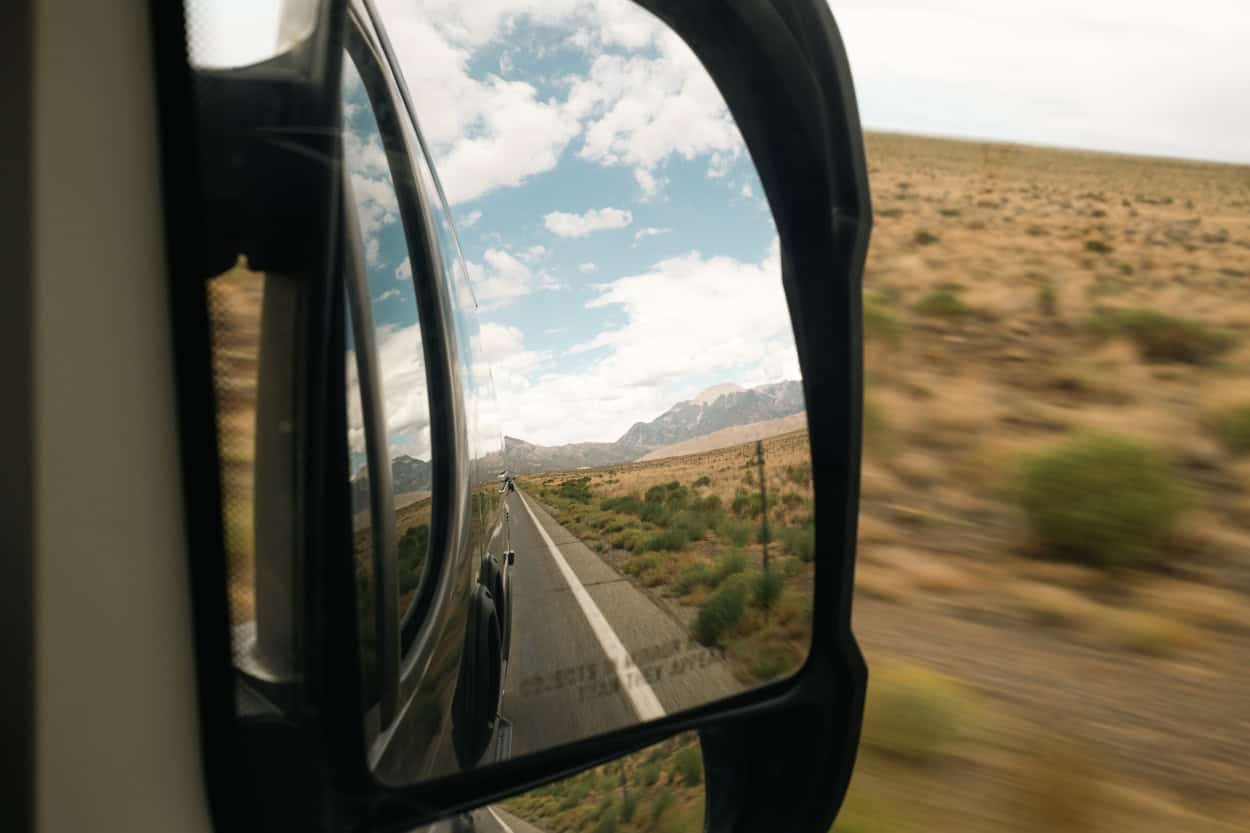
How To Get To Alamosa, Colorado
There are a few ways to get to Alamosa, depending on where you’re starting from. Most visitors drive, but flying and public transit are both possible too (with a few caveats).
Drive To Alamosa
We drove from our home in Denver though Colorado Springs and then into Alamosa.
It’s an easy few-hour drive down I-25 and then over Highway 160. Most of that stretch got a nice repavement recently. Along the way, you’ll climb over La Veta Pass at just over 9,400 feet. It can feel a bit steep in spots, but slow and steady is the way to go.
Most visitors reach Alamosa by car. Here’s the driving distance from the region’s major cities:
- Colorado Springs, CO — 165 miles, about 2 hours 45 minutes
- Durango, CO — 149 miles, about 2 hours 55 minutes
- Santa Fe, NM — 140 miles, about 3 hours
- Albuquerque, NM — 202 miles, about 4 hours
- Denver, CO — 232 miles, about 4 hours 25 minutes
- Grand Junction, CO — 249 miles, about 4 hours 50 minutes
Fly To Alamosa
The San Luis Valley Regional Airport (ALS) sits right in Alamosa. It offers limited commercial service, mainly direct flights to and from Denver. For more flight options, Colorado Springs Airport and Denver International Airport are the closest major hubs, though both require a few hours of driving afterward.
Public Transportation to Alamosa
Alamosa has a daily Bustang Outrider bus connecting to Pueblo, with onward connections to Denver and Colorado Springs. Bustang is an interregional express bus service operated by the Colorado Department of Transportation (CDOT). This specific route falls under the Bustang Outrider service. You can find it, along with all current routes, at ridebustang.com. That said, a car is still the easiest way to get around once you’re in the area.
Keep in mind, there’s currently no shuttle service between Alamosa and Great Sand Dunes National Park. If you fly or bus into town, you’ll need to rent a car to reach the park.
If you do need a rental, Alamosa has two options. Quest Car Rentals operates right out of the San Luis Valley Regional Airport. Alamosa Car Rentals is the other option, and interestingly, they operate through the Turo app instead of a traditional counter.
Things to Do in Alamosa, Colorado
Great Sand Dunes National Park isn’t the only reason to visit Alamosa. Here are a few things worth doing in town that have nothing to do with sand.
Alamosa National Wildlife Refuge
The Alamosa National Wildlife Refuge has a 3-mile wildlife drive you can explore by car, bike, or on foot. It’s open year-round, though spring through early fall is the best time to see migratory birds in the wetlands.
Keep an eye out for great blue herons, bald eagles, and even elk. The Bluff Overlook along the route gives you a panoramic view of the refuge. The Sangre de Cristo Mountains rise in the background.
Alamosa Visitor Center
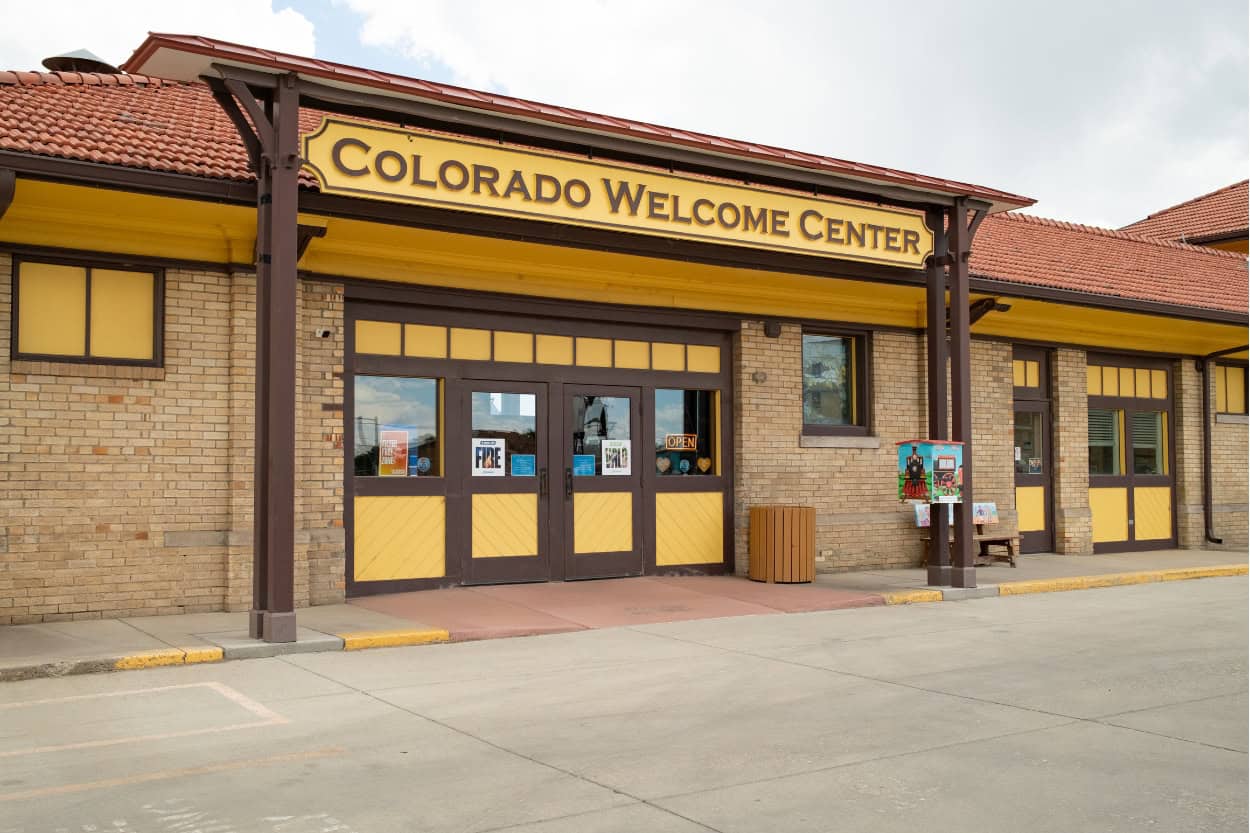
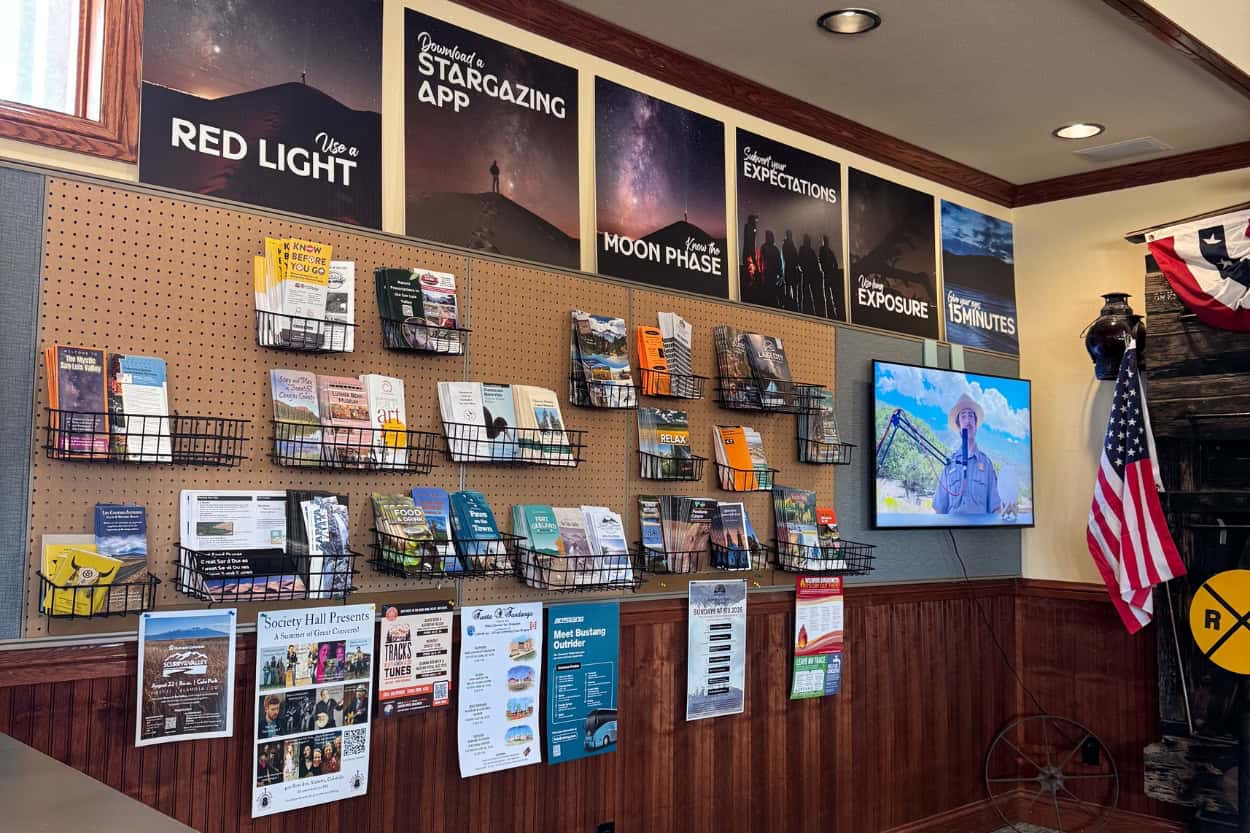
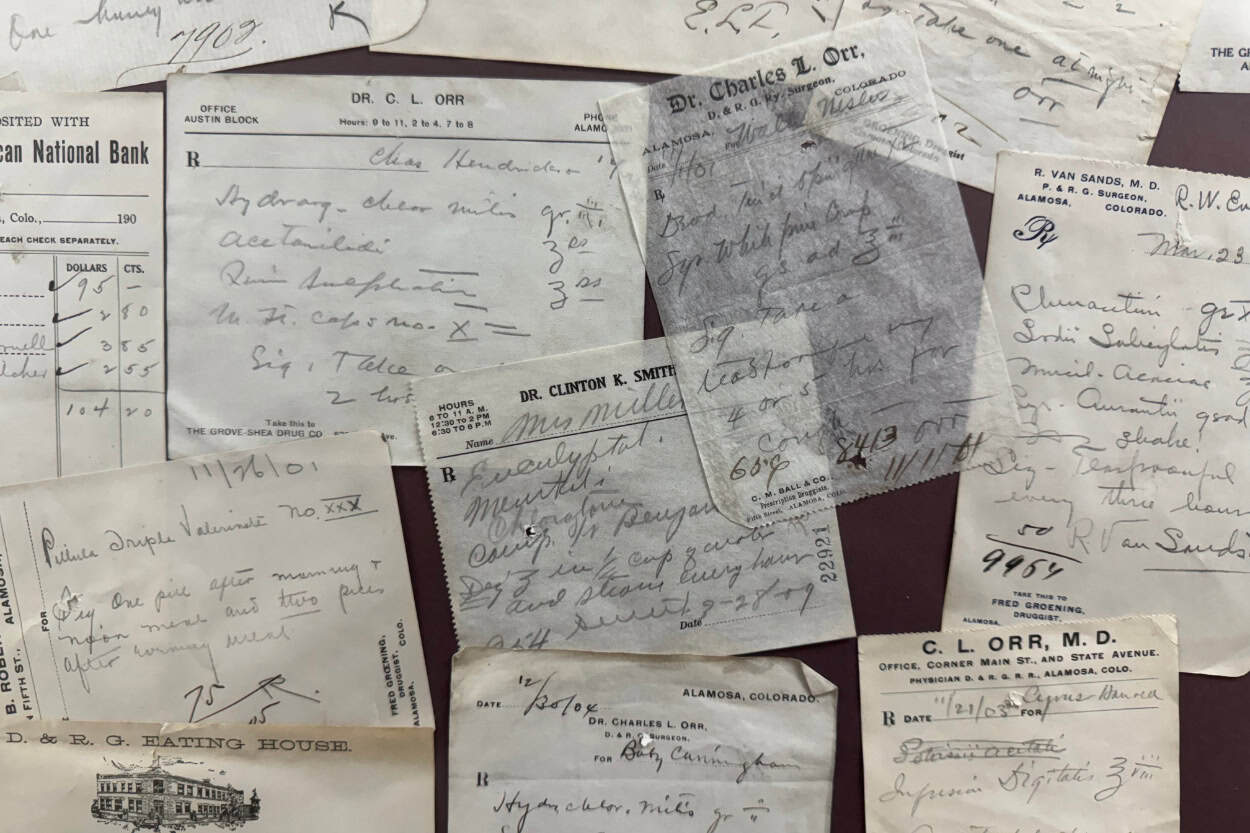
The Alamosa Visitor Center is a great first stop on your way to the Great Sand Dunes National Park. It’s housed in the town’s original train depot, and it’s full of local history. The staff there know the area well and have loads of free brochures and maps.
It’s located in the Historic Railroad Depot at 610 State Ave, Alamosa, CO 81101 and is open 7 days a week from 9:00am to 5:00pm.
Downtown Alamosa
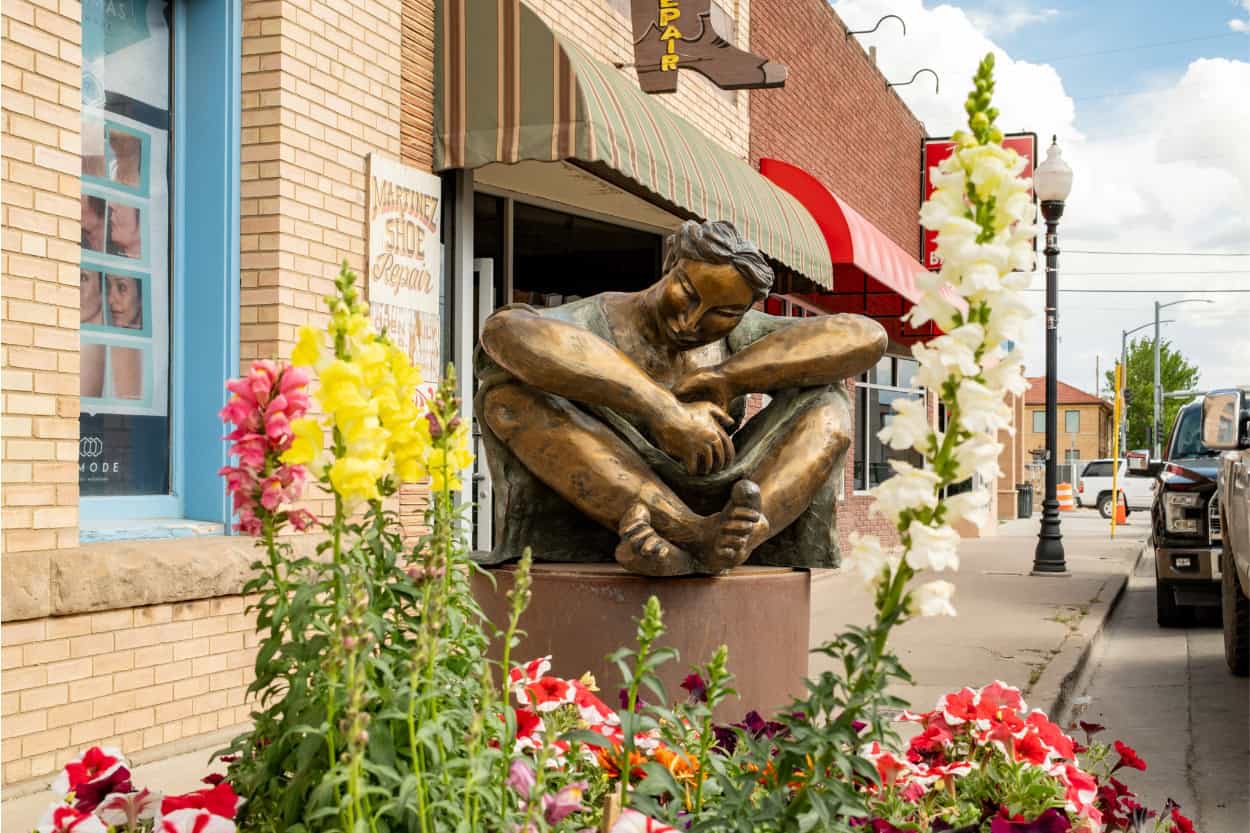
Downtown Alamosa is small, but it’s worth a slow walk. In addition to the many great restaurants (more about that here) there are many great local shops to explore. We stumbled into Hobbytown, a local hobby shop, along with the Narrow Gauge Book Cooperative nearby.
About Great Sand Dunes National Park
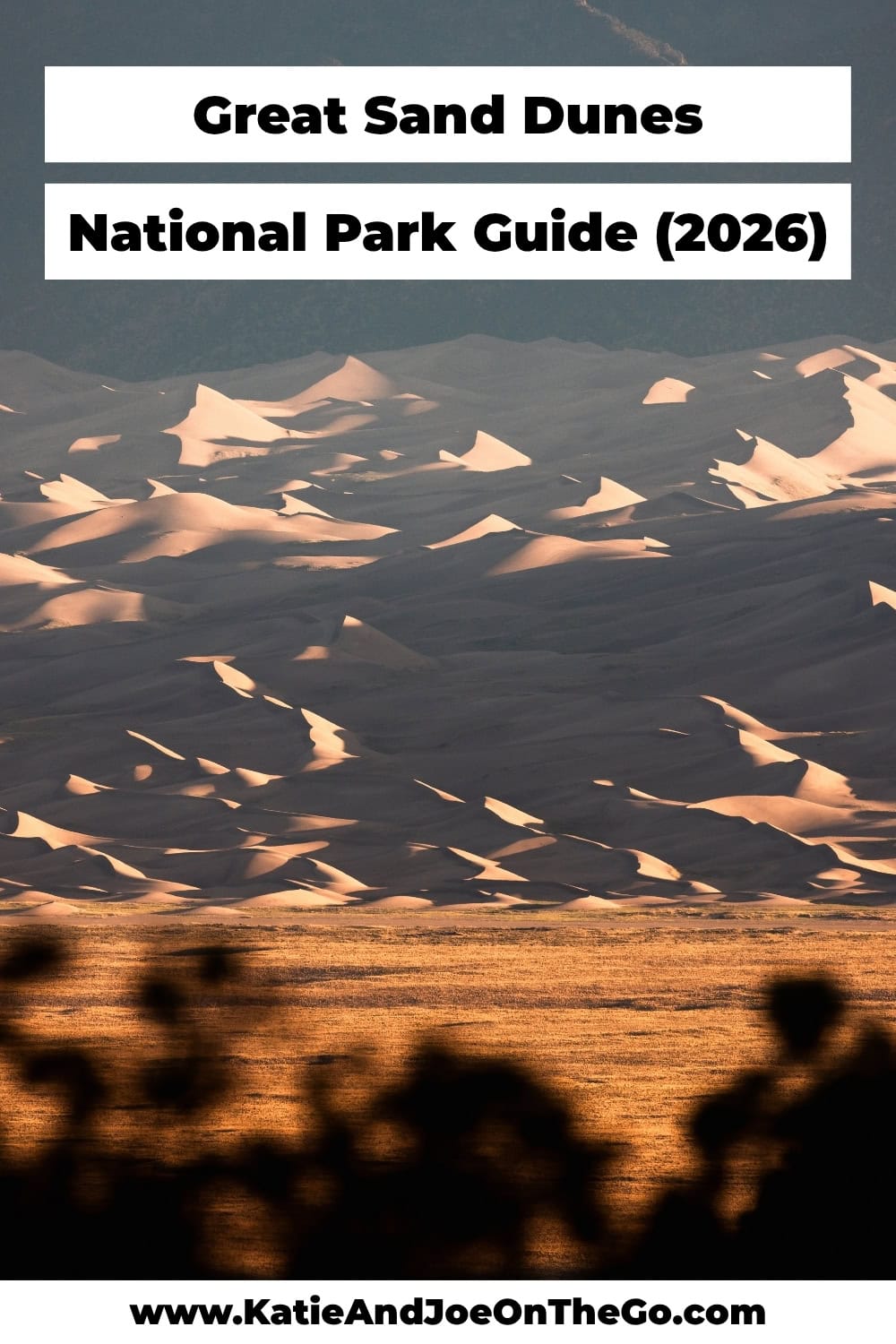
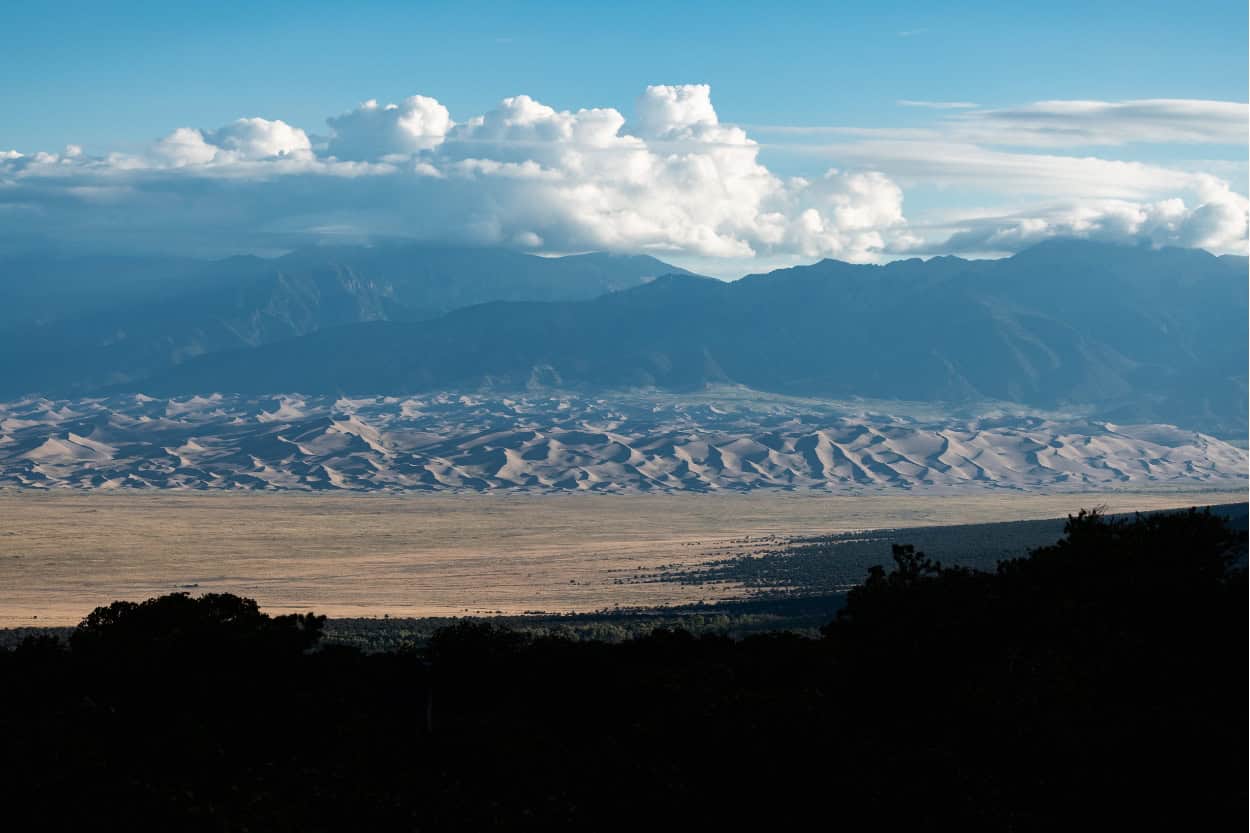
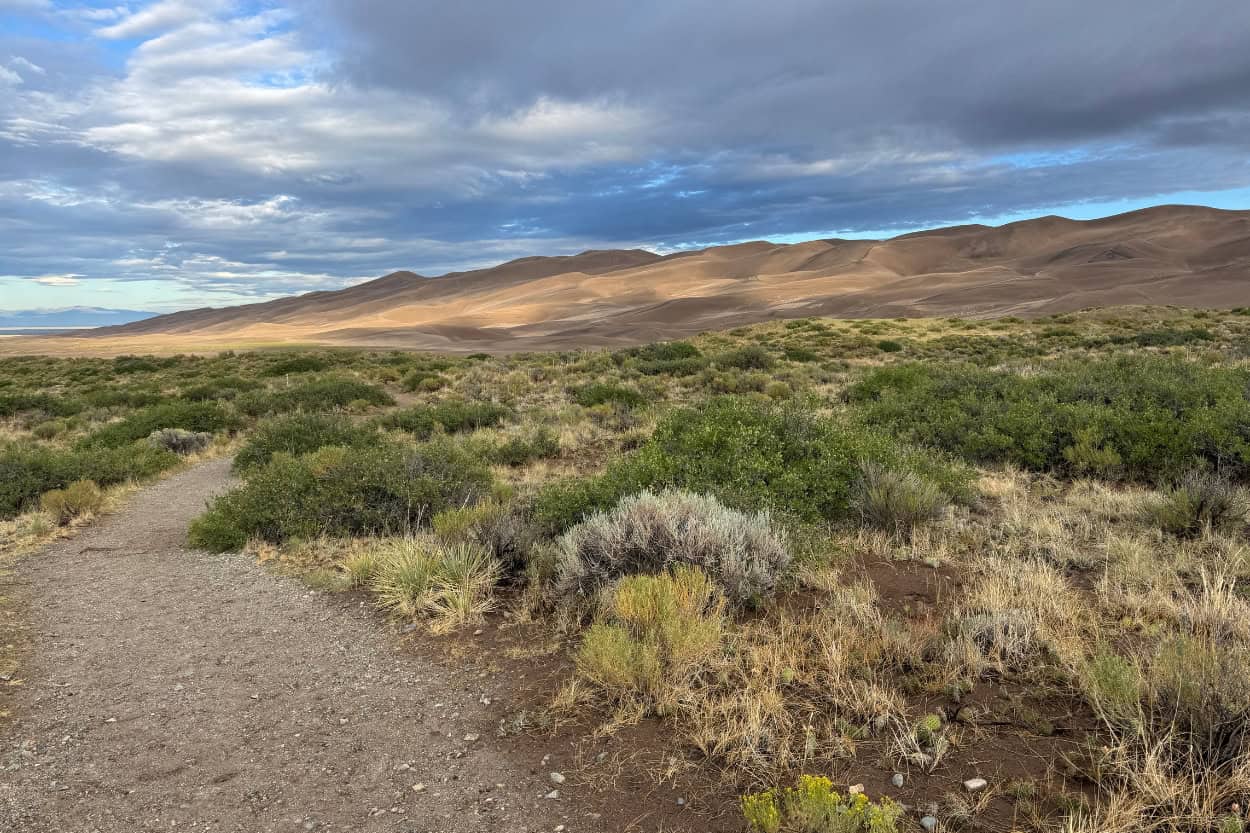
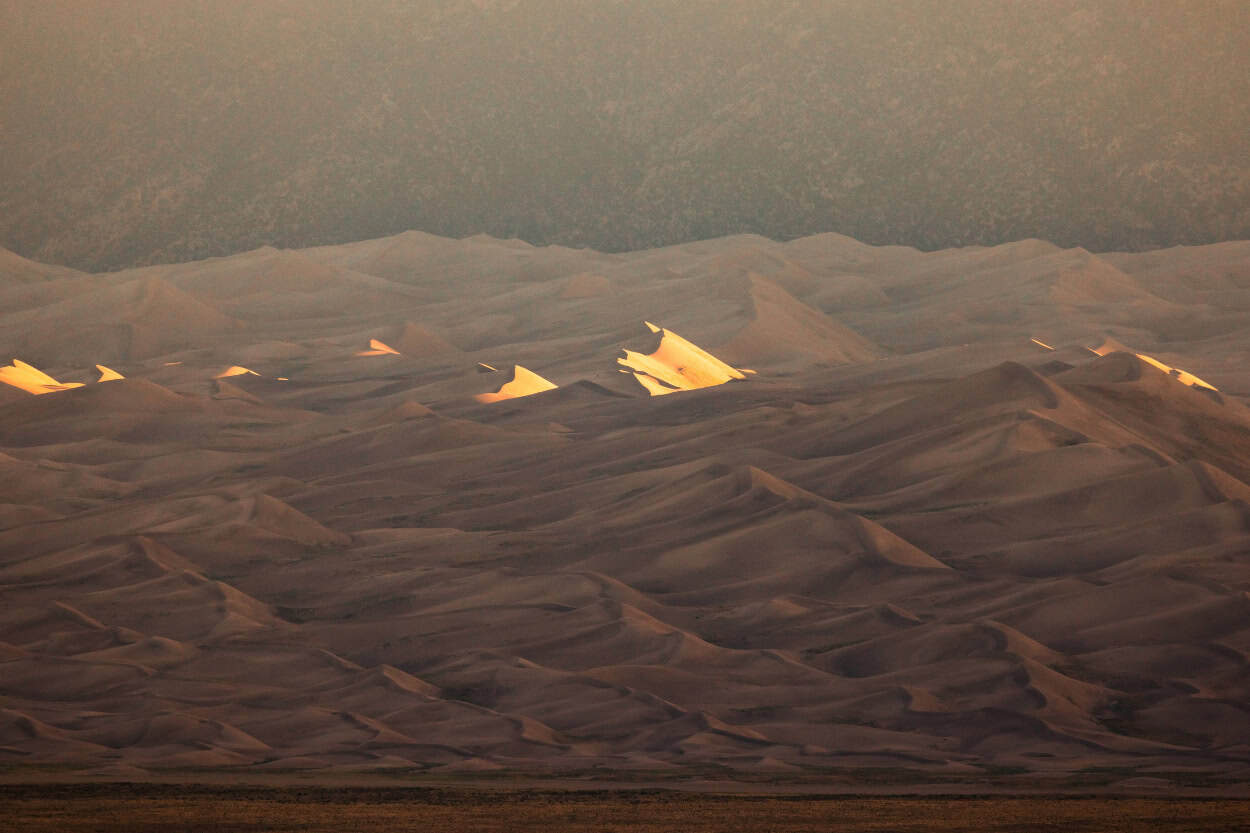
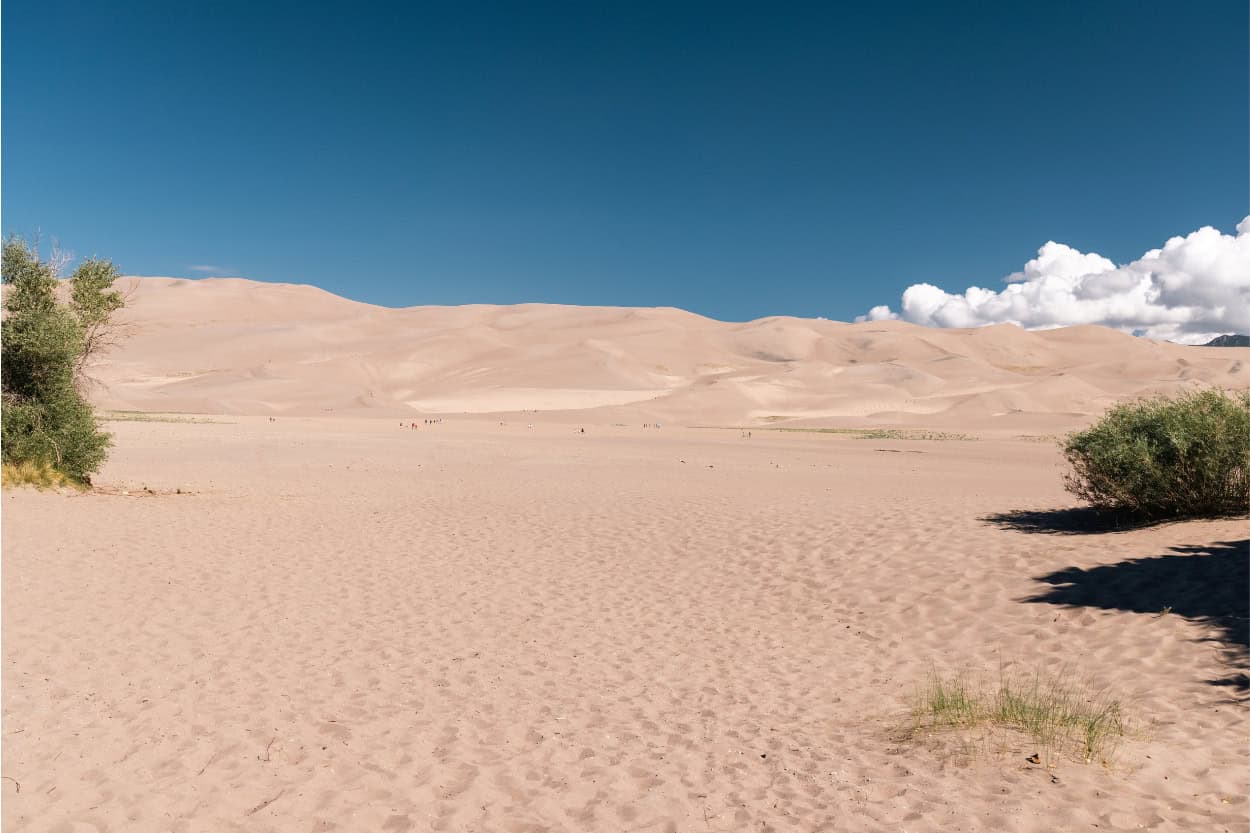
Great Sand Dunes National Park is home to the tallest sand dunes in North America. In fact, Star Dune, the tallest in the park, rises about 741 feet from the valley floor. Altogether, the dune field covers roughly 30 square miles.
History of Great Sand Dunes National Park
Great Sand Dunes started out as a national monument. Specifically, President Herbert Hoover established it in 1932. However, it wasn’t until 2004 that Congress redesignated it as Great Sand Dunes National Park and Preserve. As a result, that change added protection for the surrounding alpine lakes, tundra, and forests beyond the dunes themselves.
We’ve actually visited Great Sand Dunes a few times ourselves, including before it became a National Park in 2004. Back then, it was still a national monument.
Today, the park spans about 149,000 acres between the park and preserve combined. Additionally, that includes six peaks over 13,000 feet, along with grasslands, wetlands, and old-growth forest well beyond the sand.
How the Great Sand Dunes Were Formed
The dunes formed over hundreds of thousands of years. First, wind carried sand and sediment from the Rio Grande and the San Luis Valley floor. Eventually, it dropped that sand at the base of the Sangre de Cristo Mountains, where the wind lost strength. From there, repeated wind cycles built the dunes higher and higher.
We’re not scientists, so we’ll keep this part simple. For the full geologic breakdown, the National Park Service has a detailed page on how it came together.
How to Get to Great Sand Dunes National Park
Great Sand Dunes National Park is actually one of the closer national parks to our home in Colorado. We drive by it a few times a year on trips to visit friends and family in Southwest Colorado. That route usually takes us south on Highway 285, right past the edge of the park.
From Alamosa, the drive to the park is short. It’s about 30 minutes from downtown Alamosa to the Great Sand Dunes visitor center located at 11999 CO-150, Mosca, CO 81146, mostly along Highway 160 and Highway 150.
Looking for other ways to get to Great Sand Dunes National Park? We wrote an entire section about that here.
Map of Great Sand Dunes National Park
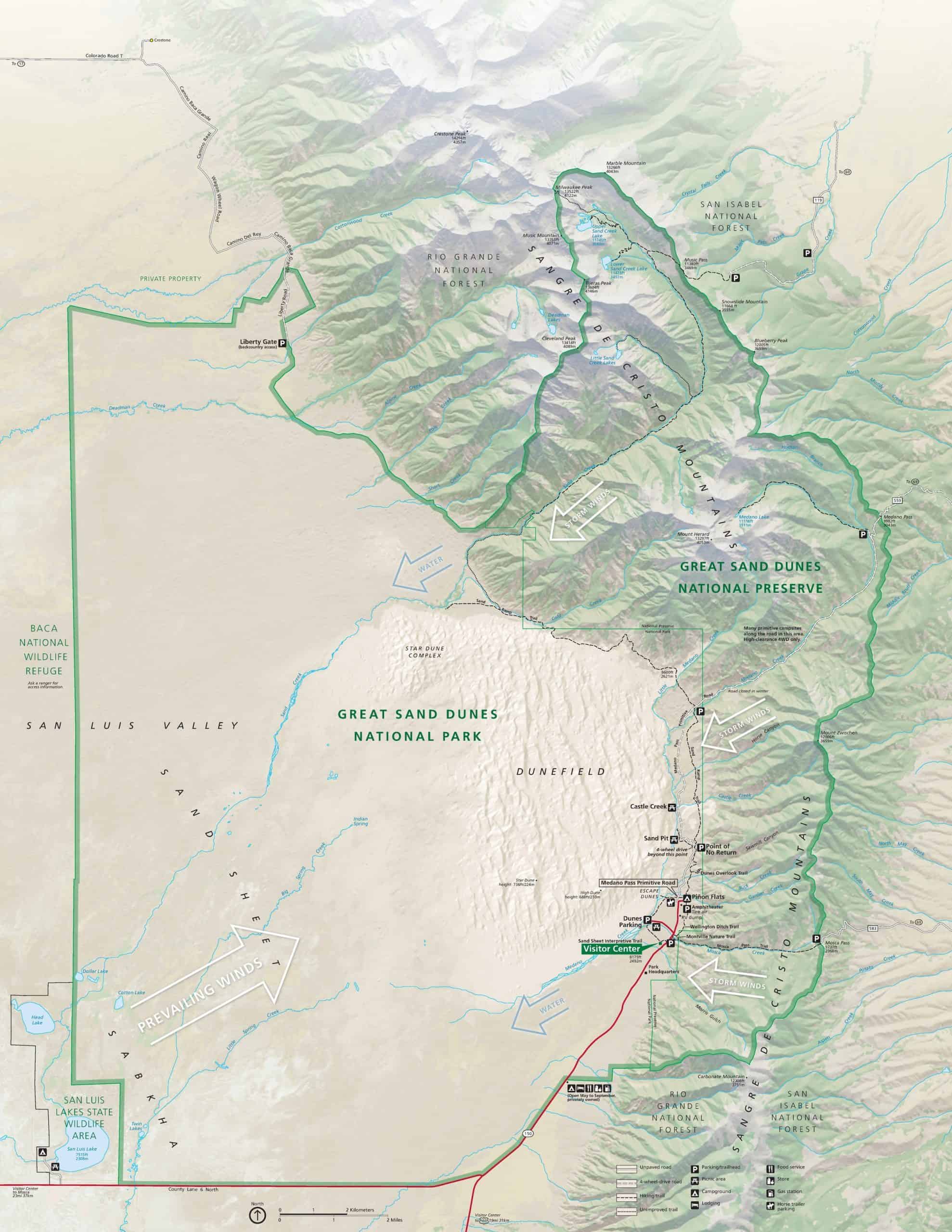
This map of Great Sand Dunes National Park lays out the full park at a glance, from the main dunefield to the visitor center, campgrounds, and trailheads scattered across the San Luis Valley.
While not visit, Alamosa is to the southwest of the maps bottom left corner.
What Should You Do Inside the Park
Great Sand Dunes National Park offers more than just the dunes themselves. Between sandboarding, wildlife watching, ranger talks, and the visitor center, you could easily spend a full day here without repeating yourself.
Walking the Dunes
There are set routes through the dunes via Alltrails, but we found them hard to follow. The sand shifts constantly, so what looks like a clear path one day can look completely different the next. We ended up finding our own easier ways to climb and descend instead of sticking to a set route.
Also keep in mind, once you head out onto the dunes, you’re on your own to get back. There’s no shuttle or shortcut, so pace yourself and bring enough water for the return trip. Also, it’s important to understand that it takes a lot more effort to walk on the sand than it does on a paved or a traditional dirt trail.
Sandboarding & Sledding
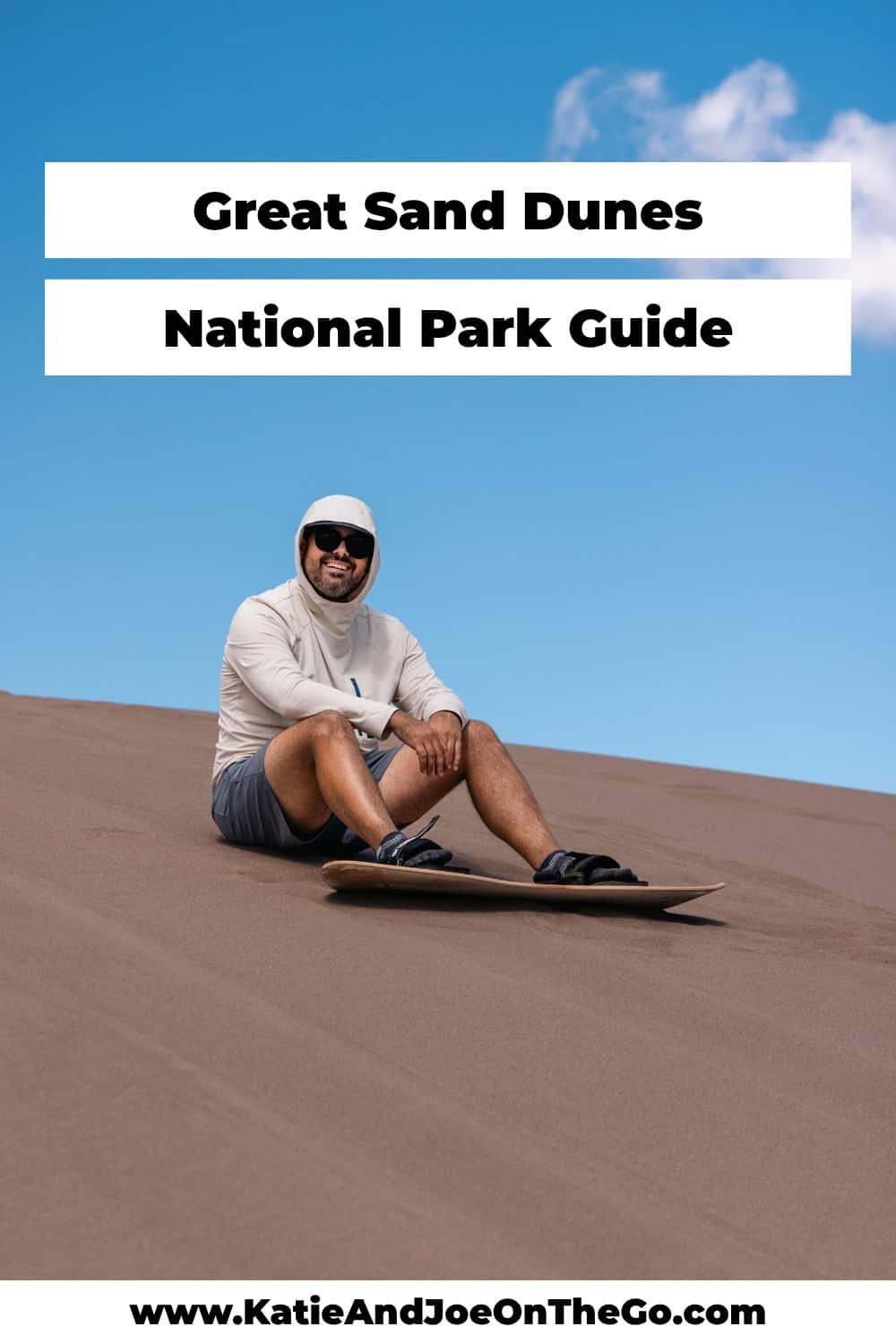
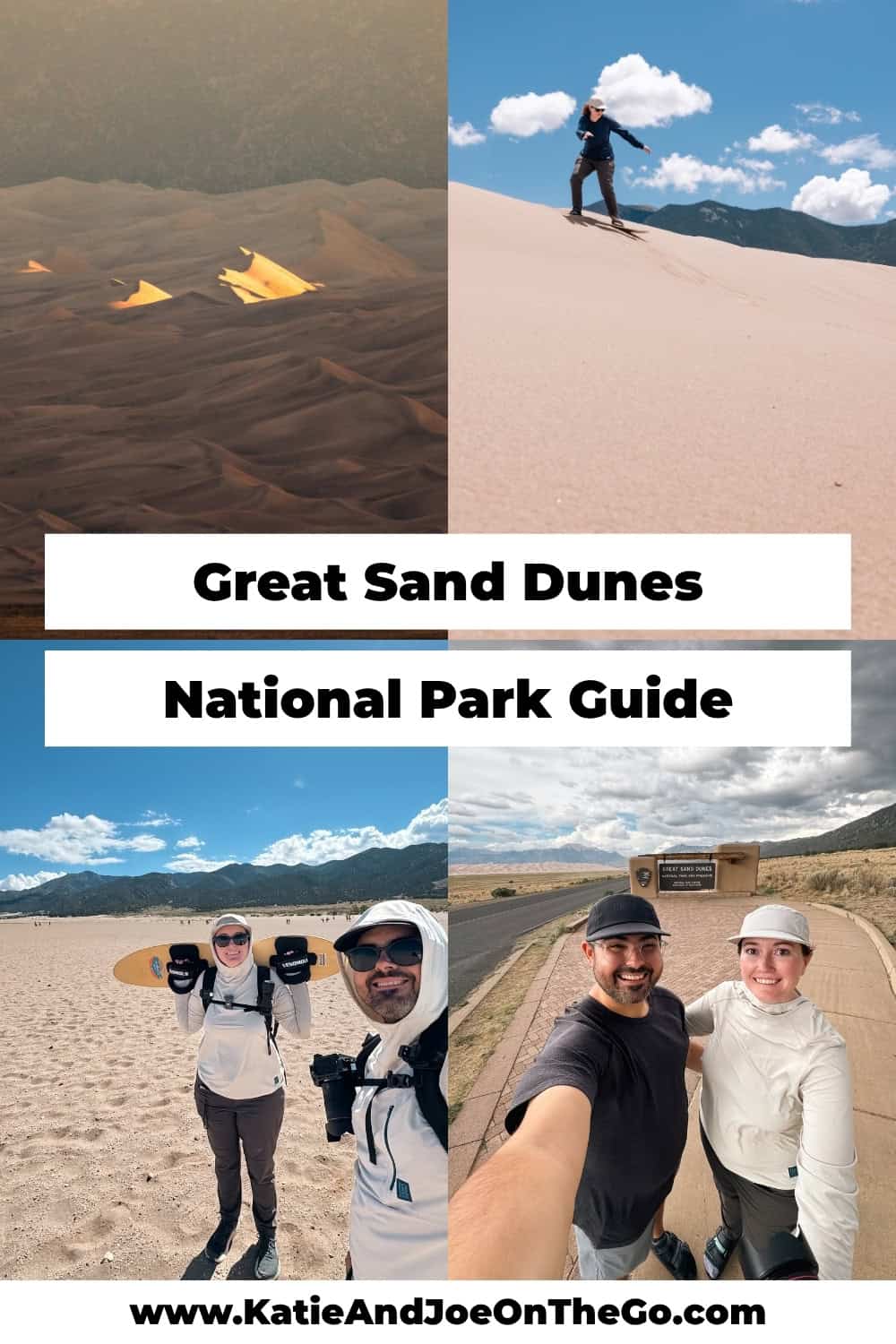
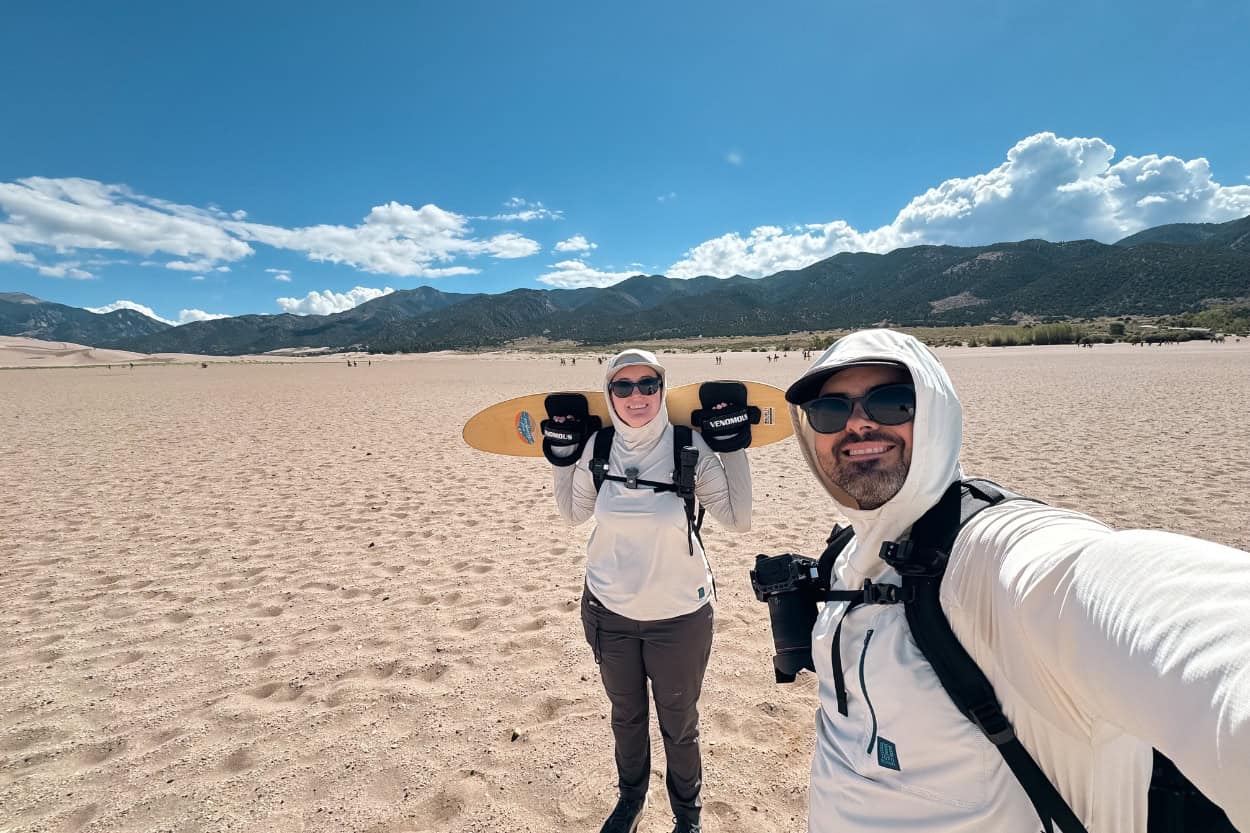
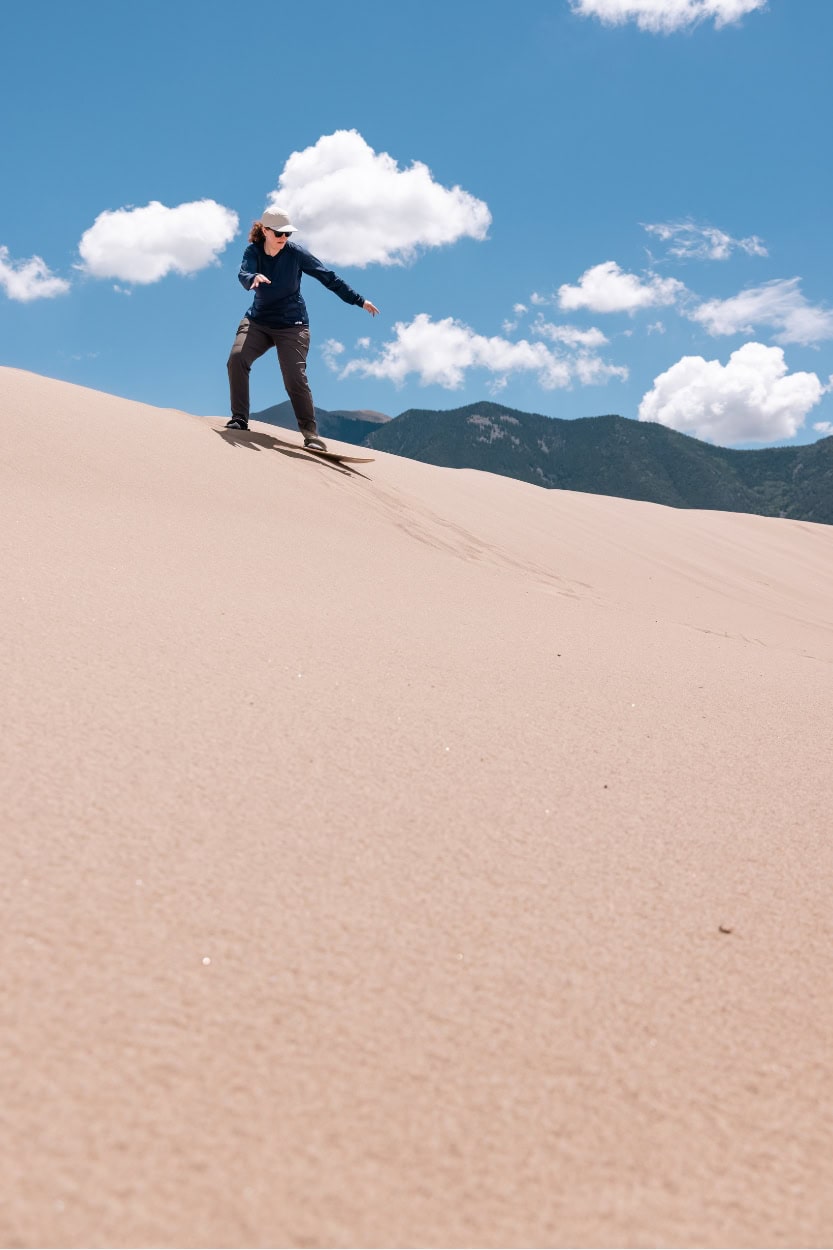
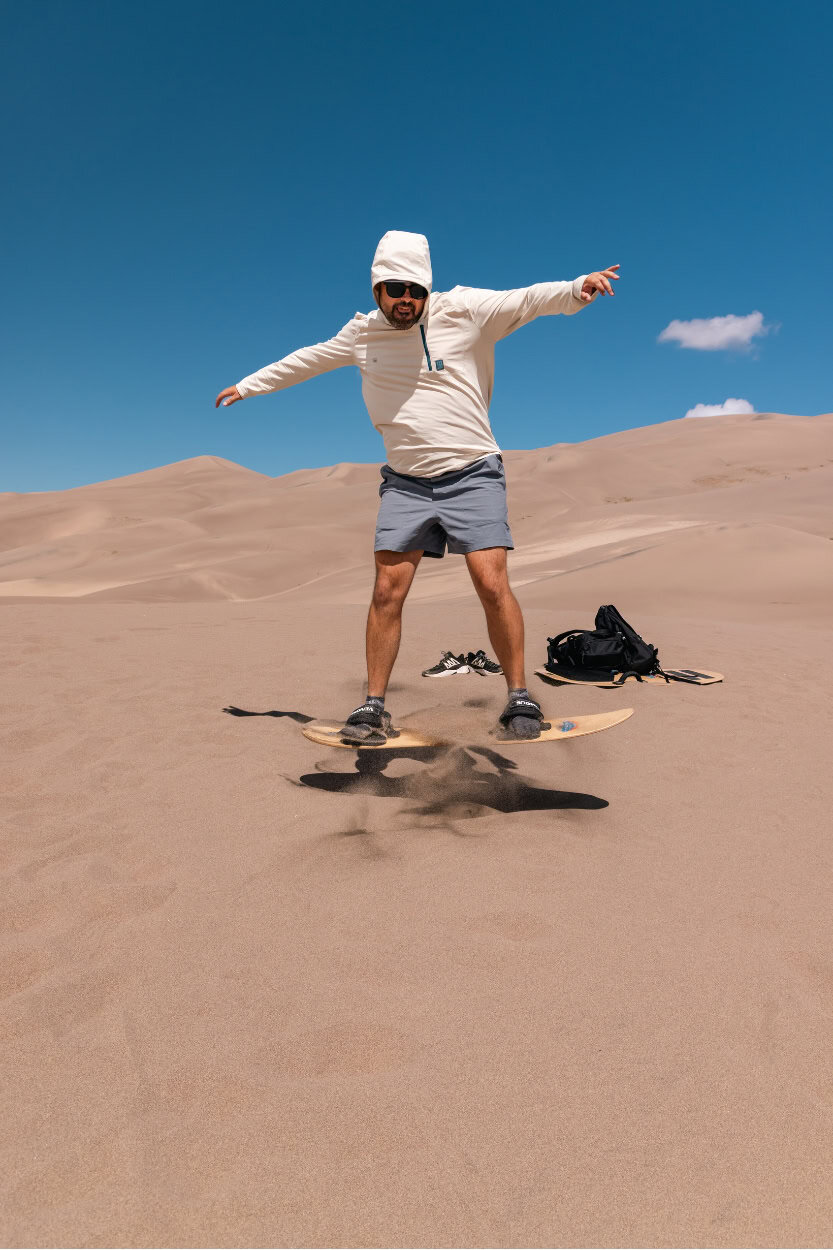
Sandboarding is the main draw at Great Sand Dunes National Park, and it’s harder than it looks. The sand gets faster and easier to ride once it warms up in the afternoon, and waxing your board helps too. We found out that waxing our board between every run helped us keep the momentum up tremendously.
We tried both a knee board and a stand-up board ourselves. The knee board was easier to descend but hard to turn. Meanwhile, outside of a few runs we barely got a few feet on the stand-up board before falling.
While it seems scary, finding a steep dune will help you gain the momentum needed to actually sled down.
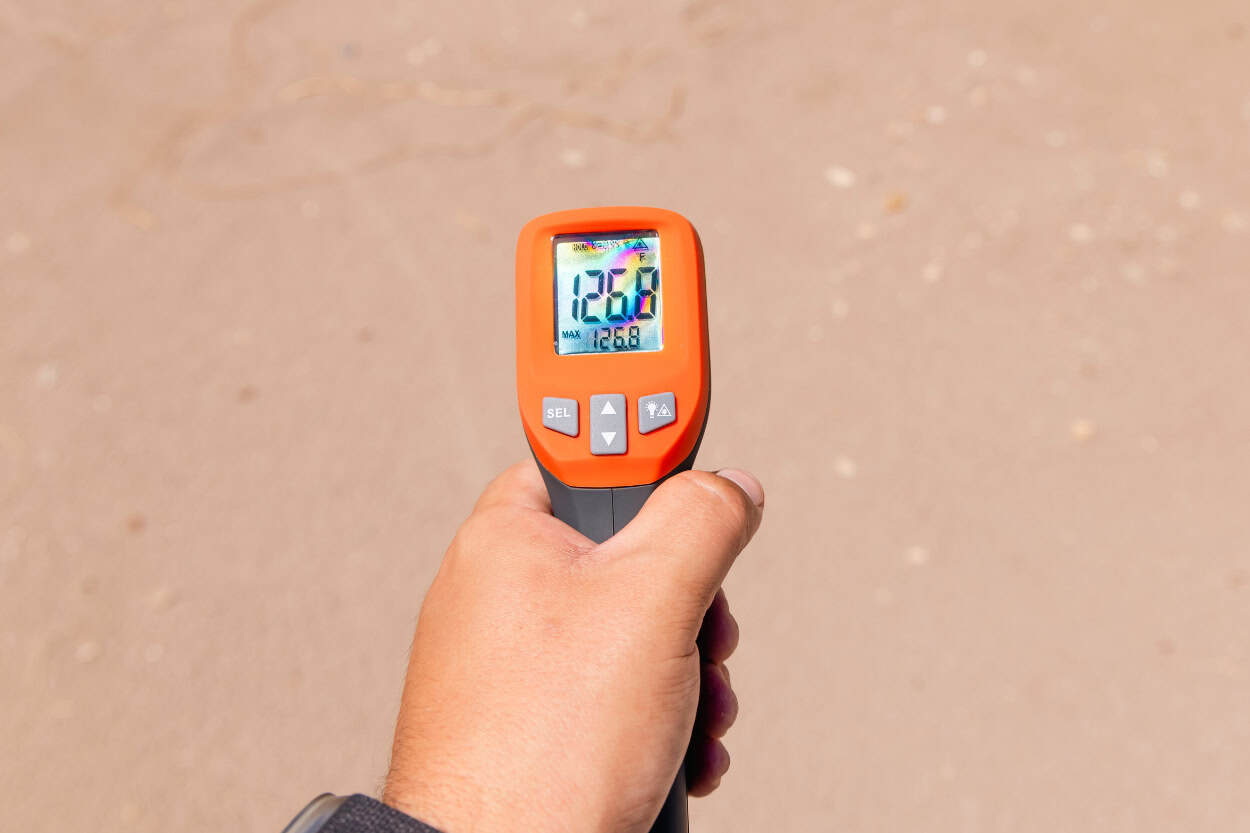
Sand temperatures can reach up to 150 degrees in peak summer. During our visit, we measured it above 125+ degrees more than once, even on a cloudy day.
Once you’re finished sandboarding, there are outdoor changing rooms and outdoor showers near the picnic parking lot. While not perfect, we were able to get the majority of sand off of us before getting back in our car.
Boards and sleds aren’t available to rent inside the park itself. Instead, a handful of outfitters near the entrance rent them by the day. We’ll share exactly where in the Good to Know / FAQ section below.
Wildlife You Might See
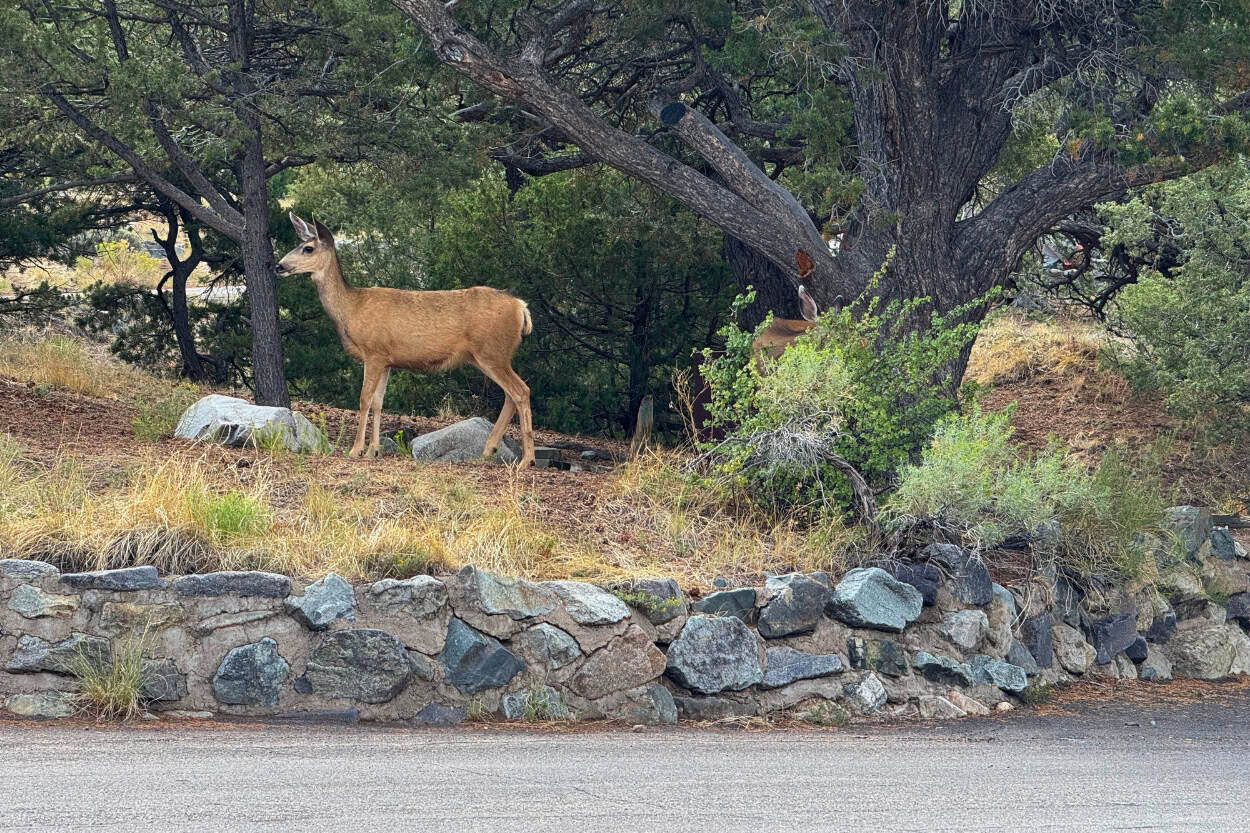
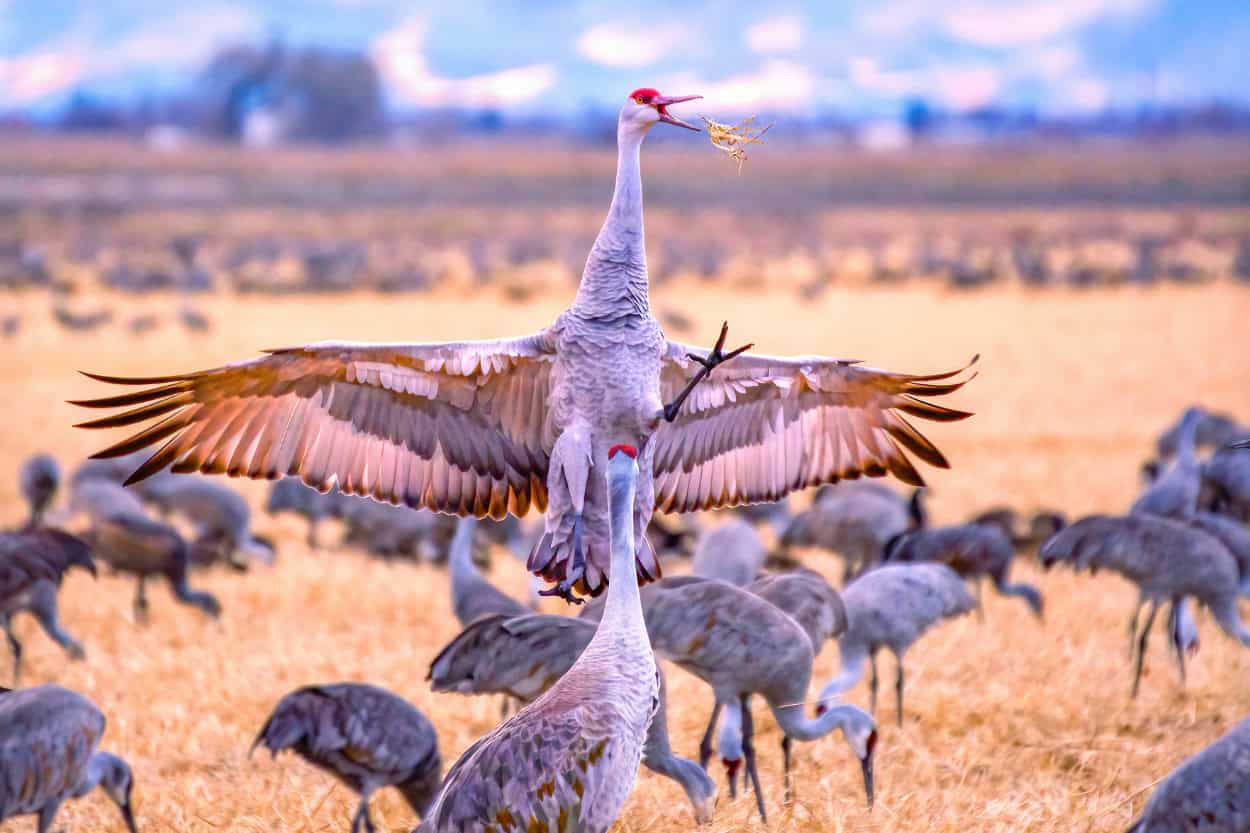
Great Sand Dunes National Park is home to more wildlife than you’d expect from a desert landscape. Pronghorn graze the grasslands at sunrise, and the park hosts nine species of owls. Elk, bighorn sheep, and even black bears also live within park boundaries, though sightings are less common.
We saw a small group of deer walking through the Pinyon Flats Campground on our last morning. Reminder, if you see a wild animal to not approach it and definitely do feed it.
What You Should Do If You Don’t Want to Get Sandy
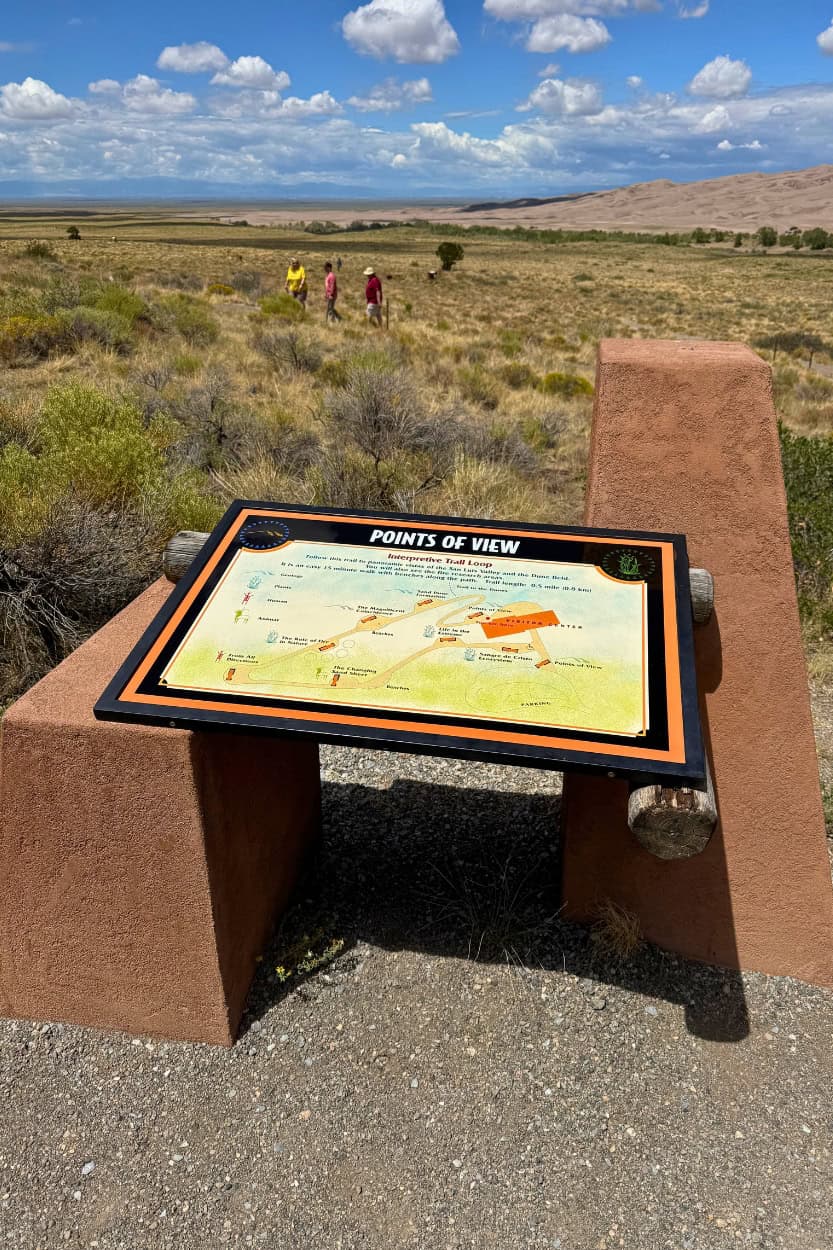
Sandboarding isn’t for everyone, and Great Sand Dunes National Park has plenty to offer beyond it. The Montville Nature Loop Trail is an easy, half-mile hike through the foothills. It’s a great option if you’re visiting during the hottest part of summer as the trees provide a good amount of shade.
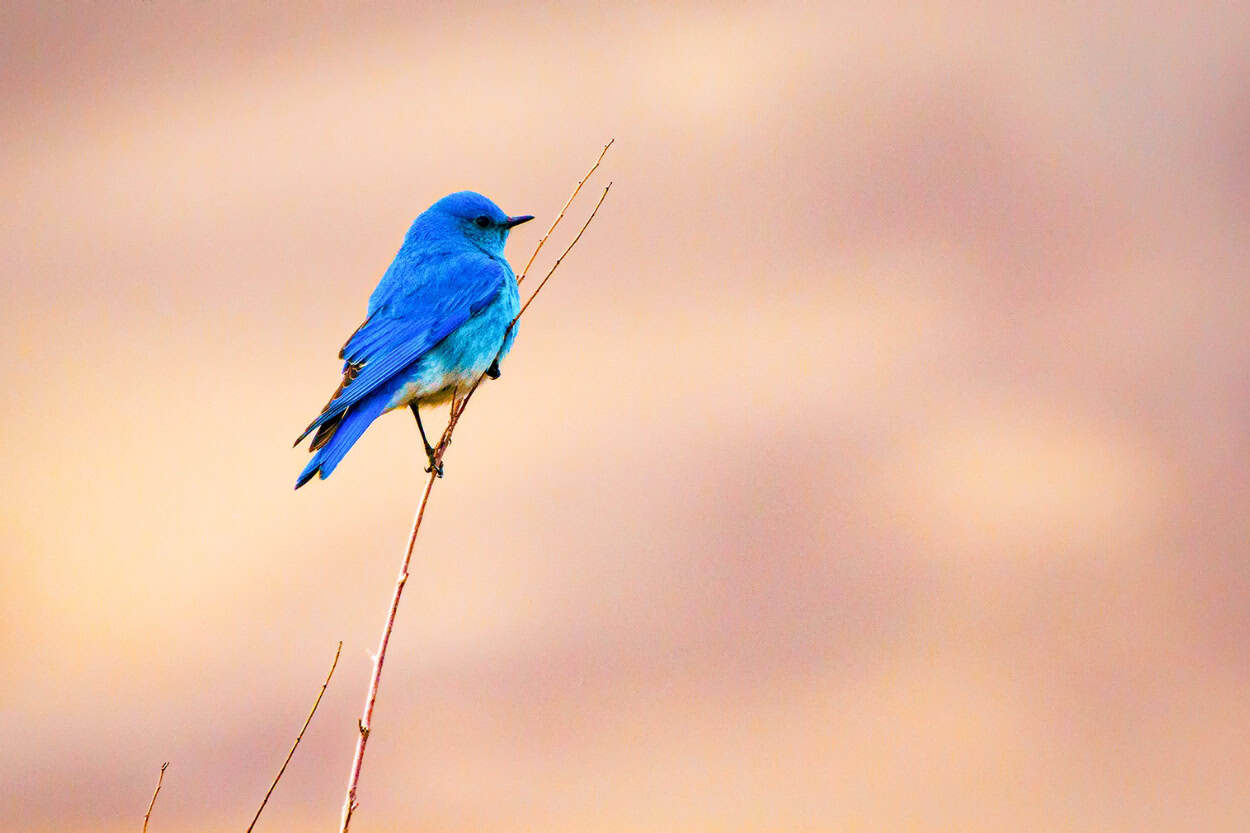
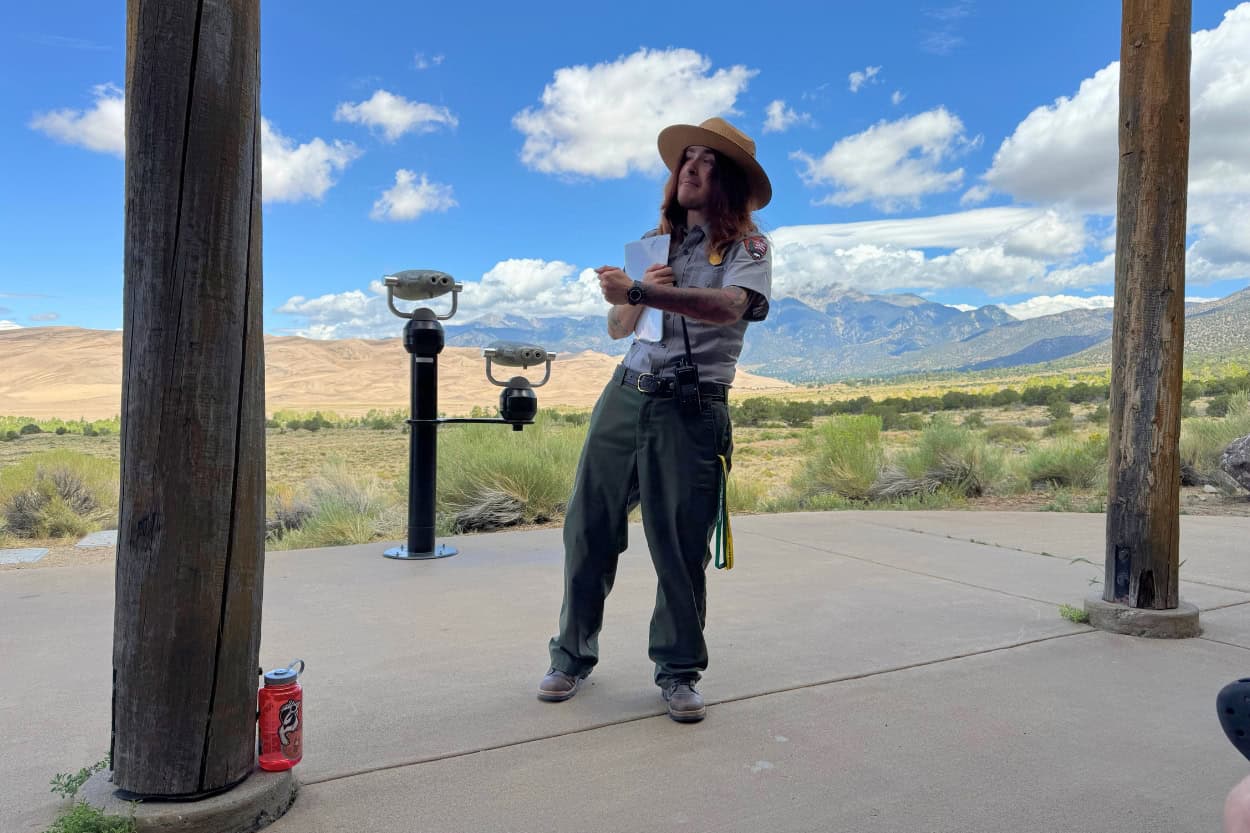
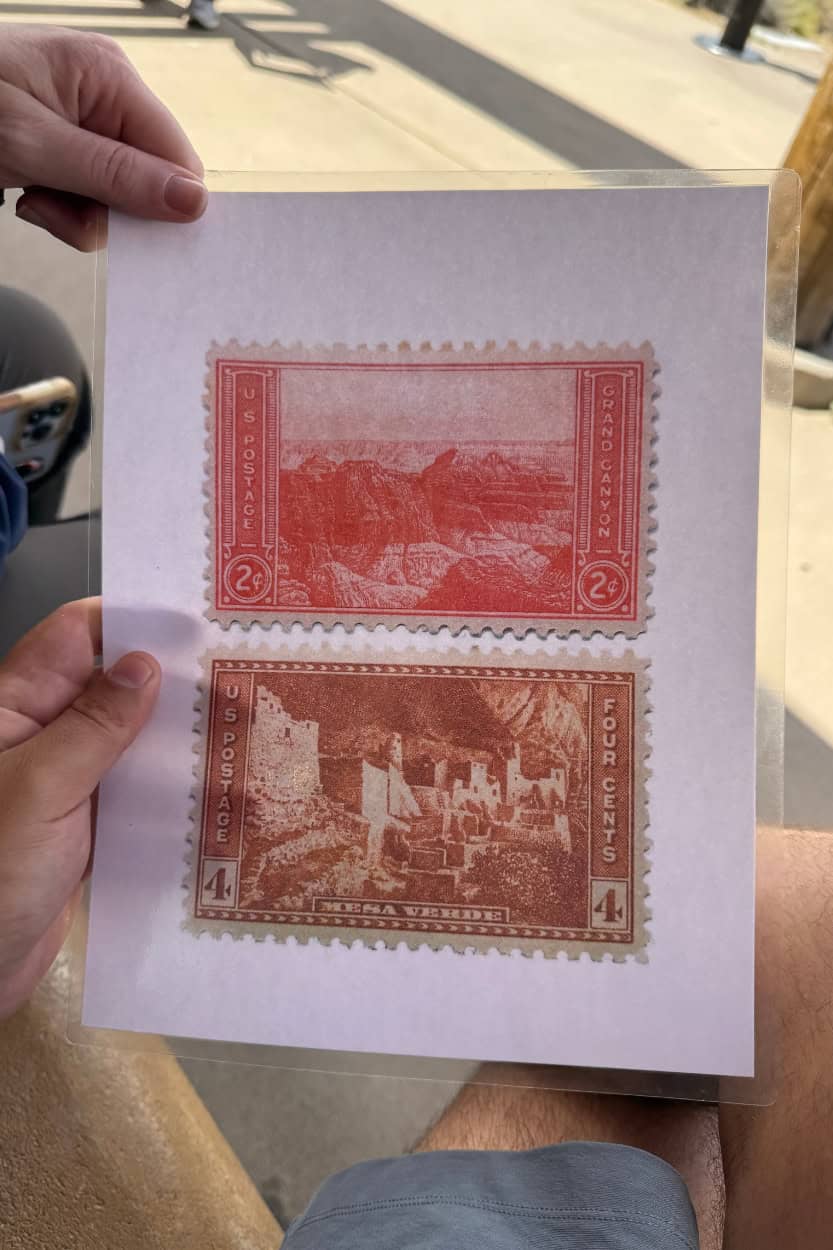
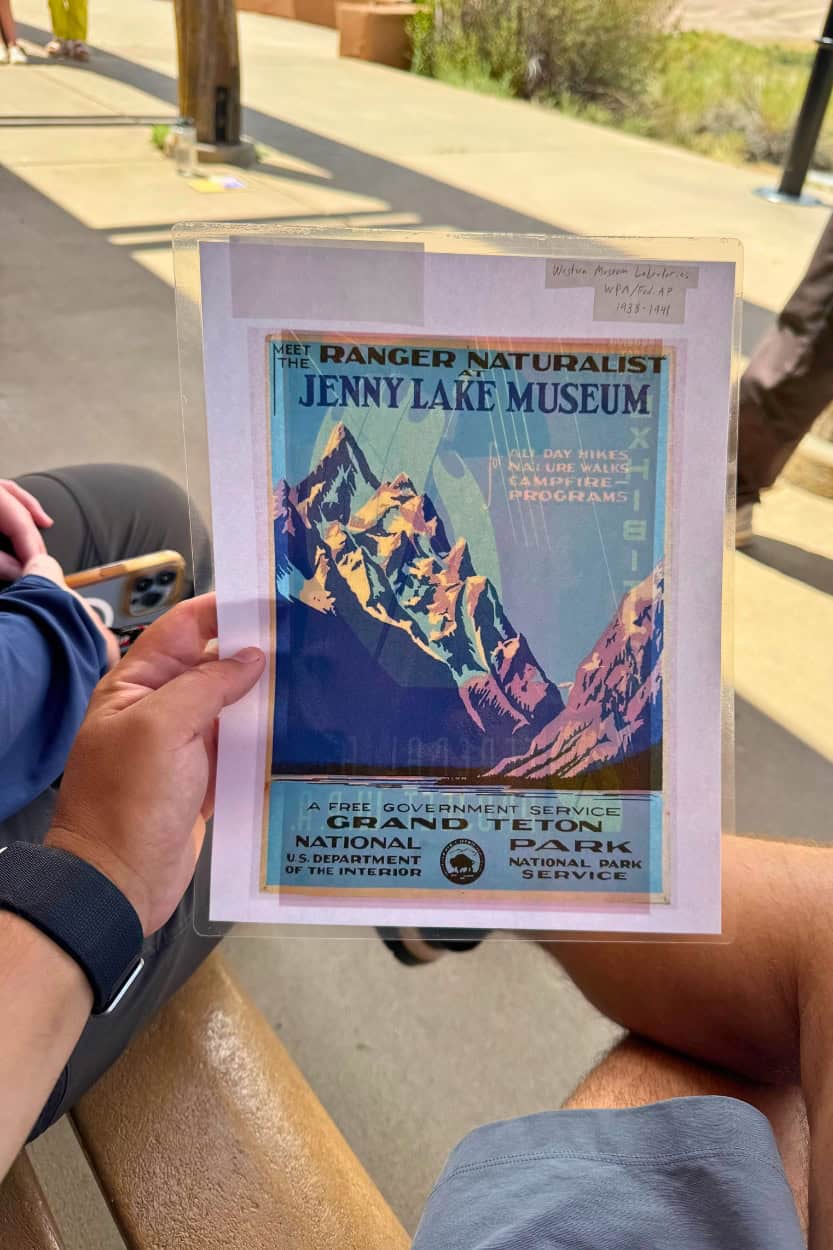
Ranger talks are another good option. We caught one on bluebirds, and how their color comes from feather structure rather than pigment. We also caught one on the history of national park signage and branding. Both ran right at the visitor center, no sand required. Get to you Ranger Talk early as there are not a lot of benches available for seating.
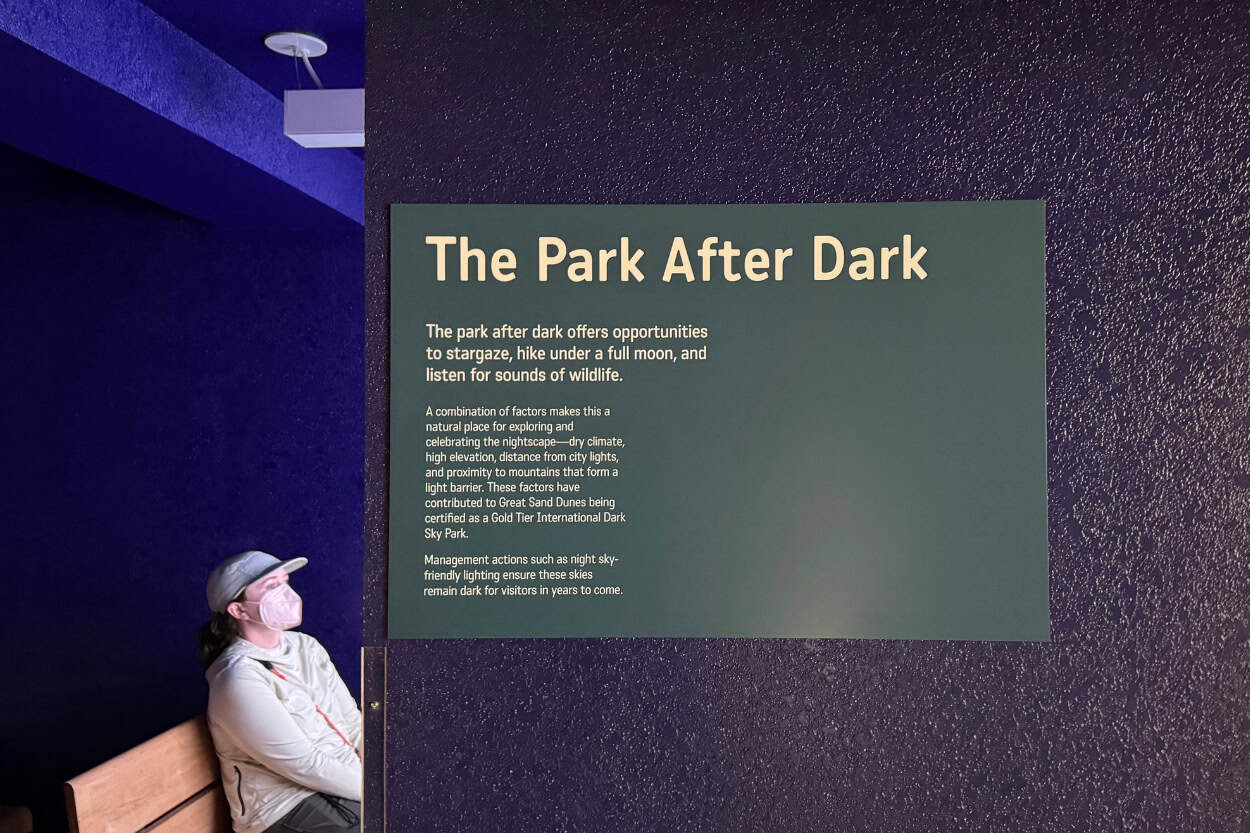
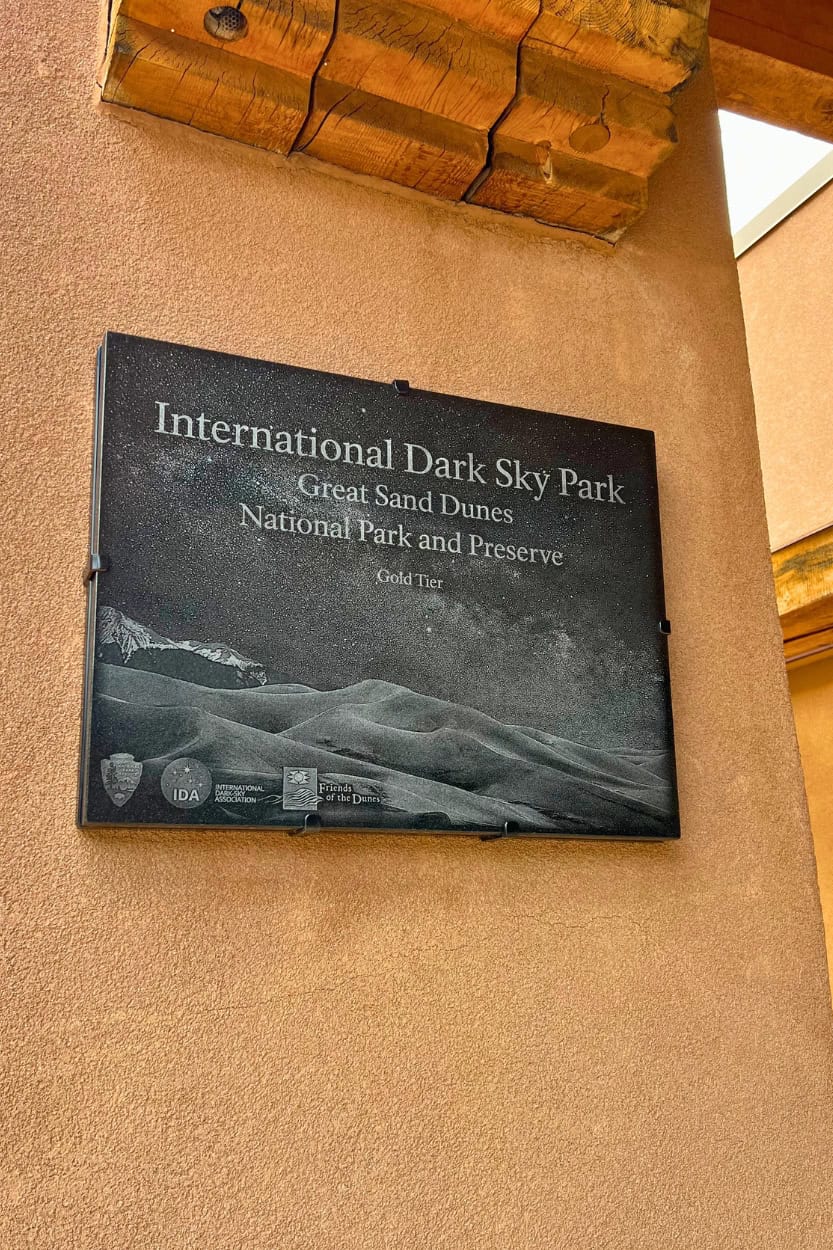
The park is also an International Dark Sky Park, so stargazing is worth sticking around for after sunset. You can view the stars from the back deck of the visitor center.
Visitor Centers Inside the Park
Great Sand Dunes National Park has just one visitor center, located near the main entrance. The exact address is 11999 CO-150, Mosca, CO 81146, here’s a link to it on google maps.
Inside, you’ll find a short park film and exhibits on the park’s dark sky program and local wildlife. There’s also rotating artwork from local artists.
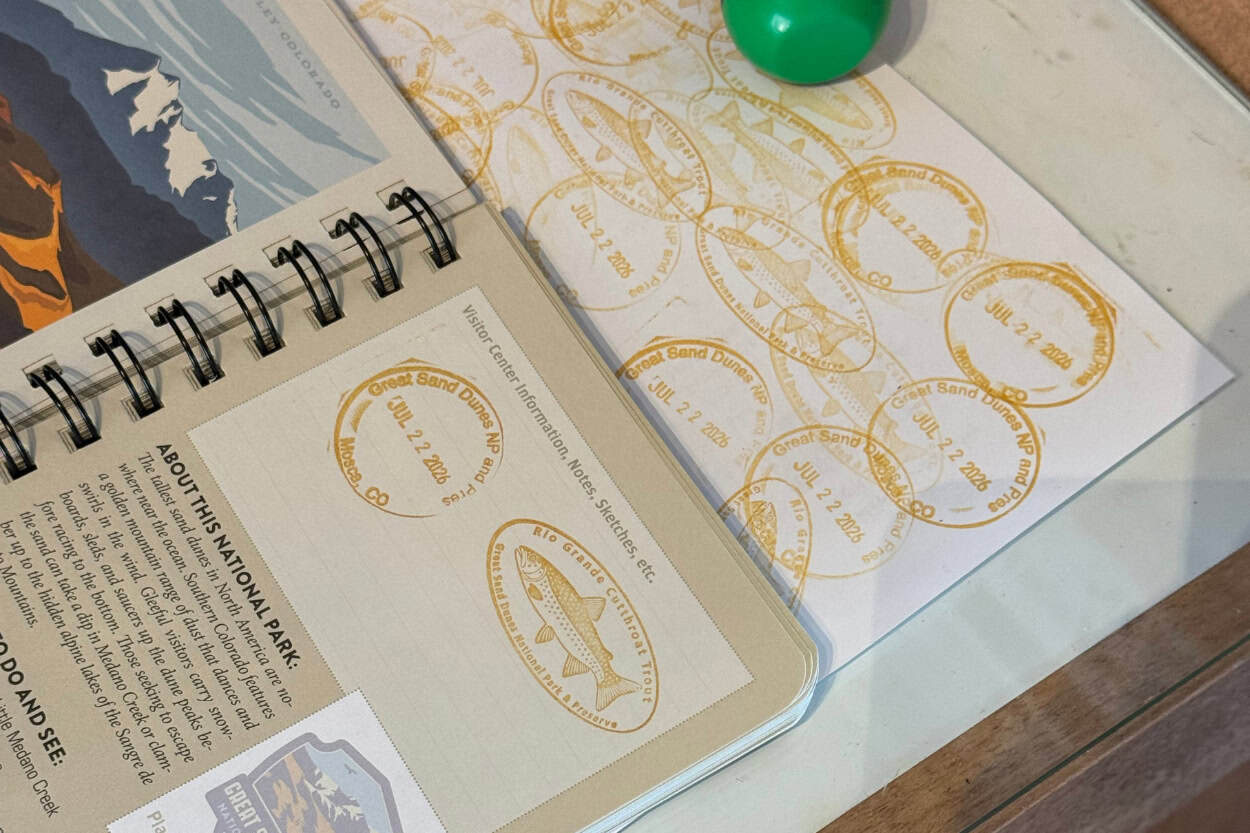
There’s also a gift shop where we picked up postcards and signed up as Park Protectors. That $25 membership supports the Western National Parks Association and comes with a 10% discount in park stores. Don’t forget to get your National Park Passport book stamped here too.
1 Day Itinerary at Great Sand Dunes National Park
If you only have one day at Great Sand Dunes National Park, timing matters. Arrive early, ideally before 9 a.m., so you can sandboard before the sand heats up.
Pack your own lunch instead of driving back to Alamosa. The round trip alone eats up over an hour, time you’d rather spend in the park.
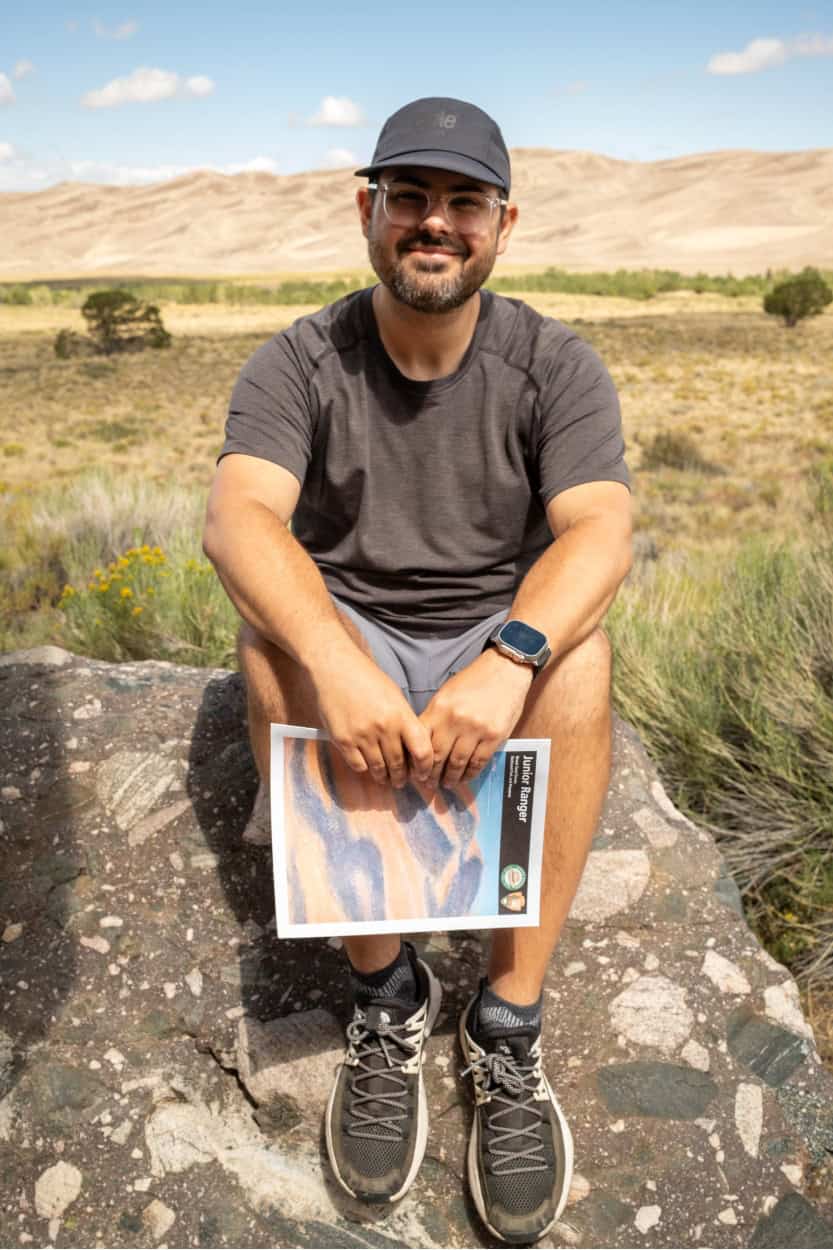
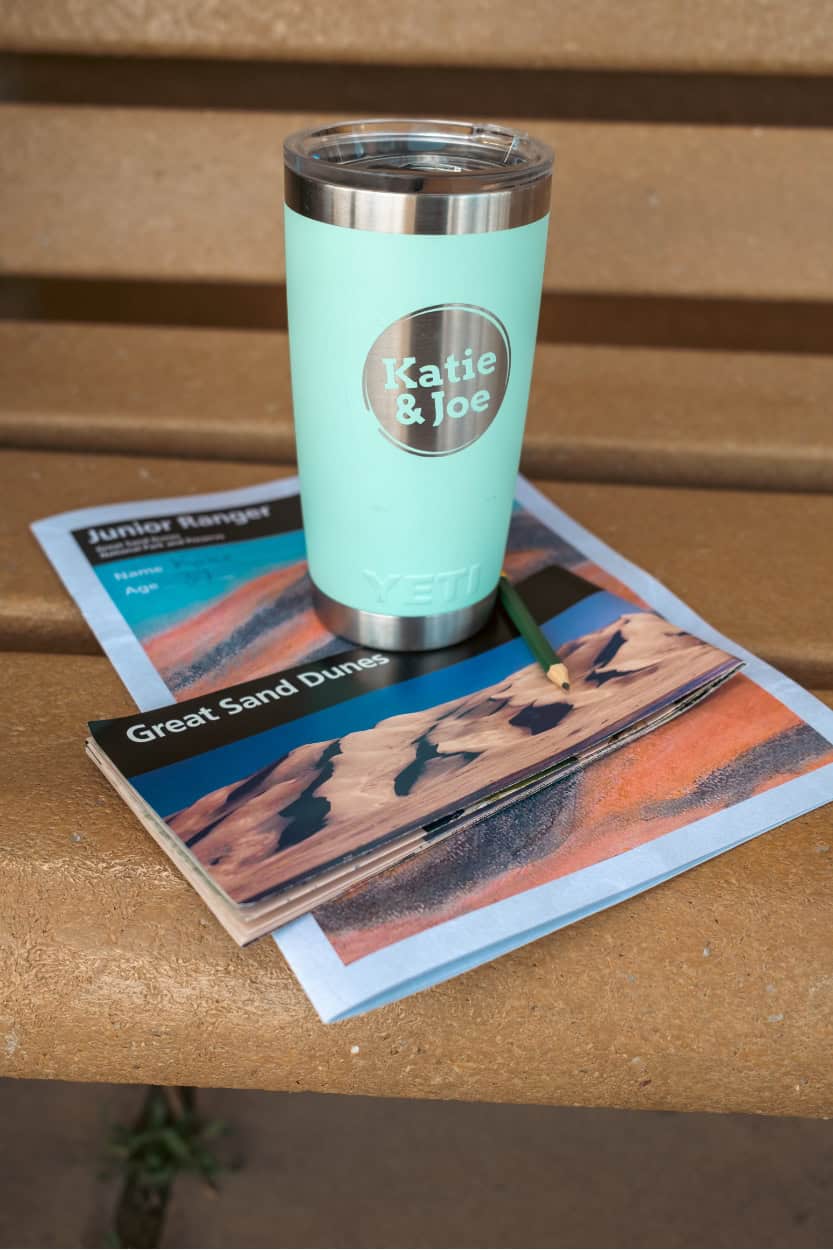
From there, head to the visitor center for the park film, exhibits, and a passport stamp. The Junior Ranger program is a must, even for adults. It’s a fun, easy way to learn more about the park.
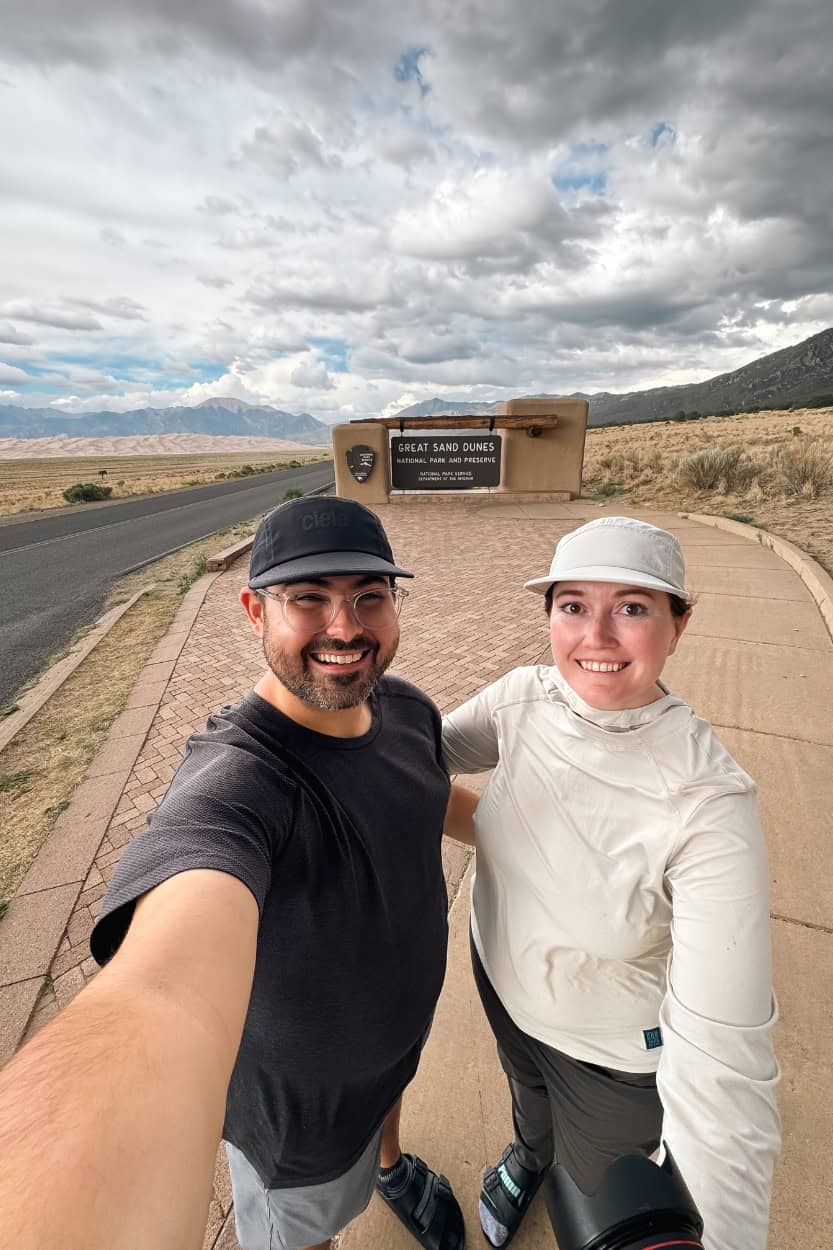
In the afternoon, an easy hike like the Montville Nature Loop Trail or a hike out to the base of the dunes. Cap off your day with a photo in front of the park sign before heading to Alamosa for a great dinner (recommendations below).
2 Day Itinerary At Great Sand Dunes National Park
With two days, you can slow down and camp overnight instead of rushing back to Alamosa. Spend day one sandboarding and exploring the visitor center. Then set up camp at Pinyon Flats Campground (book before you get there on recreation.org) for the night.
On day two, get up early for a second round on the dunes while the sand is still cool. Mosca Pass Trail starts right near the visitor center, while Zapata Falls Trail sits just south of the park. Both are worth exploring if you want a break from sand. The falls especially are a nice treat if the heat starts to get to you.
Check the day’s ranger talk schedule too, since topics change daily. They often cover the park’s wildlife, geology, or dark sky program.
Medano Pass Primitive Road
For a different kind of adventure, Medano Pass Primitive Road runs 22 miles through the park’s backcountry. It requires a high-clearance 4WD vehicle (and not AWD, you can be fined for this). The route crosses Medano Creek nine times and climbs to over 10,000 feet.
We didn’t attempt this drive ourselves, but our campsite at Pinyon Flats sat right near the start of it. We don’t currently own a vehicle that could handle it. That said, it’s high on our bucket list once we add one back to our fleet.
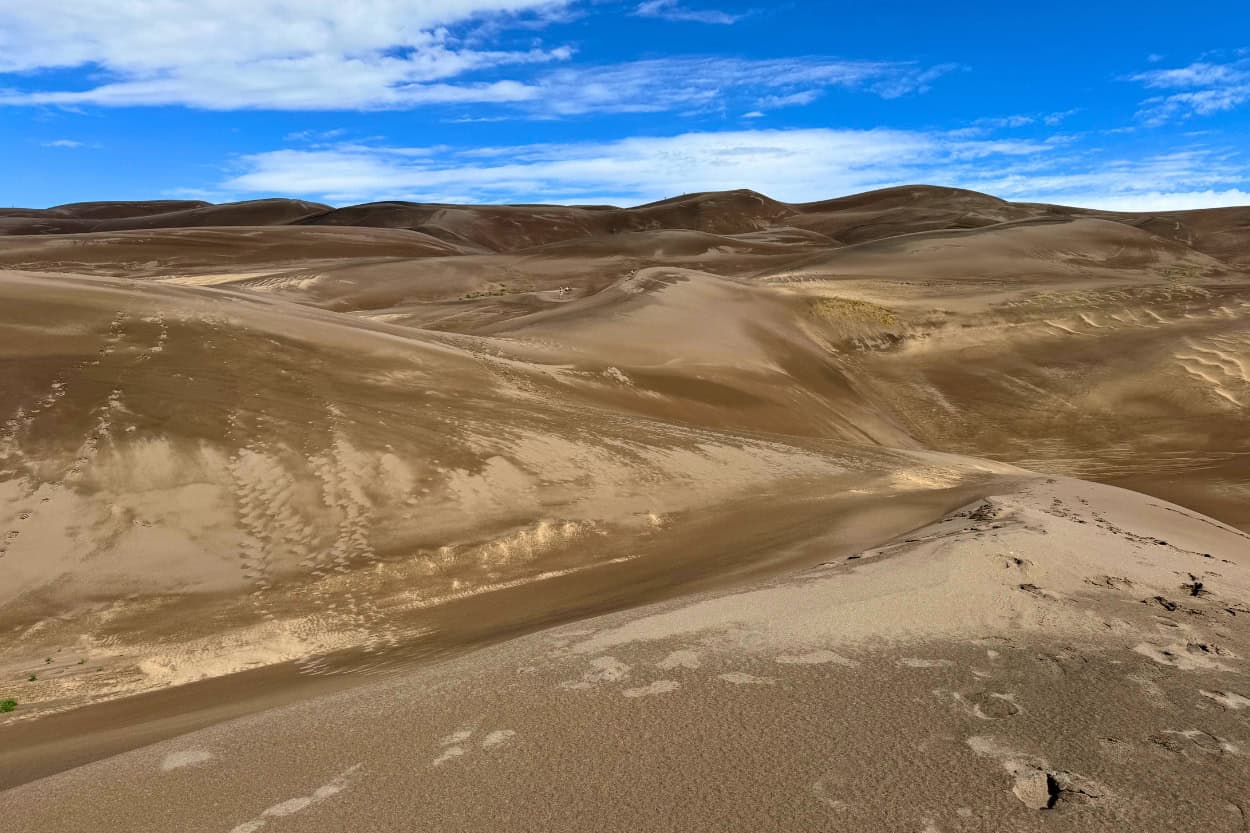
If you don’t have the right vehicle, a short walk toward the trailhead offers a view of the dunes.
Worth knowing before you go
There are a few things worth knowing before visiting Great Sand Dunes National Park. None of these are dealbreakers, but knowing them ahead of time will help you plan a better trip.
Entrance Fee and Passes at Great Sand Dunes National Park
A standard vehicle pass costs $25 and is valid for 7 days. If you’re on a motorcycle, it drops to $20. Visitors arriving on foot or by bike pay $15 per person.
If you’re visiting more than a couple of parks this year, the America the Beautiful Pass is worth it. It costs $80 and covers entrance to every national park for a full year.
Park Hours
Great Sand Dunes National Park is open 24 hours a day, year-round. That makes it one of the better parks for sunrise, sunset, or stargazing visits without worrying about gate hours.
Pet Policy
Leashed pets are allowed in some areas. That includes Pinyon Flats Campground, the Dunes Overlook Trail, and the Medano Pass Primitive Road. They’re not allowed inside the visitor center or in the backcountry dune area beyond the Point of No Return.
Keep in mind, the sand gets hot enough to burn paws in summer. Bring booties or plan around cooler parts of the day if you’re bringing a dog.
Cell Service
Cell service is spotty throughout the park, thanks to its remote location. We both have AT&T, and we only got reception near the visitor center. Outside of that, we were without service.
We do have Starlink set up in our van, which gave us wireless internet even without cell service. It’s a nice option if you need to stay connected while you’re out there.
Thunderstorm Safety
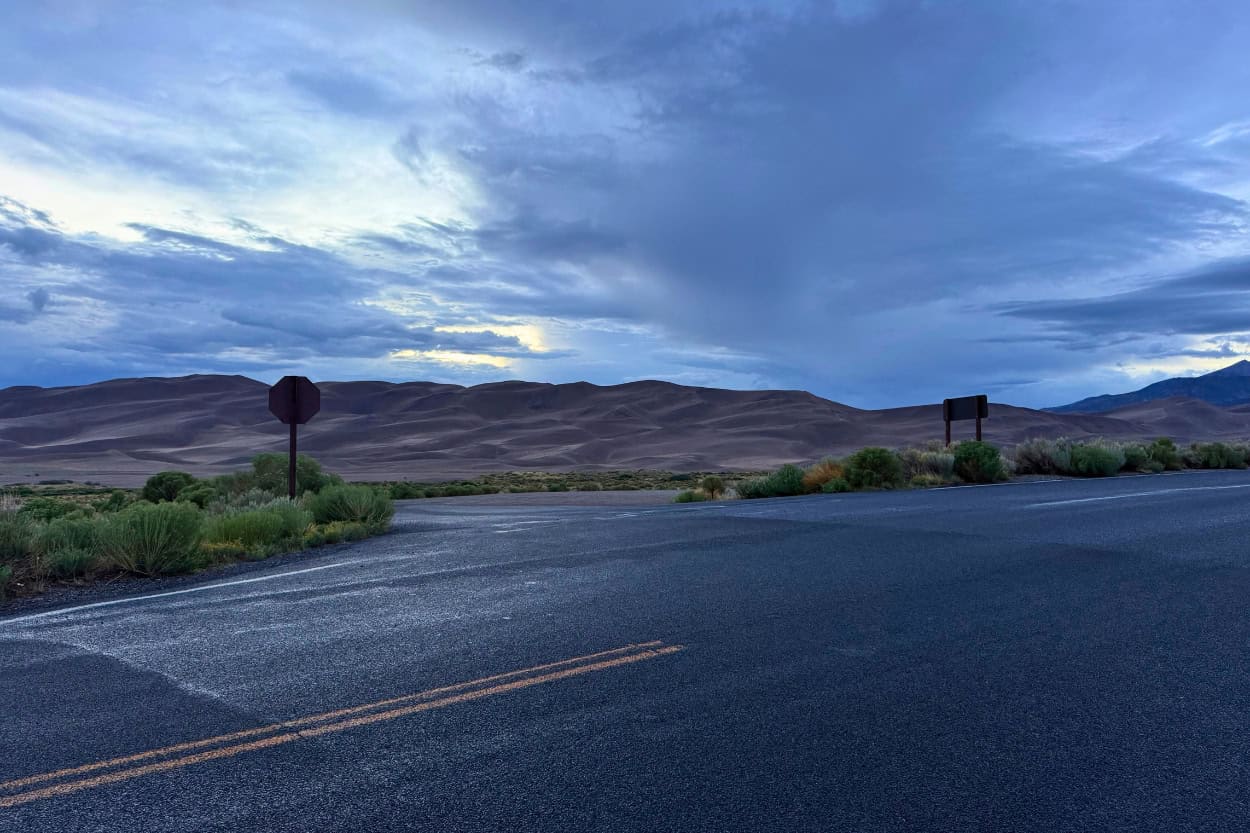
Thunderstorms are genuinely dangerous at Great Sand Dunes National Park. The dunes are the tallest thing around for miles. That makes anyone standing on them an easy target for lightning.
Storms can roll in quickly during spring, summer, and fall. Check the forecast before heading out, and get off the dunes immediately if you hear thunder.
What to Pack
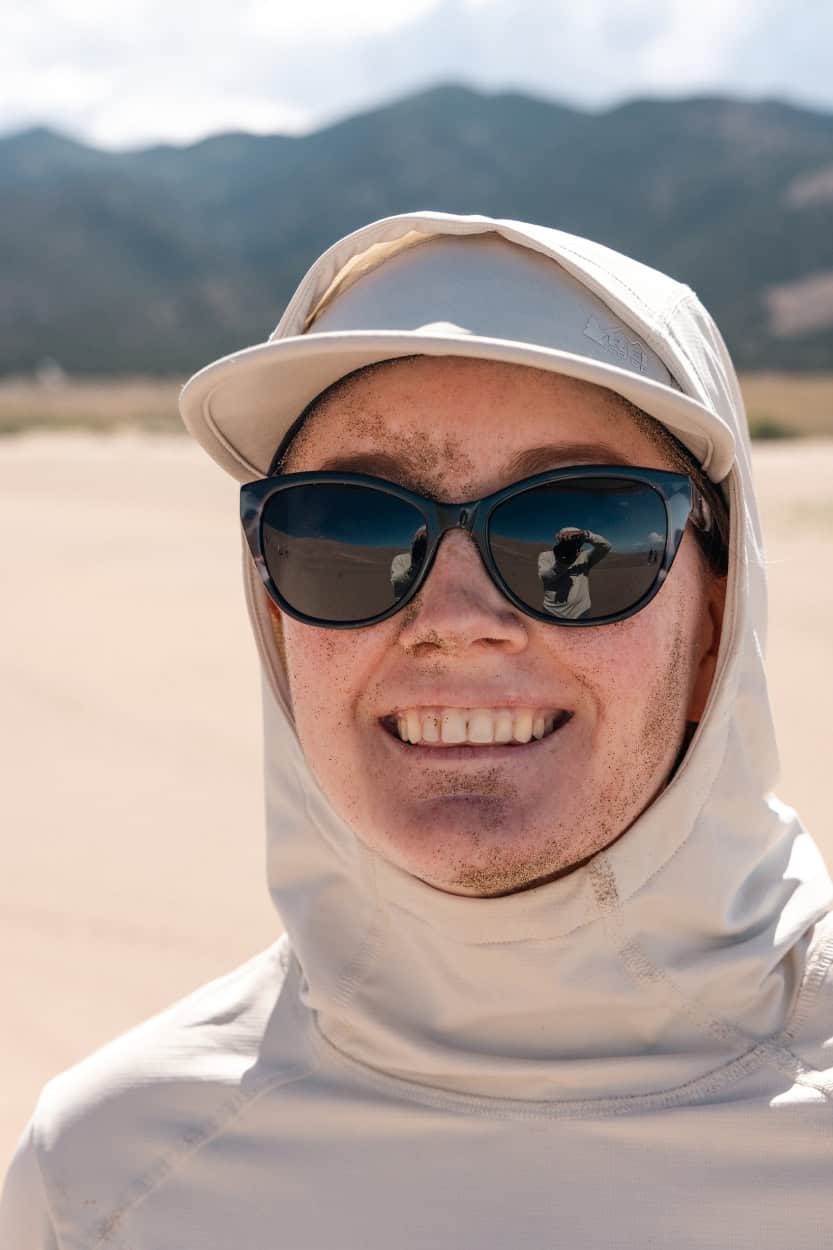
Sunscreen and a hooded sun shirt go a long way here, since there’s little shade in the dune field. Bring plenty of water too, since plastic water bottles aren’t sold inside the park. There are water fill stations inside the visitor center, so bring a refillable bottle like this one.
To protect your feet from the hot sand, Closed-toe shoes or sandals are a must. Sunglasses, sun shirts, and a bandana are also worth packing if it’s windy.
What To Pack
We put together a shoppable list on REI with the exact gear we packed for this trip, from clothing layers to the essentials we bring on every national park adventure. It’s everything we actually own and use ourselves, all in one place.
Altitude
Great Sand Dunes National Park sits at a high elevation. Elevations range from about 8,000 feet to over 13,000 feet at the highest peaks. Even Alamosa itself sits at 7,544 feet. If you’re coming from a lower elevation, give yourself time to adjust before pushing hard on the dunes.
While we’ve never personally used them, we’ve seen quite a few people use the Oxygen Boost bottles (buy here). In addition, make sure you are staying hydrated!
Where to Eat When Visiting Alamosa, Colorado
There’s no real food inside Great Sand Dunes National Park itself. The visitor center offers a small selection of light packaged snacks and drinks (think beef jerky and bottle sodas), but that’s about it. Most visitors eat in Alamosa instead, so here are a few restaurants we’d recommend after eating our way through downtown during our visit.
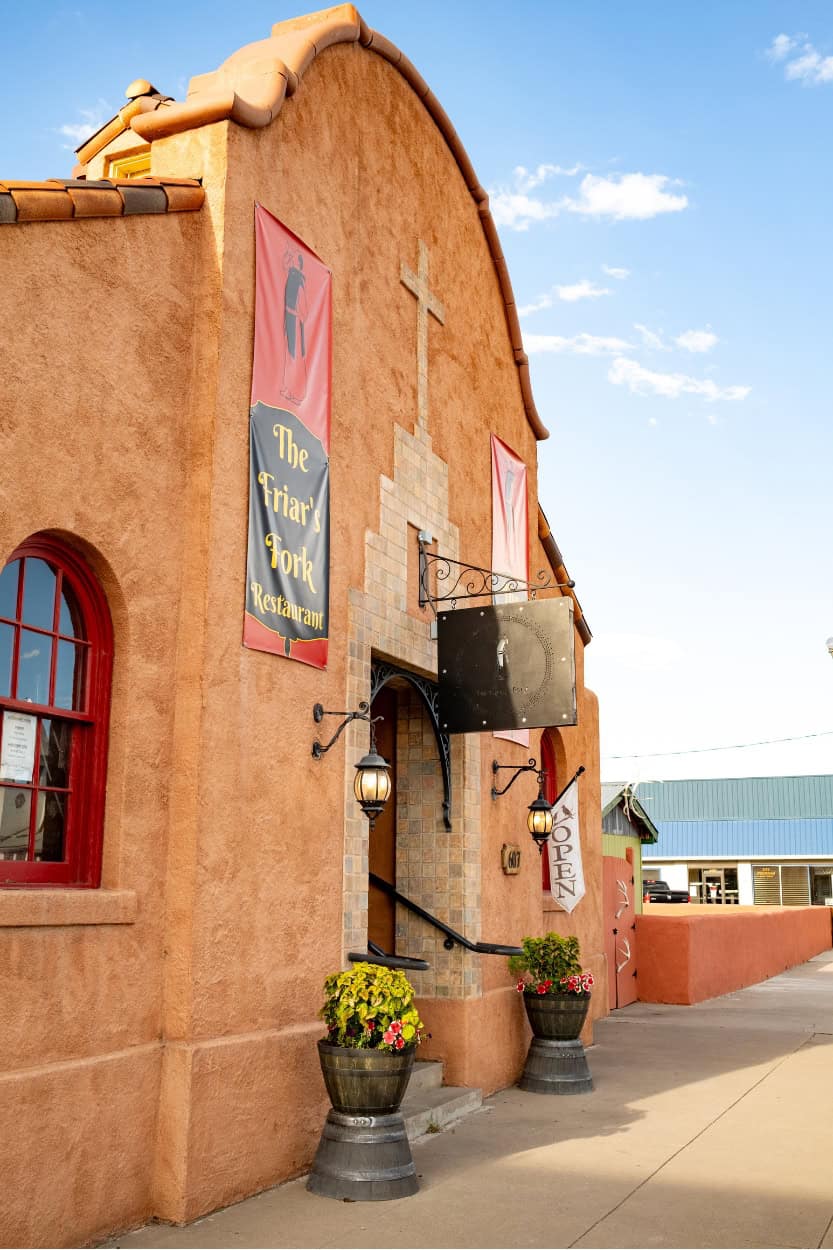





The Friar’s Fork & Sanctuary
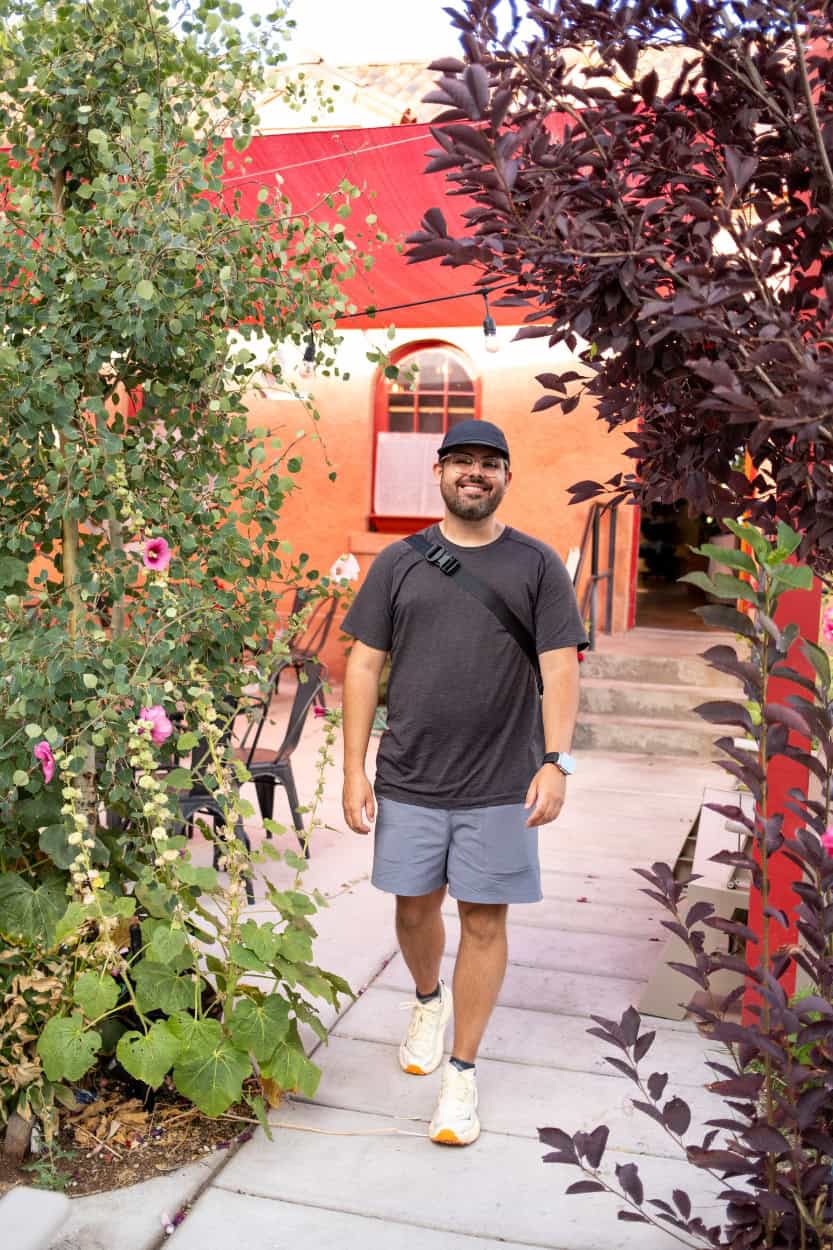
Friar’s Fork was our first dinner in Alamosa, and it set a high bar for the trip. It’s a James Beard nominated restaurant, serving Italian and Mediterranean-inspired food. The restaurant is located inside a historic church that the owners renovated and brought back to life. There’s no air conditioning inside but we sat on the covered patio, and the shade and breeze made it comfortable.
Joe ordered the duck confit: tender duck legs glazed with fig and wine sauce. It came served over mushroom ravioli and broccolini. Katie went with the Chicken Marsala.
For appetizers, we split two Aperol spritzes and a duck leg with orange marmalade sauce. We finished with a Prosecco and lemon sorbet float. It’s one of the most refreshing desserts either of us has had.
Between the two entrees, two Aperol spritzes, the duck appetizer, and the sorbet-prosecco float, our bill came to $105.17 before tip.
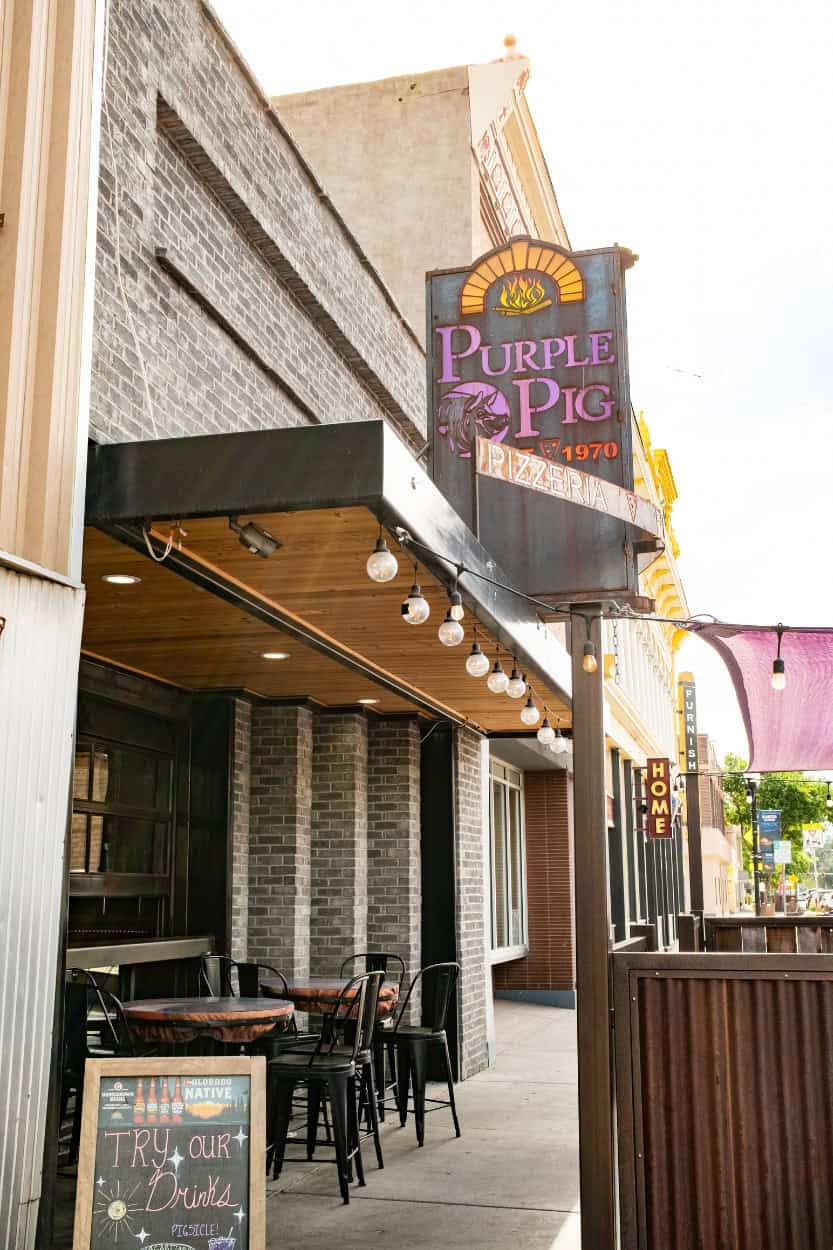




Purple Pig Pizzeria
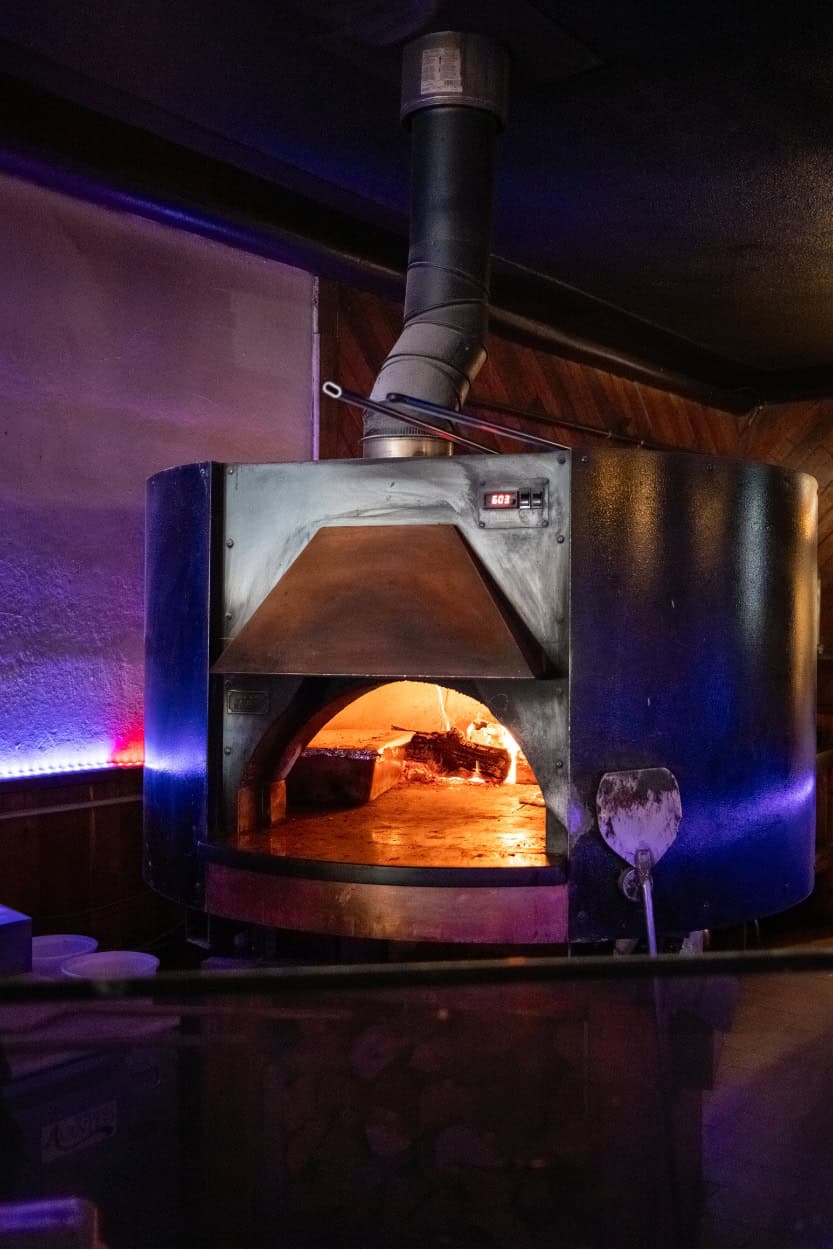
Purple Pig Pizzeria has a wood-fired oven right in the middle of the dining room. We ordered a margherita pizza, a pulled pork and peach pizza, and a four cheese pizza. Katie also got a Pigsicle, a cocktail made from a mix of different liquors that turns it purple.
We had so much food left over that we brought two full pizzas back to the van with us. We also grabbed a cannoli here, which we ended up eating a few nights later.
Between one beer, the Pigsicle, three 8-inch pizzas, and a cannoli, our total came to $66.32.

Roast Craft Coffee + Libations
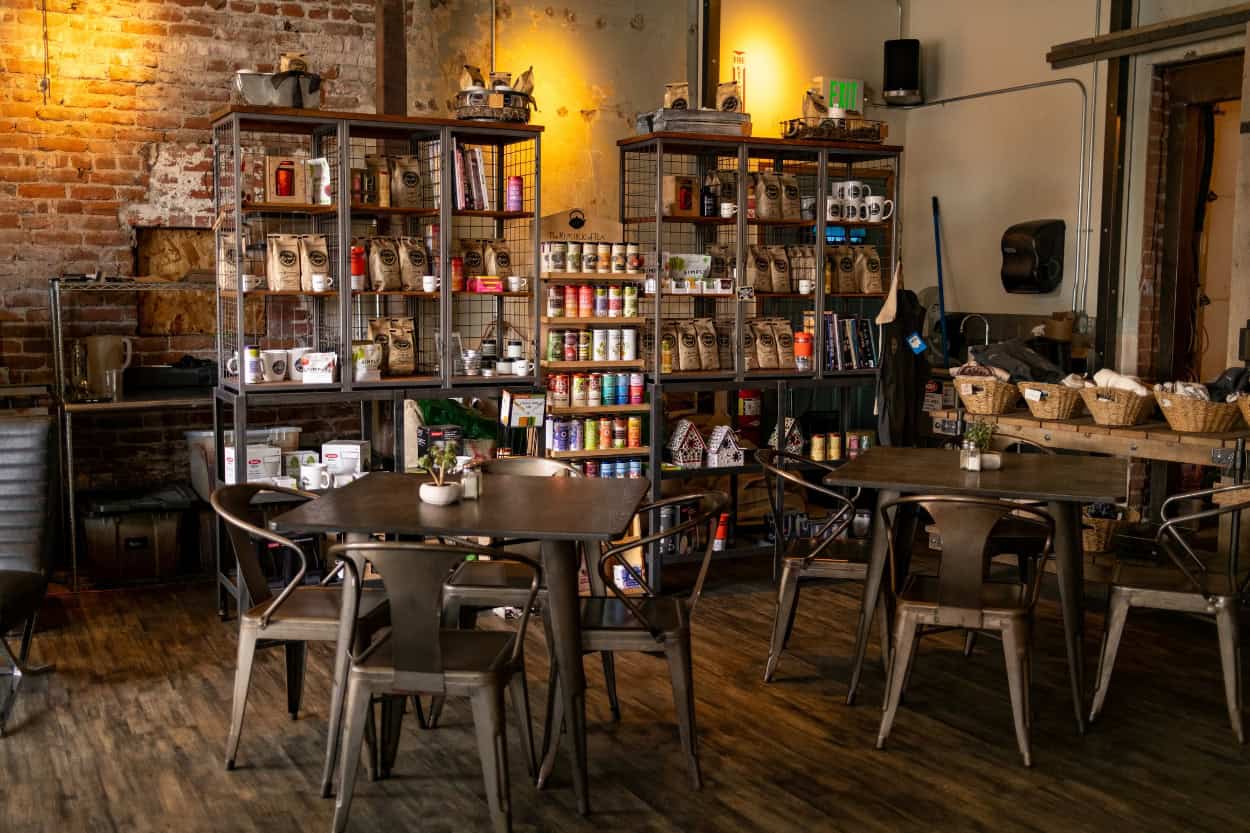
Roast Craft Coffee + Libations is part coffee shop, part brewery. It’s a great stop if you need caffeine in the morning or a beer in the afternoon. We stopped twice ourselves for a great shot of espresso.

Woody’s Q Shack
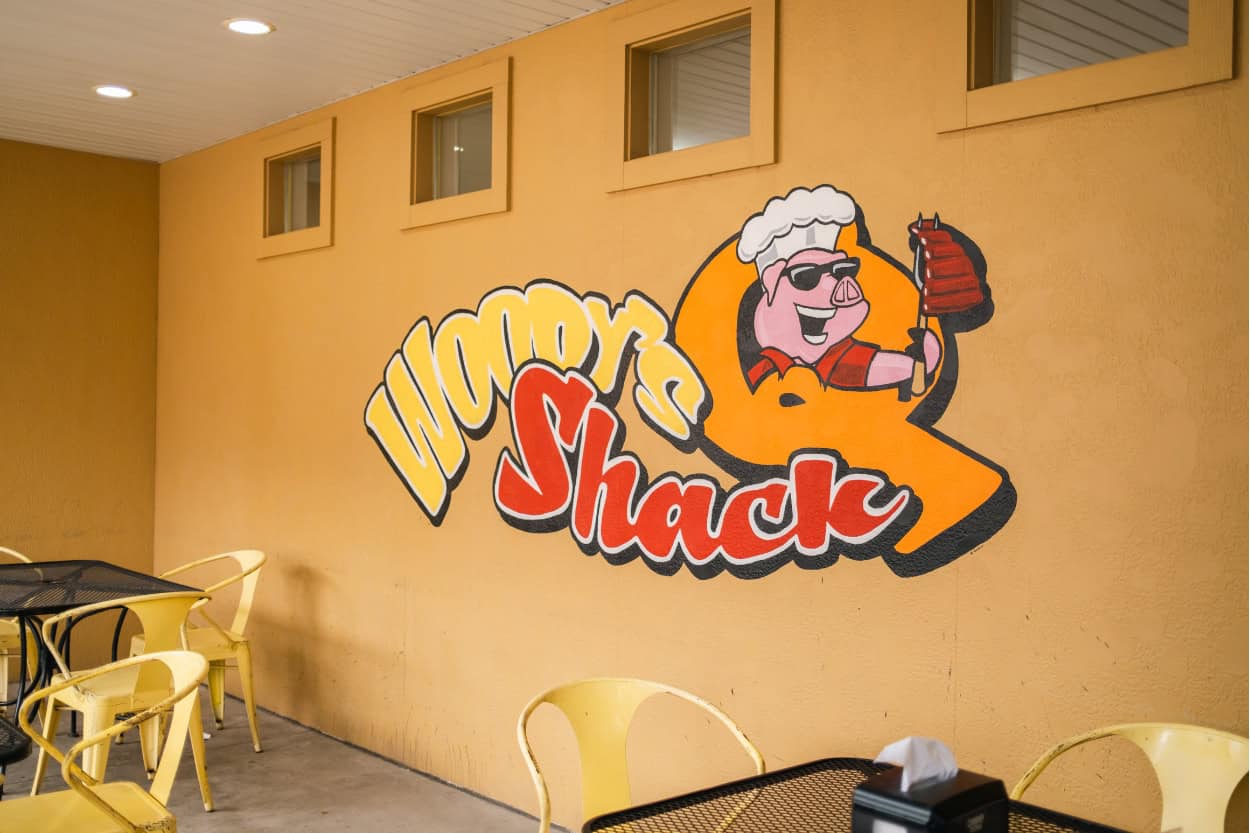
Woody’s Q Shack sits on Main Street in Alamosa, and it was our last stop before heading home. They’ve got a wall of awards and ribbons inside, so we knew we were in for some solid barbecue.
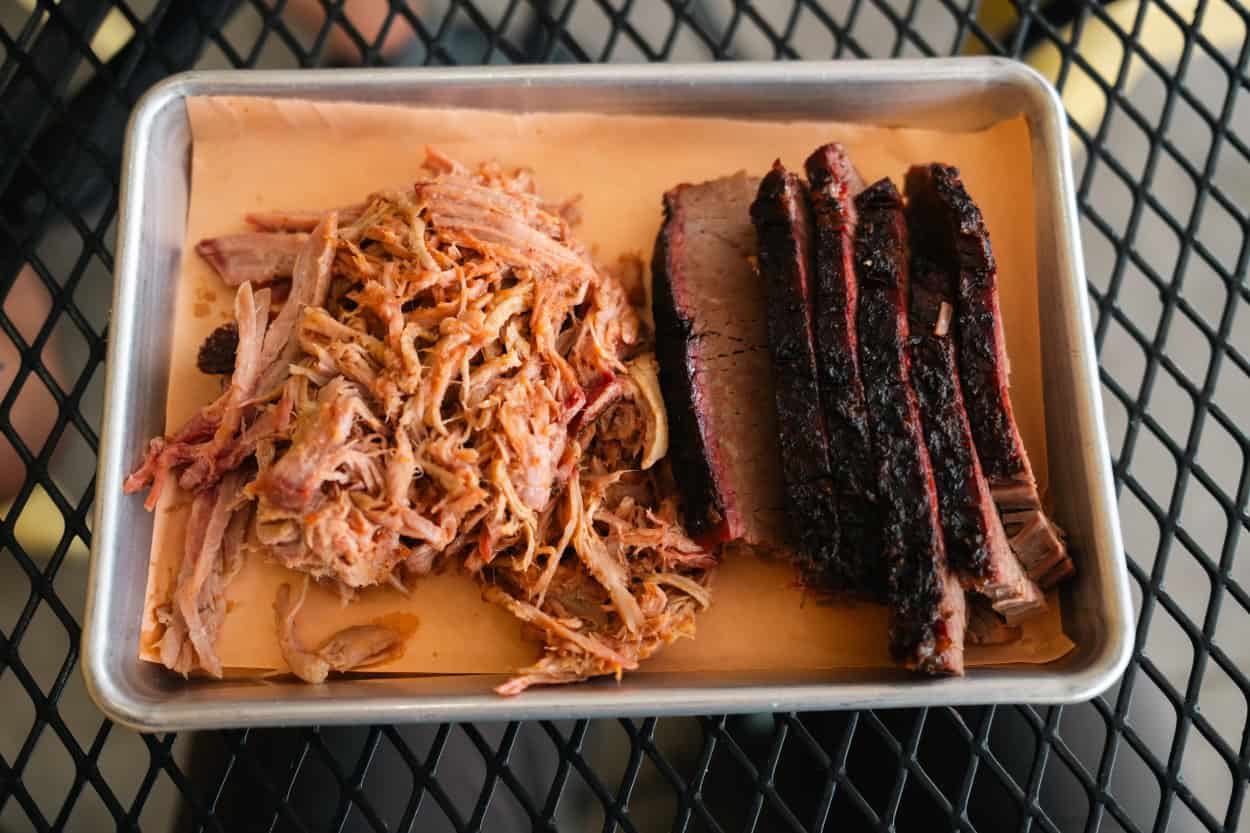
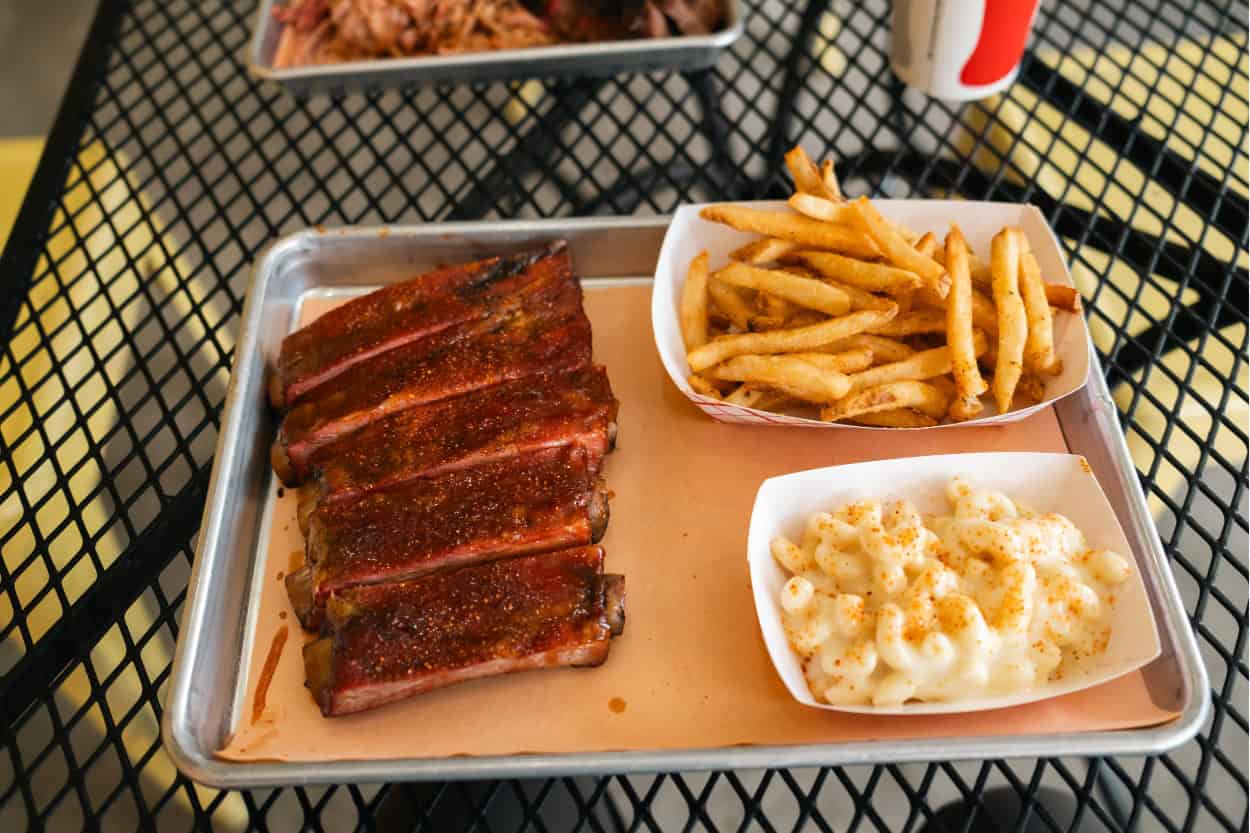
We ordered a half slab of ribs and a sampler plate with lean brisket and pulled pork. It was so good that we ordered food to go for the drive back to Denver too. That included ten wings with a dry rub, fries, mac and cheese, and of course, a banana pudding cup.
Other Places to eat in Alamosa, Colorado
We didn’t make it to every restaurant in Alamosa. Here are a few more local favorites worth checking out.
Lindo Jalisco
A family-owned Mexican restaurant with recipes passed down through generations. It’s closed on Tuesdays, so plan around that if you want to try it.
San Luis Valley Brewing Company
Housed in a former bank. The old vault door is still on display behind the bar. They brew with locally sourced grains and hops, and their food menu leans American. Around the corner, the same owners run The ROAST (which we went to twice for coffee).
Mammoth Spud Cafe
Is one of the newer spots in town. It’s part cafe, part gift shop, and part homemade fudge shop. It’s known for enormous loaded baked potatoes made with locally grown potatoes.
While you’re at it, try the local green chile wherever you can. It’s a point of pride in the San Luis Valley. Most restaurants in town have their own version worth sampling.
Where to stay when visiting Great Sand Dunes National Park and Alamosa, Colorado?
There aren’t many places to stay when visiting Great Sand Dunes National Park. That said, we’ve put together options to fit almost any style of trip. Below, you’ll find camping, hotels, and VRBO options. We’re also including something a little more fun: a vehicle that doubles as a place to sleep.
Camping
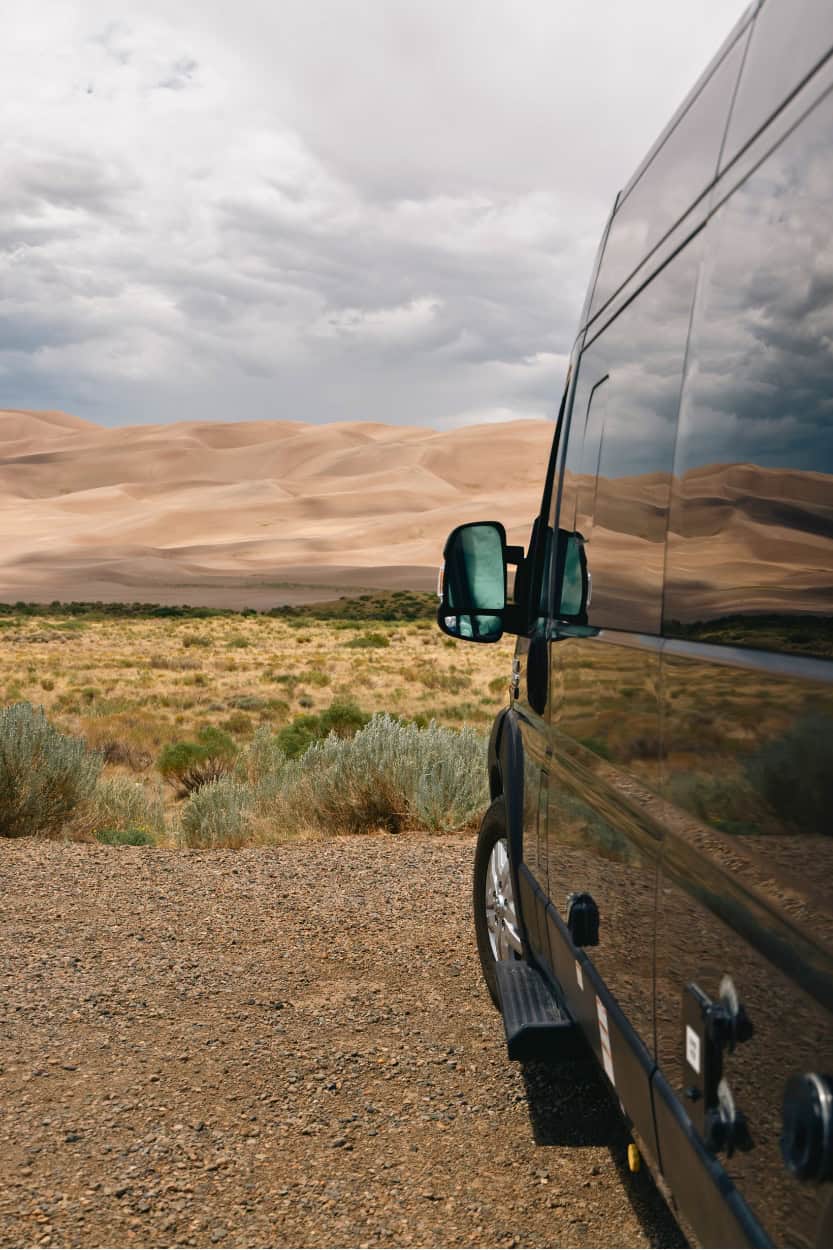
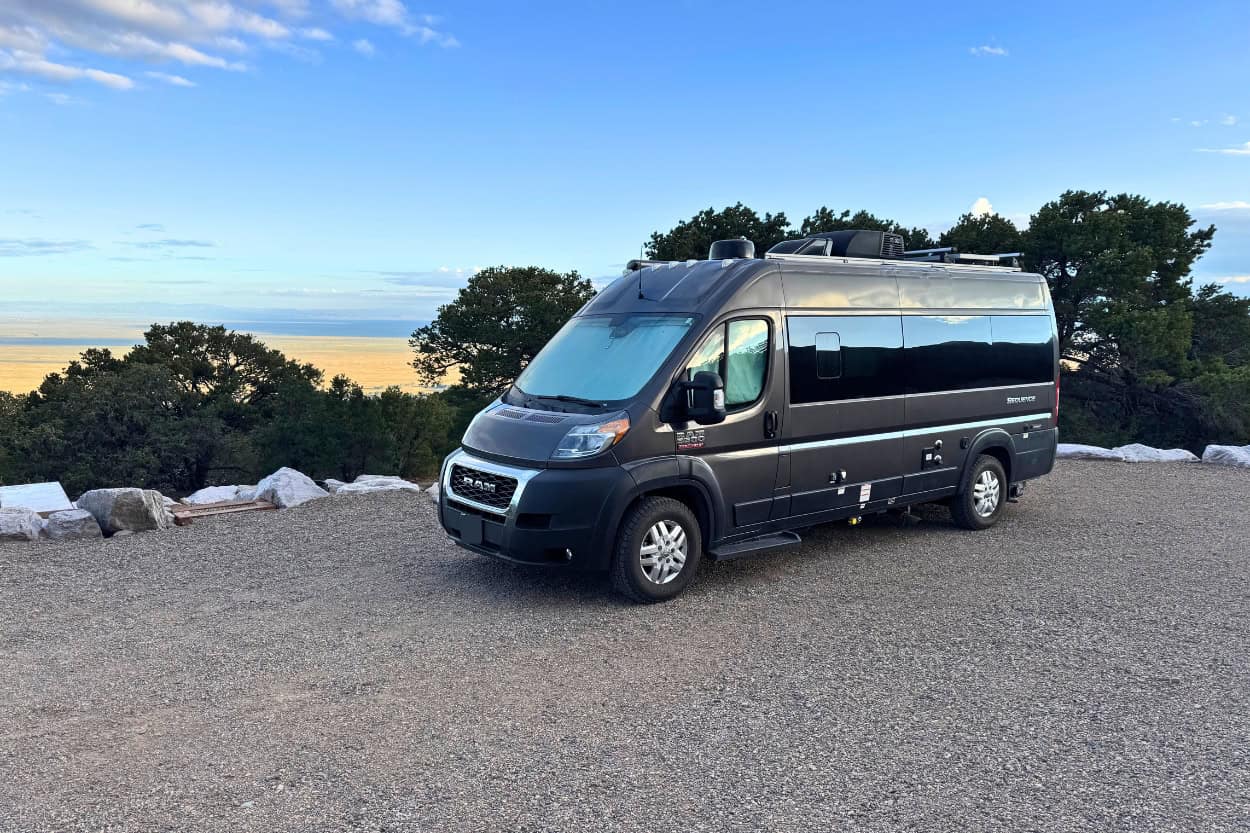
There’s something that feels right about camping when you’re visiting a National Park. We camped both nights of our trip in our own van. On our second night, we stayed inside the park itself. That meant no drive was required to start the day, just a short walk to the dunes.
Zapata Falls Campground
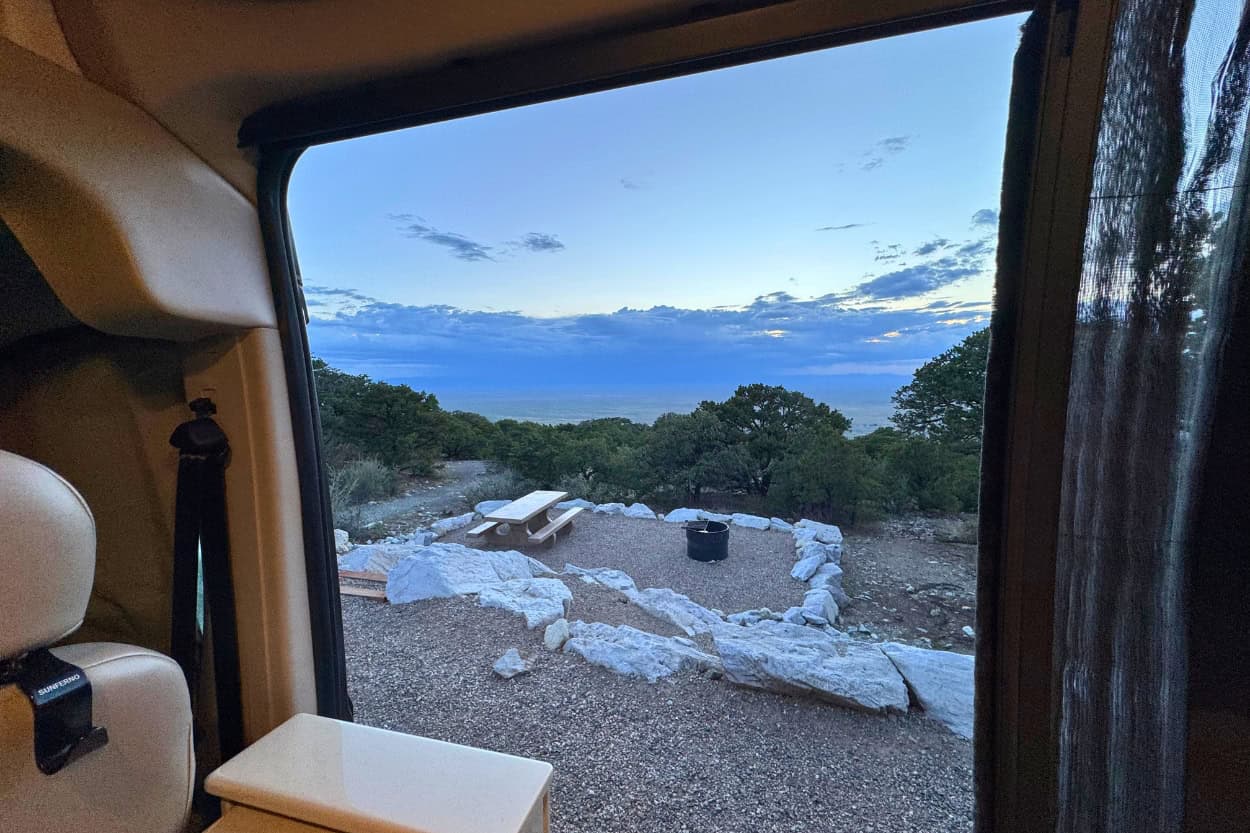
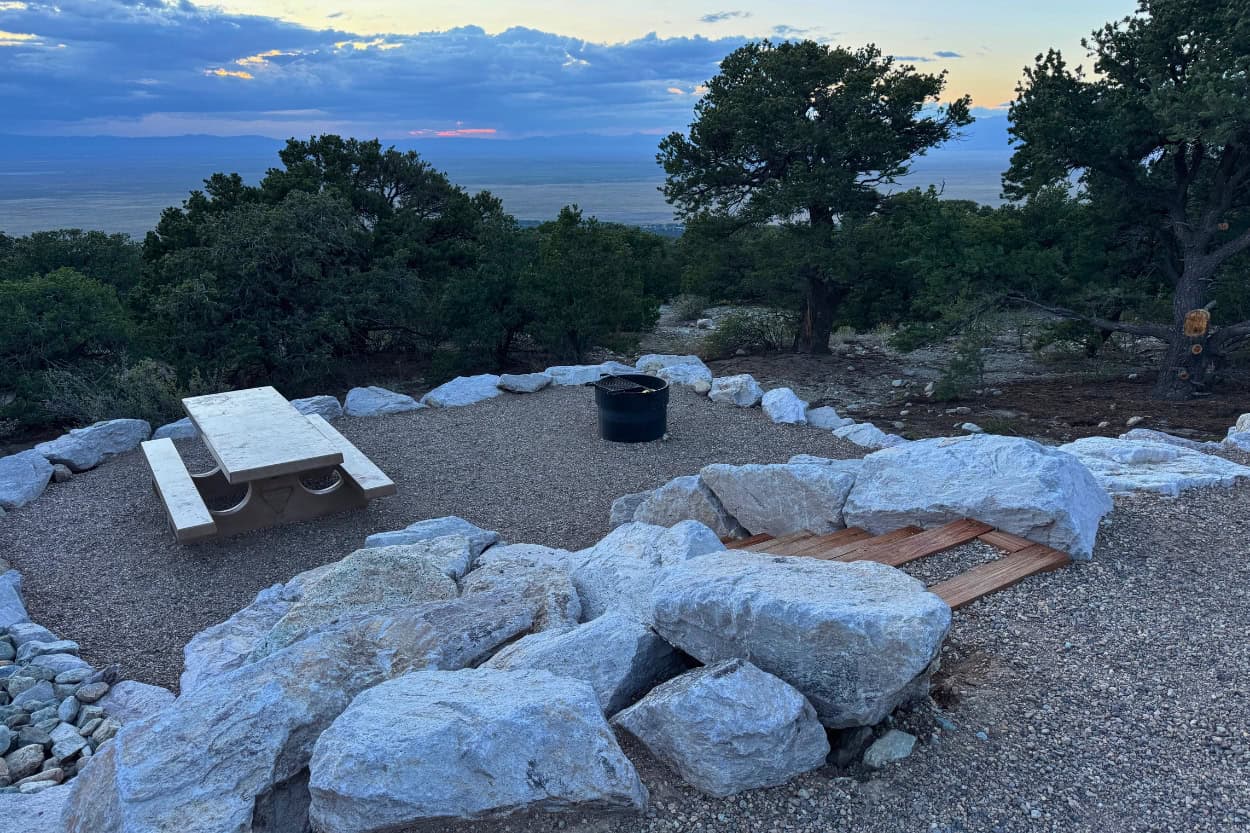
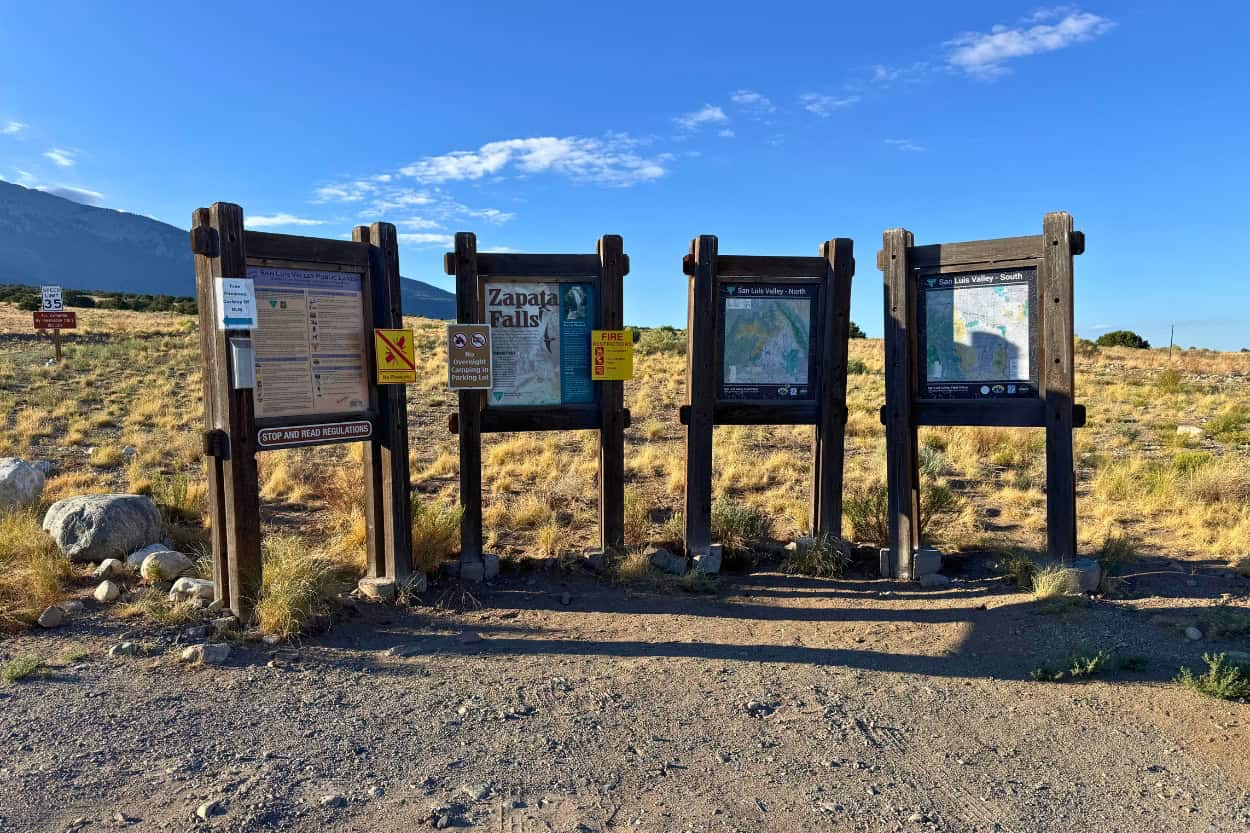
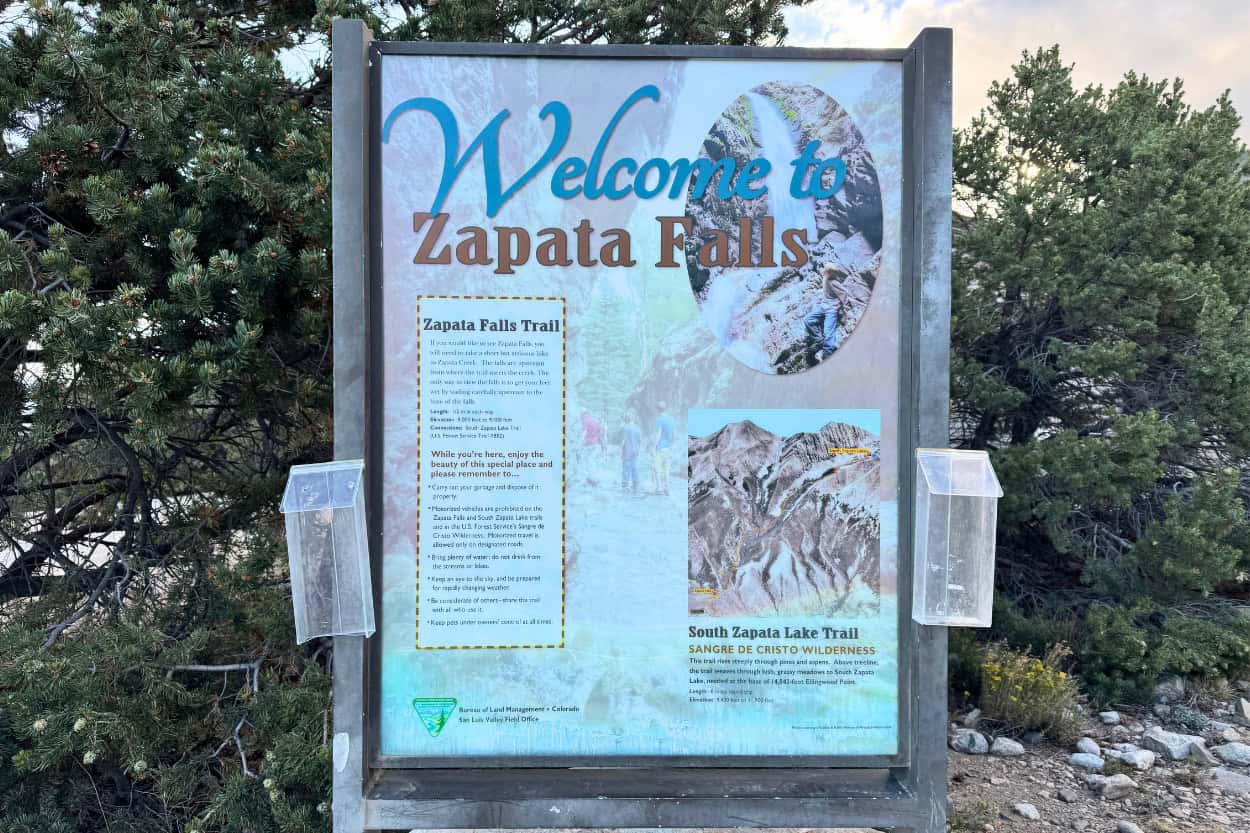
We spent our first night at Zapata Falls Campground, just south of the park. It cost around $19 for the site. The views alone made it worth it. The dunes and the San Luis Valley stretched out below us, with Alamosa visible in the distance.
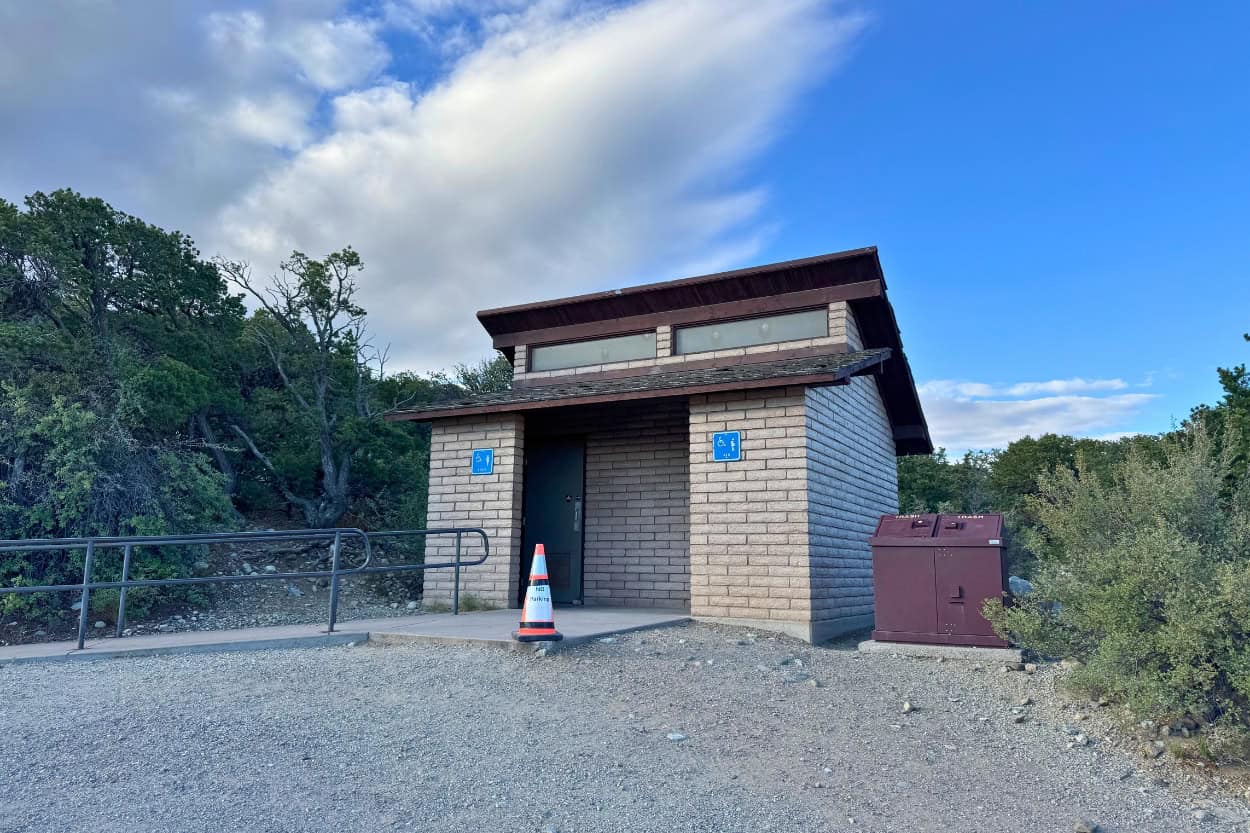
Each site has a fire pit and a concrete picnic table, and there are two bathrooms on the loop.
Piñon Flats Campground
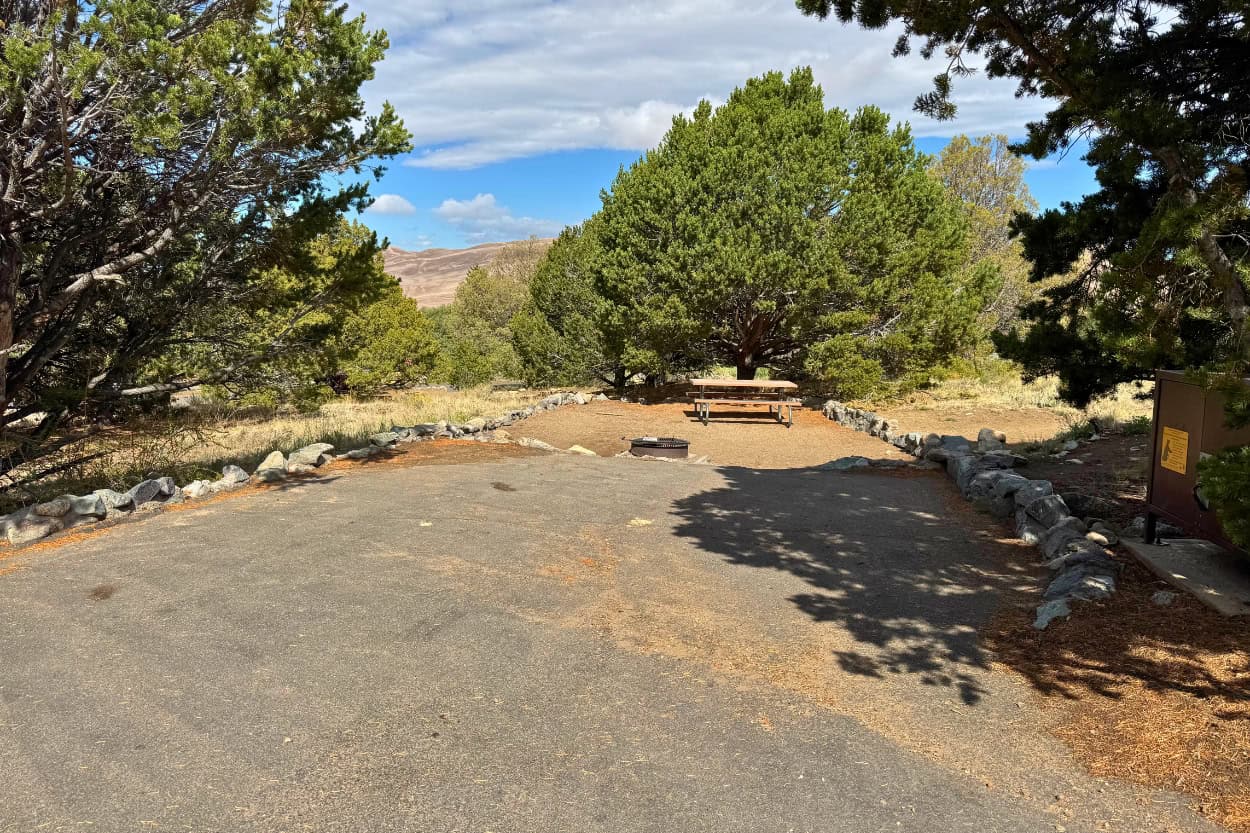
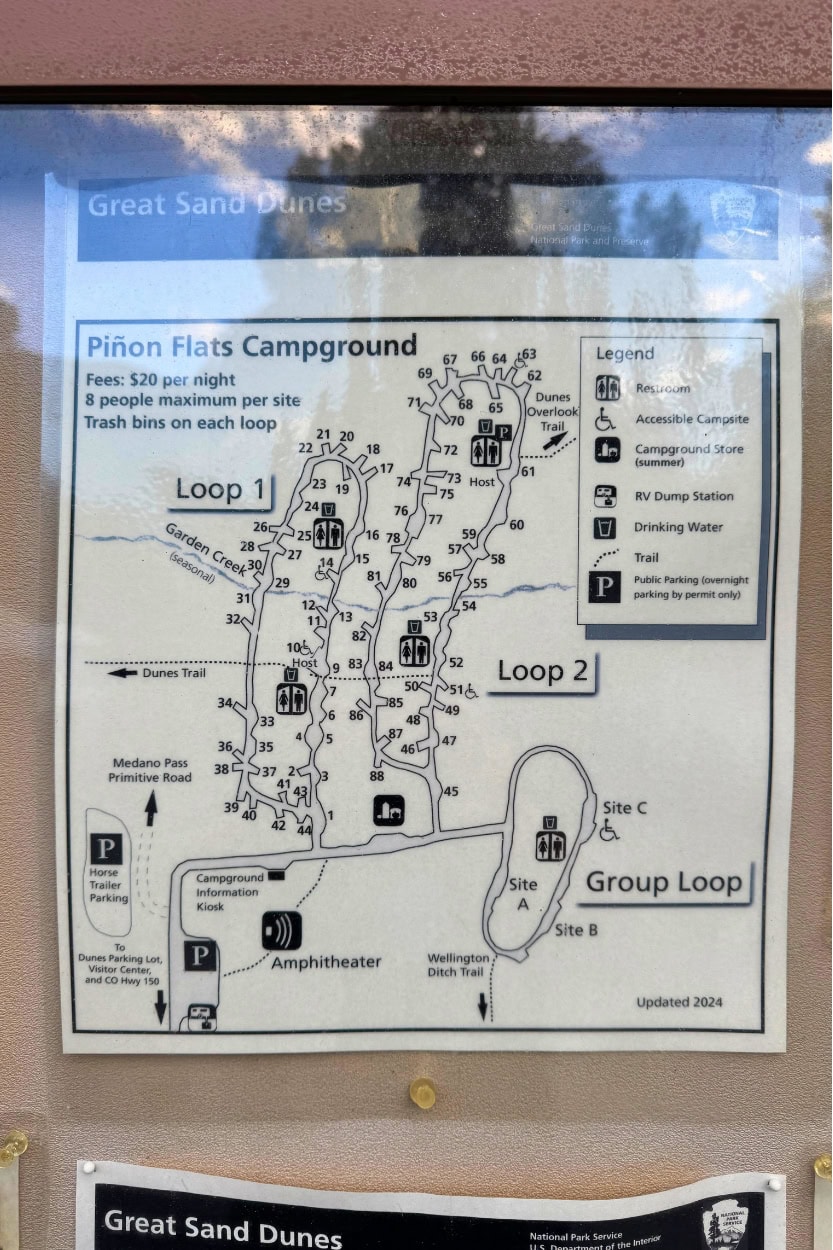
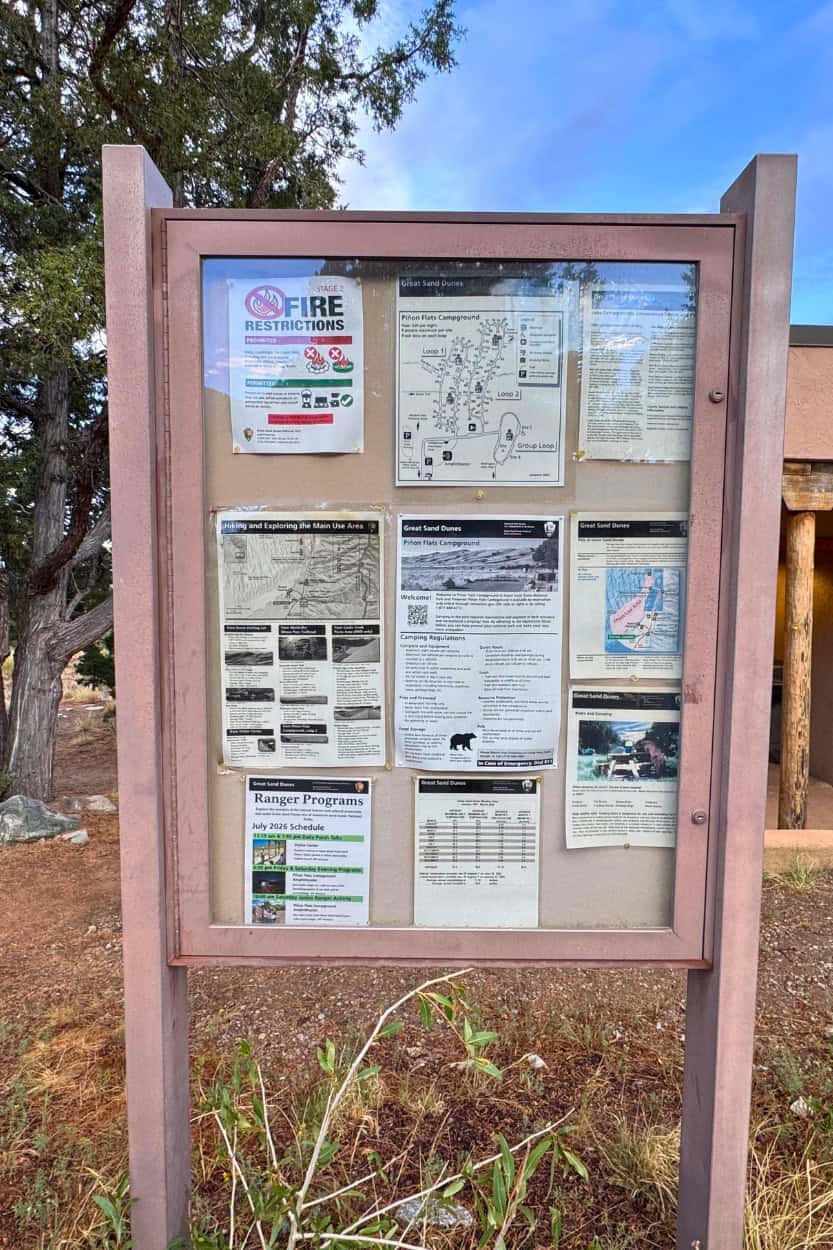
Our second night was at Piñon Flats Campground, inside Great Sand Dunes National Park itself. The RV site cost $20 for the night. There were multiple bathrooms inside the campground an a great trail that led you straight to the dunes.
There’s also access nearby to the Medano Pass Primitive Road and horse trailer parking. The campground has an outdoor amphitheater with a screen for ranger programs, though ours got rained out.
Campervan Rentals
If you don’t have a camper van, companies like Outdoorsy and Native Campervans rent them out of Denver. Either would be a great way to see Great Sand Dunes National Park and other Colorado National Parks. This solves your place to stay and your vehicle in one shot.
Hotels
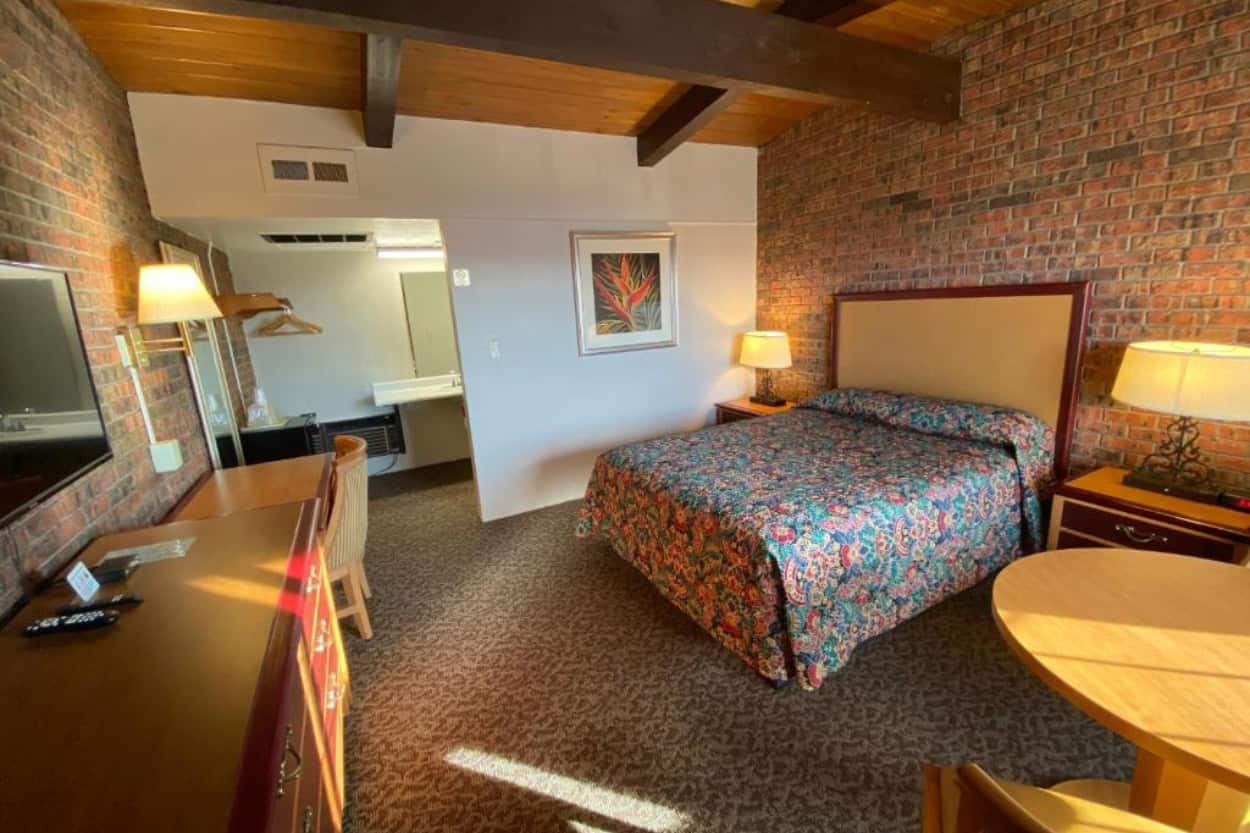
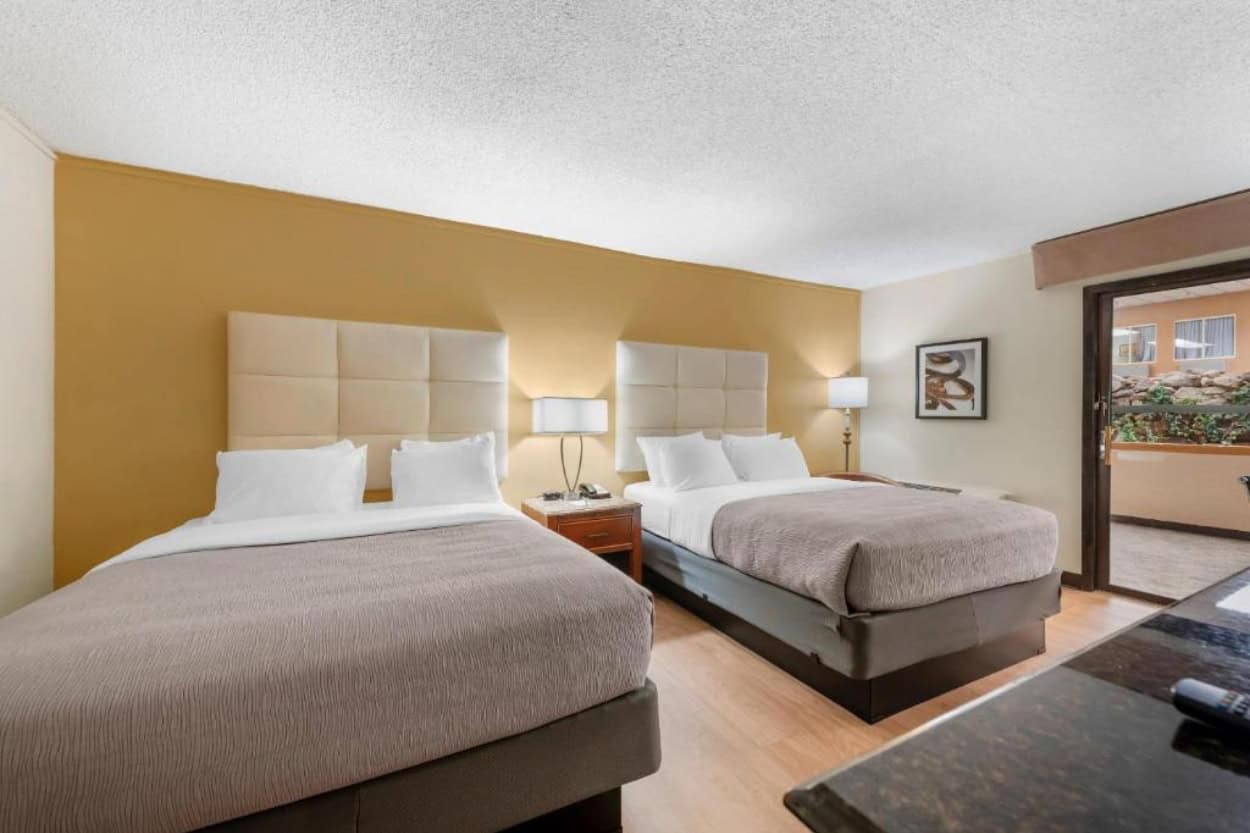
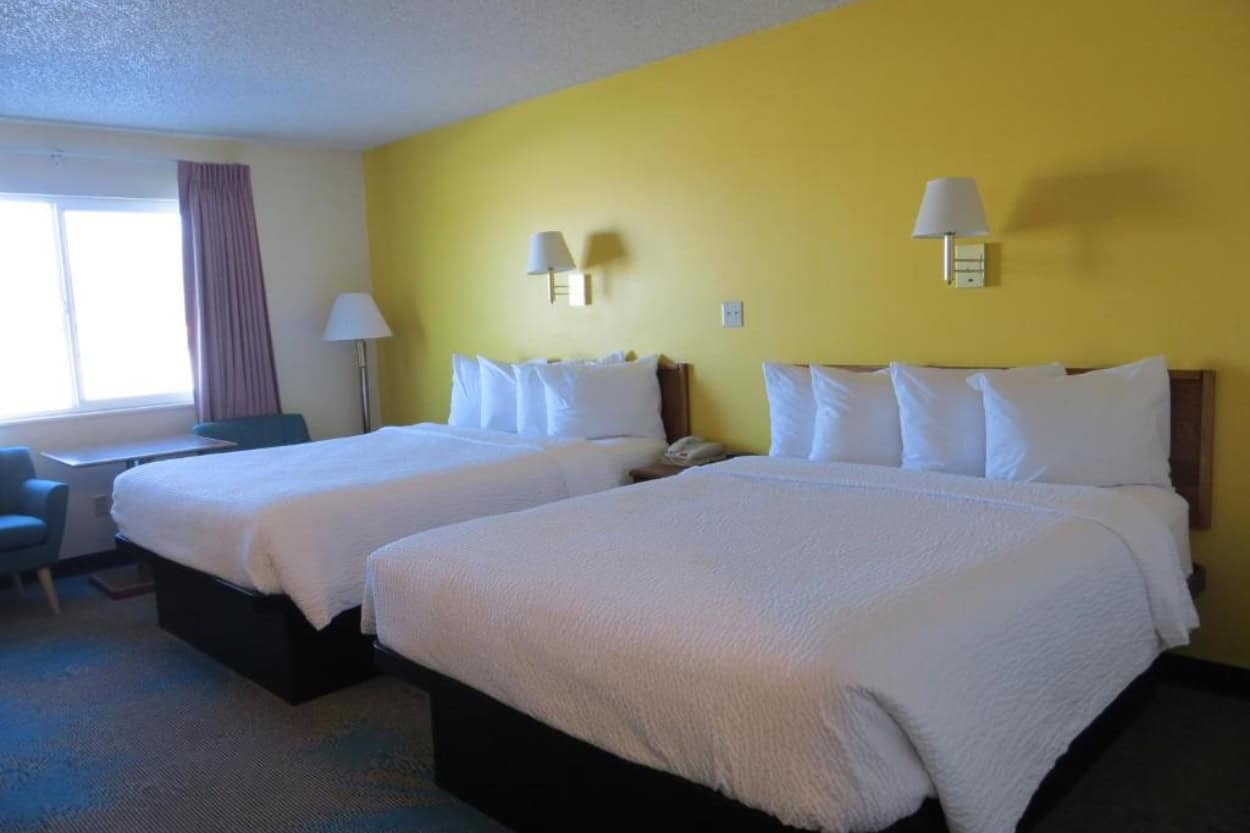
We camped both nights of our trip, so we can’t speak to these from personal experience. That said, Alamosa has a handful of hotel options if camping isn’t for you:
VRBO/Airbnb
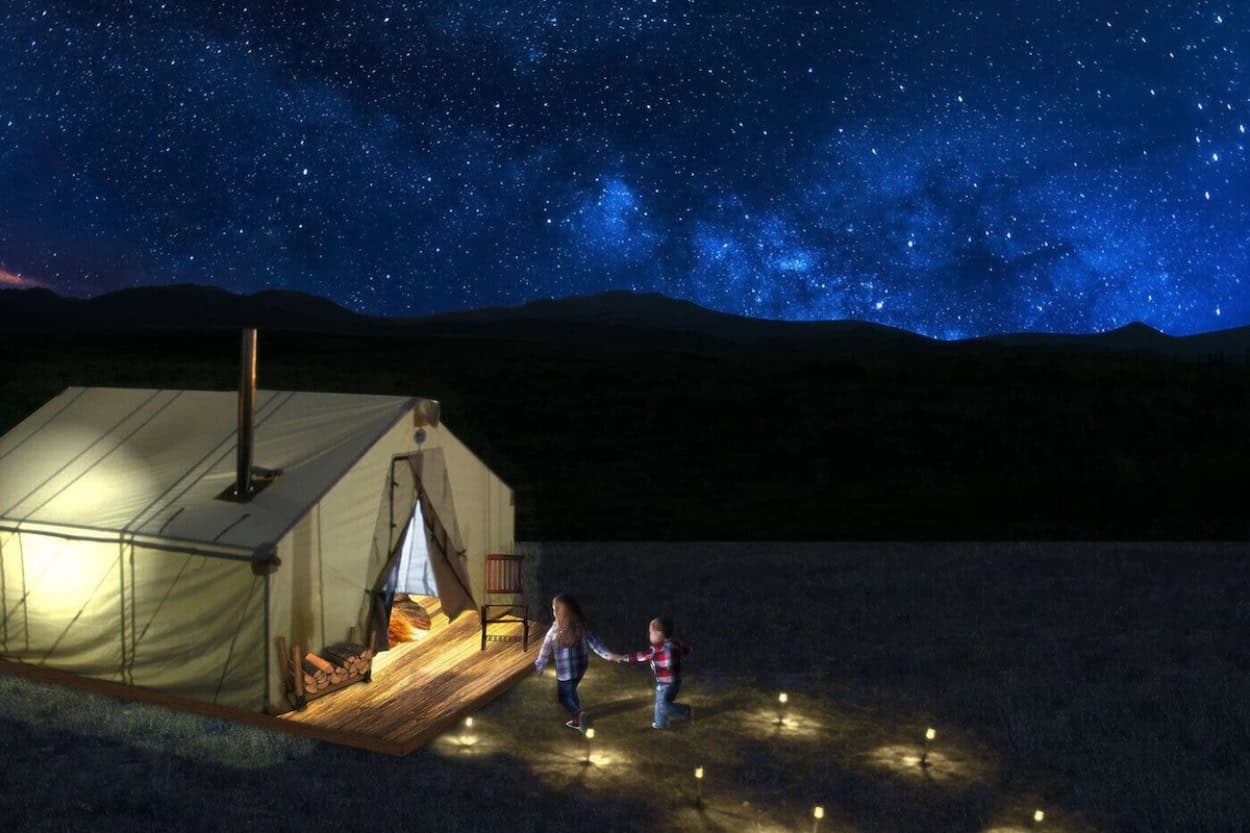
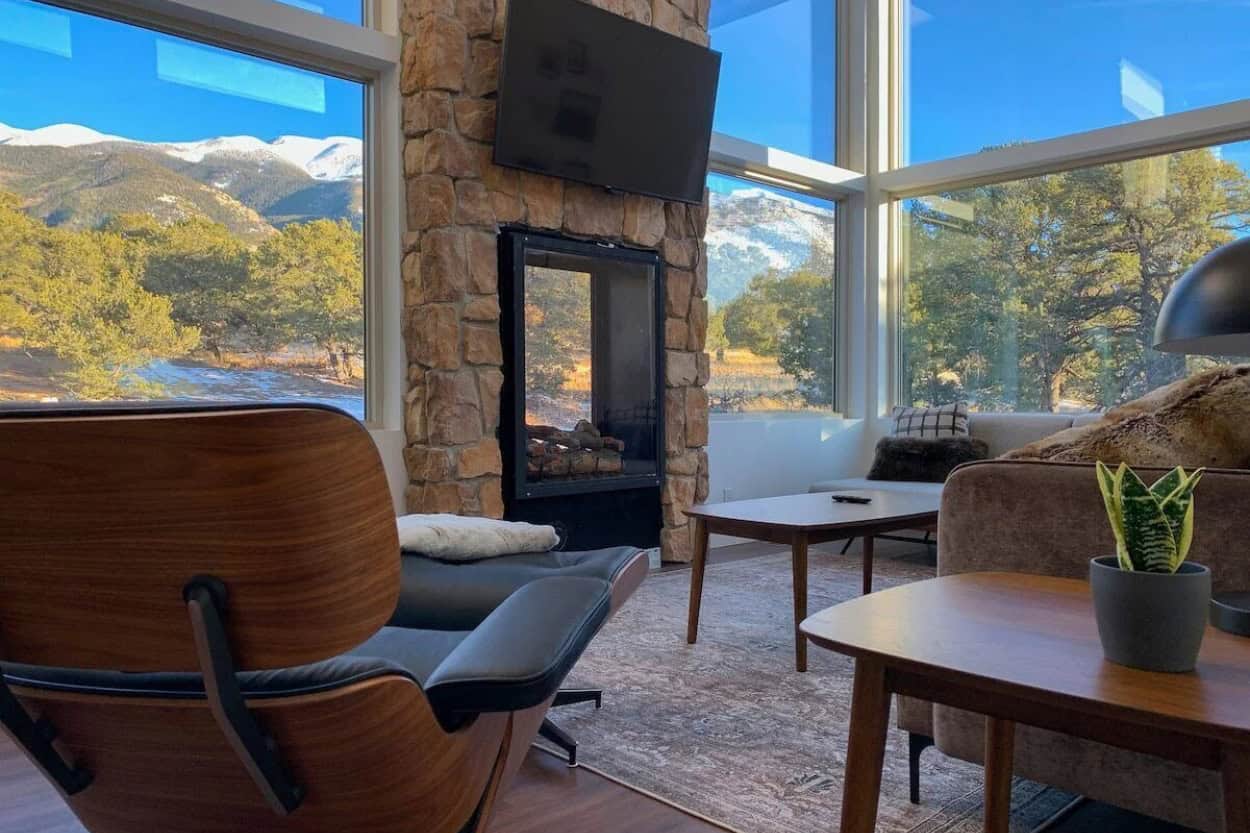
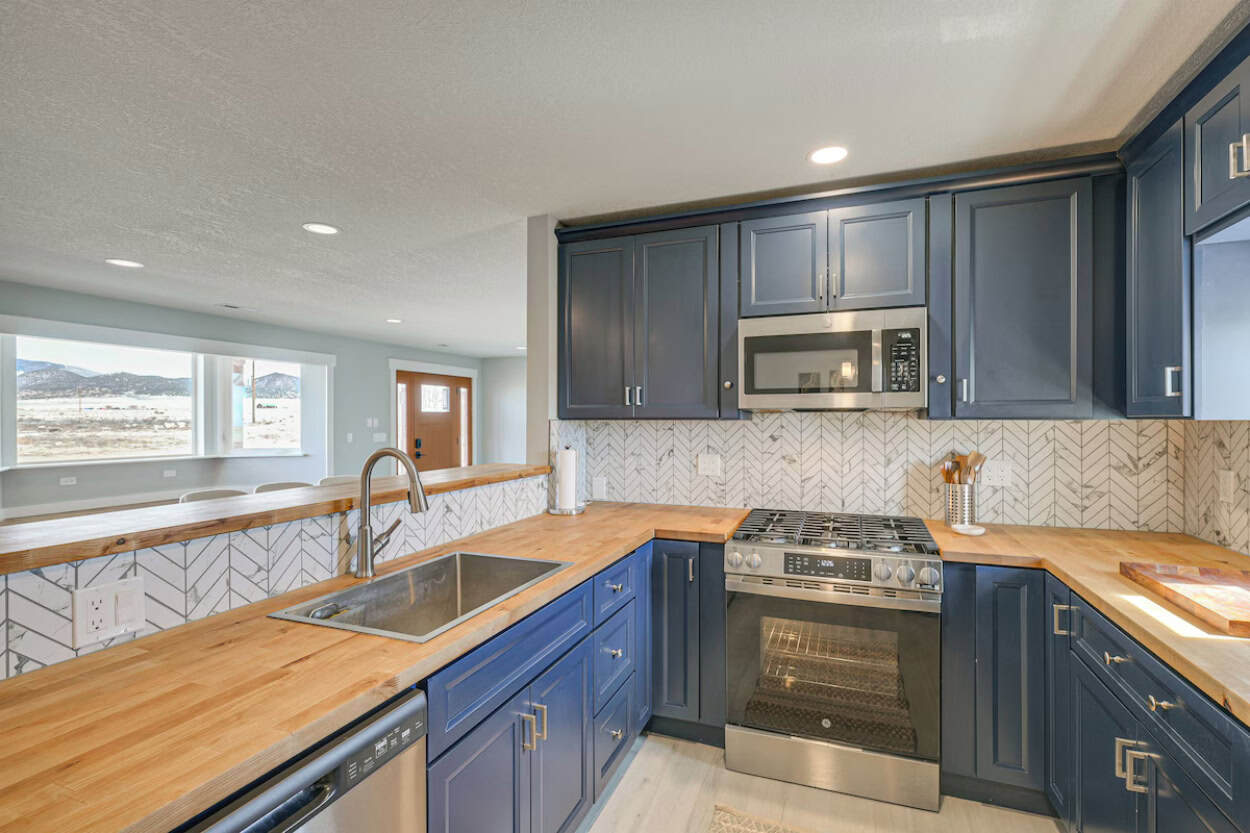
There are a few vacation rentals much closer to Great Sand Dunes National Park than Alamosa. Staying nearby cuts down on driving if you want to explore the park at night, especially for stargazing. Here are a few options worth checking out:
- Rustic Rook Resort Great Sand Dunes
- Sand Dunes Escape & Epic Stargazing in Blanca, located in nearby Blanca
- Trails End Getaway, a modern cabin with a hot tub near the park
Whichever option you choose, book ahead if you’re visiting during peak months. Campsites and rentals near the park fill up fast, especially on weekends.
Final Thoughts
Alamosa and Great Sand Dunes National Park surprised us, even on a repeat visit. Between sandboarding, the ranger talks, and the food scene, there was more here than we expected.
While most people rush through in a single afternoon, we’re glad we gave it three full days. If you do the same, you’ll leave with a better sense of what makes this park worth the drive. The same goes for this stretch of the San Luis Valley.
Thanks for following along. We hope this guide helps you plan your own trip to Alamosa and Great Sand Dunes National Park. If you still have questions, we offer a 30-minute travel planning chat where we can help you sort out the details.
Good To Know & FAQs
Here’s a quick list of questions that we’ve gotten a few times.
How hot does the sand get at Great Sand Dunes National Park?
The sand can reach up to 150 degrees in peak summer. During our July visit, we measured it above 125+ degrees more than once, even on a cloudy day!
Where can I rent sandboards and sand sleds near Great Sand Dunes National Park?
Boards and sleds aren’t available inside the park itself. A handful of outfitters near the entrance rent them by the day. Options include Oasis Store, Dune Valley, Spindrift Sandboards, Sand Dunes Pool, and Christie Mountain Sports. They range from about 4 to 36 miles from the park.
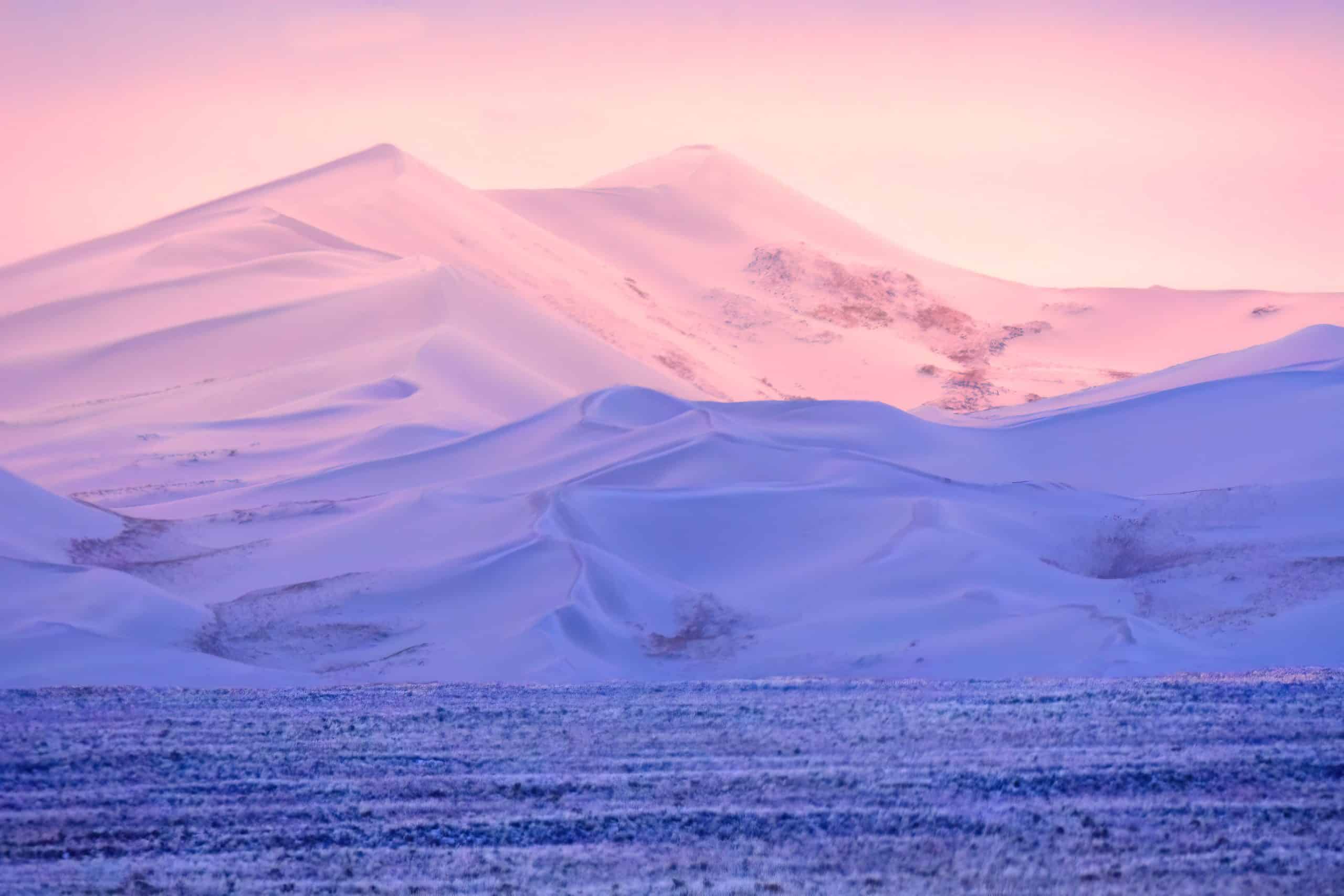
When is the best time to visit Great Sand Dunes National Park?
Late spring through early summer is popular if you want to see Medano Creek flowing near the dunes. Fall tends to be the most comfortable overall, with cooler sand, fewer crowds, and mild temperatures. We visited in July and found the sand hot but manageable, the early morning was by far the best time to explore.
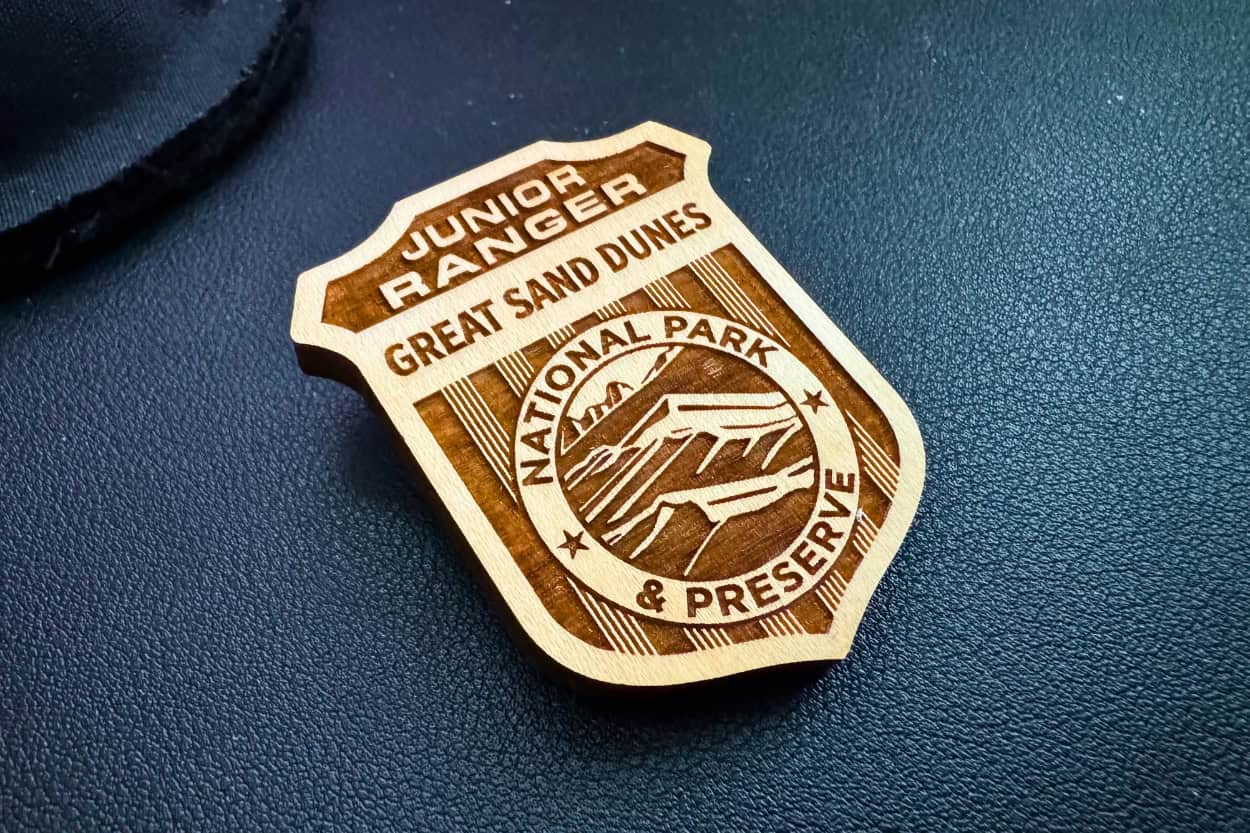
Is there a Junior Ranger Program at Great Sand Dunes National Park?
Yes, and it’s worth doing even as an adult. You can pick up a booklet at the visitor center and work through the activities. Turn it in before you leave for an official badge.
Something that we like to do, stamp the back of your Junior Ranger badge with the cancellation stamp so you know when you visited the park.
When does Medano Creek flow at Great Sand Dunes National Park?
Medano Creek typically flows from April through June, with peak flow usually in late May. By the time we visited in July, the creek had already dried up for the season.
Does it snow at Great Sand Dunes National Park?
Yes, it does, especially at higher elevations and during winter months. Snow on the dunes themselves is less common, but it creates a striking contrast when it happens.
Are the sand dunes at Great Sand Dunes National Park growing or moving?
The dunefield itself isn’t growing much these days, since less new sand is blowing in from the valley floor. That said, individual dunes are constantly shifting. Movement ranges from a few feet a year to tens of feet in a single day.
Can I fly a drone at Great Sand Dunes National Park?
No, drones aren’t allowed anywhere in the park. The National Park Service prohibits drone use across all national park sites, and Great Sand Dunes is no exception.
Where are the best places to take photos at Great Sand Dunes National Park?
Our favorite spot was actually our campsite at Zapata Falls Campground on the first night. It looks straight out over the dunes and the San Luis Valley below. Right outside the visitor center is another great option, with the dunes rising up close and no walking required.
Is there parking for trailers and RVs at Great Sand Dunes National Park?
Yes, but space is limited. You’ll find trailer and RV parking at the visitor center and the Great Sand Dunes Picnic Area parking lot.
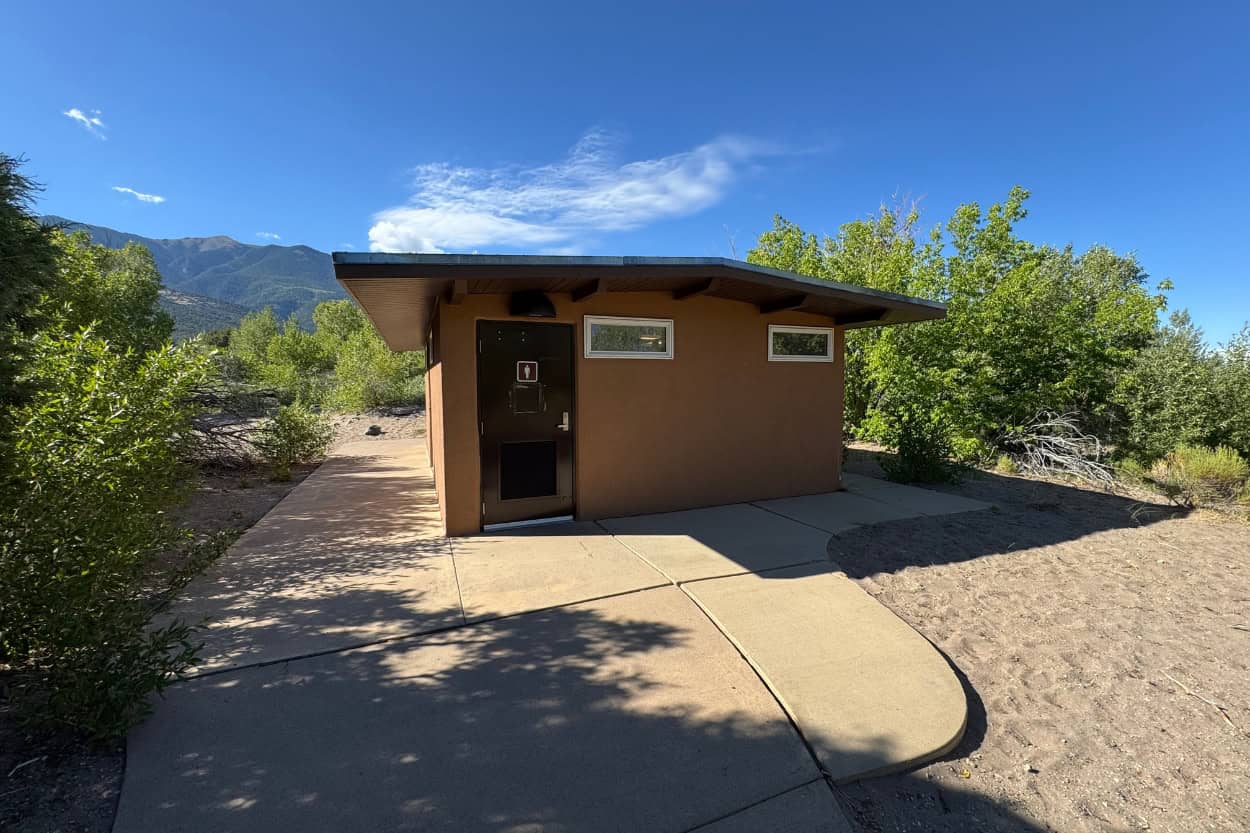
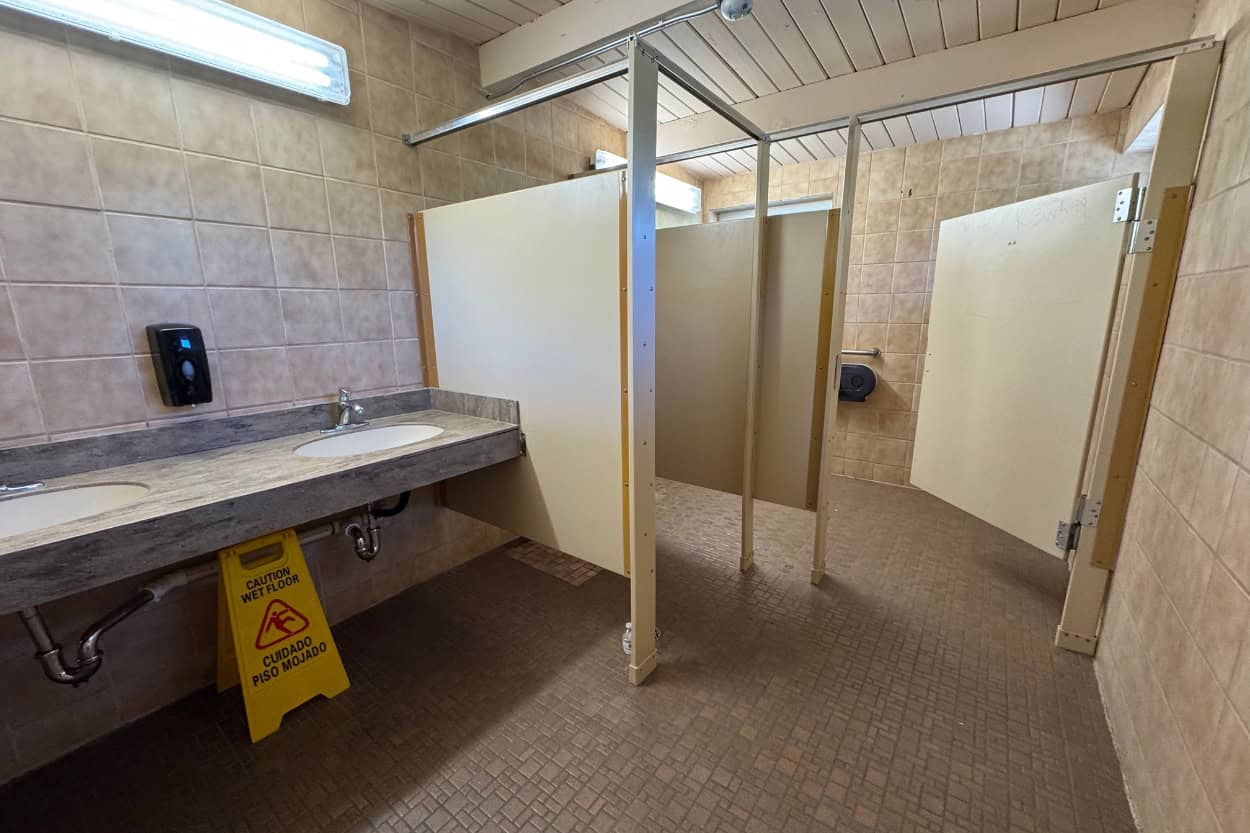
Where can I find bathrooms and water at Great Sand Dunes National Park?
You’ll find bathrooms at the visitor center, the campground, and the picnic area. The visitor center also has a water fill-up station. It’s accessible through a door that stays unlocked for 24-hour access, even when the building itself is closed.
Is there a 14,000 foot peak inside Great Sand Dunes National Park?
No, the highest point inside the park is 13,604 feet. Blanca Peak, one of Colorado’s 14,000-foot peaks, is just a few miles from the visitor center. It sits outside the national park boundary.
Pin this for later
Planning a weekend in Great Sand Dunes National Park in Alamosa, Colorado? Save this guide for your trip!